
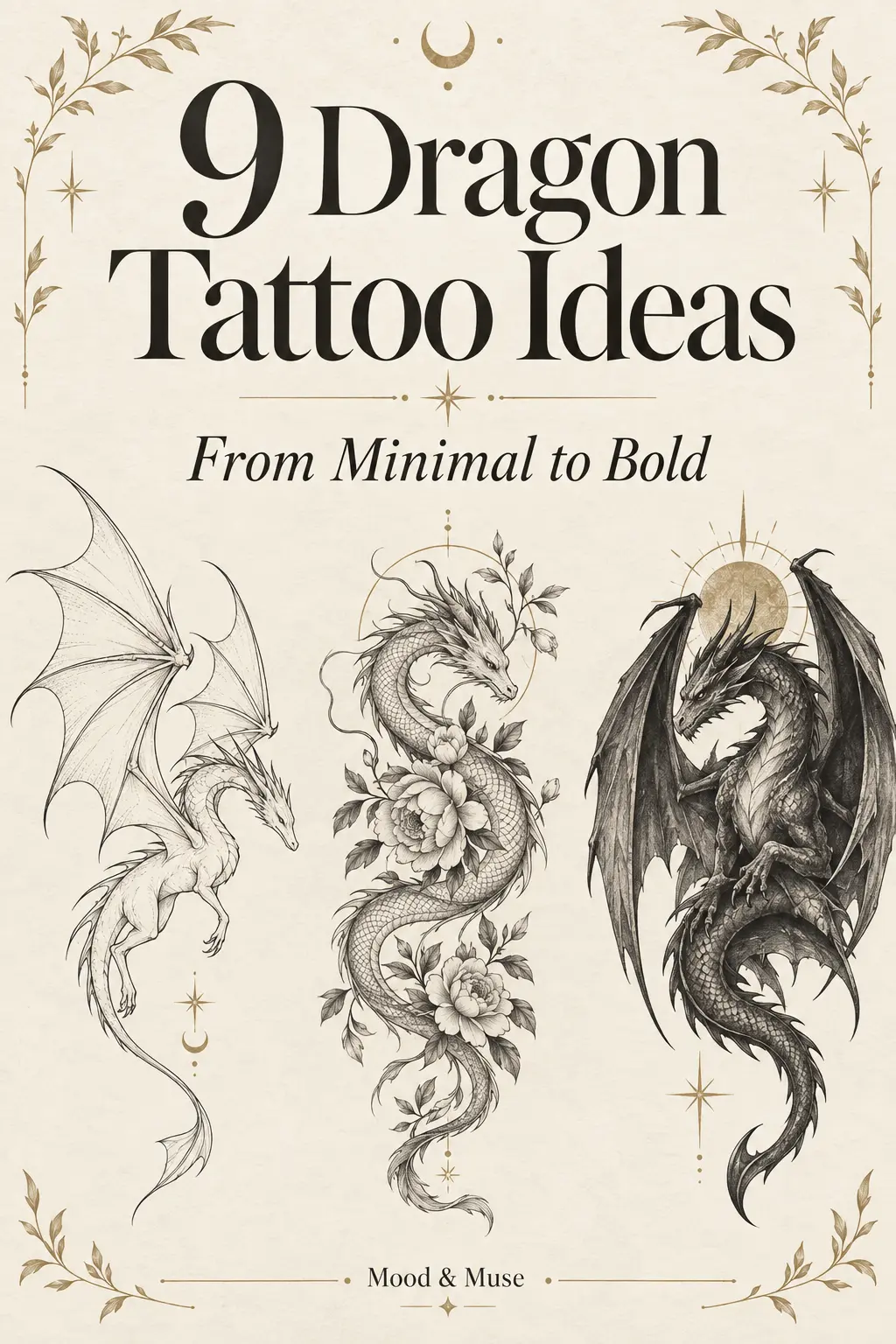
A dragon tattoo can be delicate, dramatic, or somewhere in between. Picture a simple winged silhouette, a winding dragon framed by flowers, or a bold creature with its wings stretched across an intricate composition. The same subject can take on a completely different mood depending on its shape, linework, and setting.
If your saved inspiration feels scattered, start with the overall look you want: understated, romantic, mysterious, or fierce. These nine dragon tattoo ideas give you different directions to explore and bring to a tattoo artist for an original design.
1. Minimalist Dragon Outline
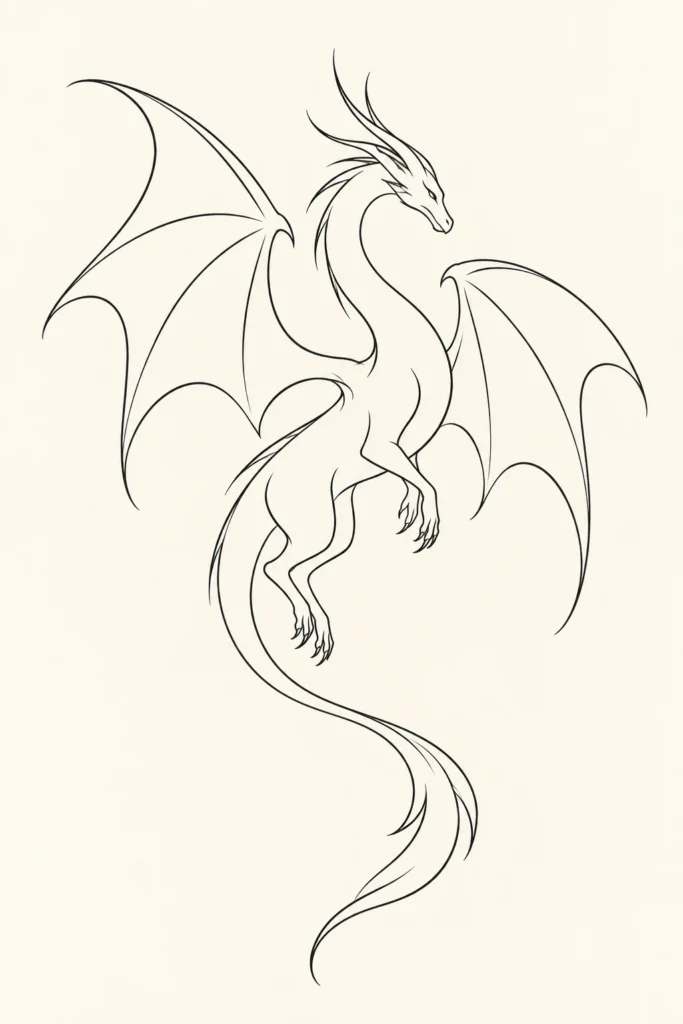
Imagine a dragon drawn with a few intentional lines: an arched neck, a sweeping tail, and a clearly defined wing. This concept keeps the focus on the creature’s silhouette rather than individual scales.
For an understated version, leave the background empty. A curved pose can give even a simple outline a sense of movement. Ask your artist what size and line weight would suit the design rather than assuming every detail can fit into a tiny tattoo.
Design direction: Black linework, an open composition, and a single flowing shape.
2. Small Flying Dragon Silhouette
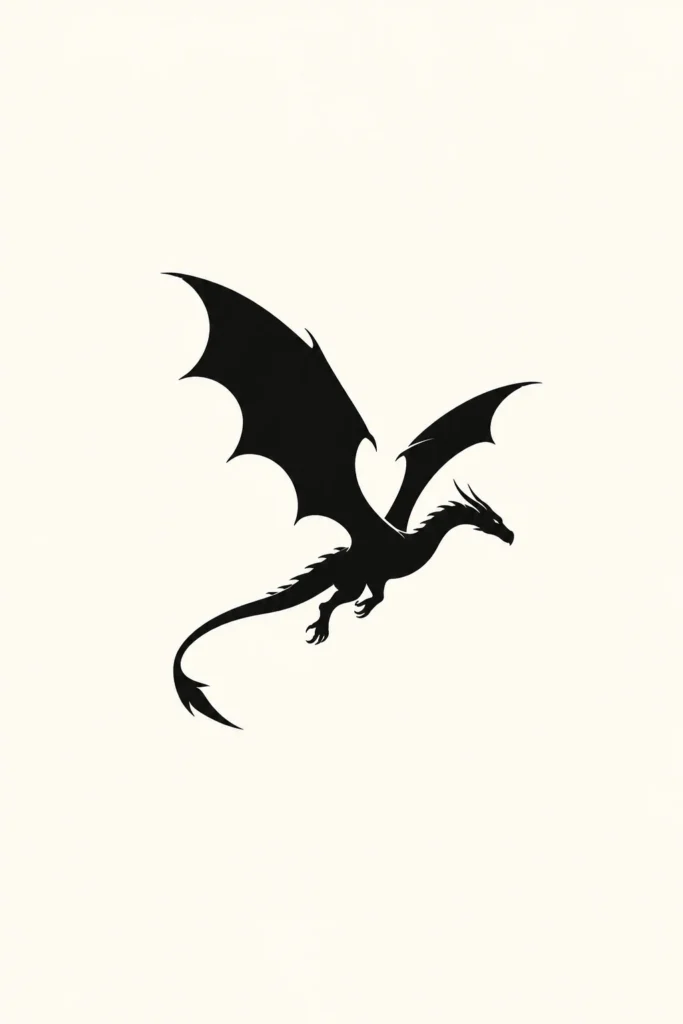
A flying dragon offers a compact, graphic alternative to an elaborate illustration. Spread wings and a tapered tail can create a strong shape without filling the design with tiny details.
Try sketching the creature from the side or at a slight angle. A side view feels like a moment from a story, while a more symmetrical pose creates an emblem-like composition. Keep any stars or other accents secondary to the dragon itself.
Design direction: A small black silhouette with clearly separated wings and tail.
3. Dragon with a Crescent Moon
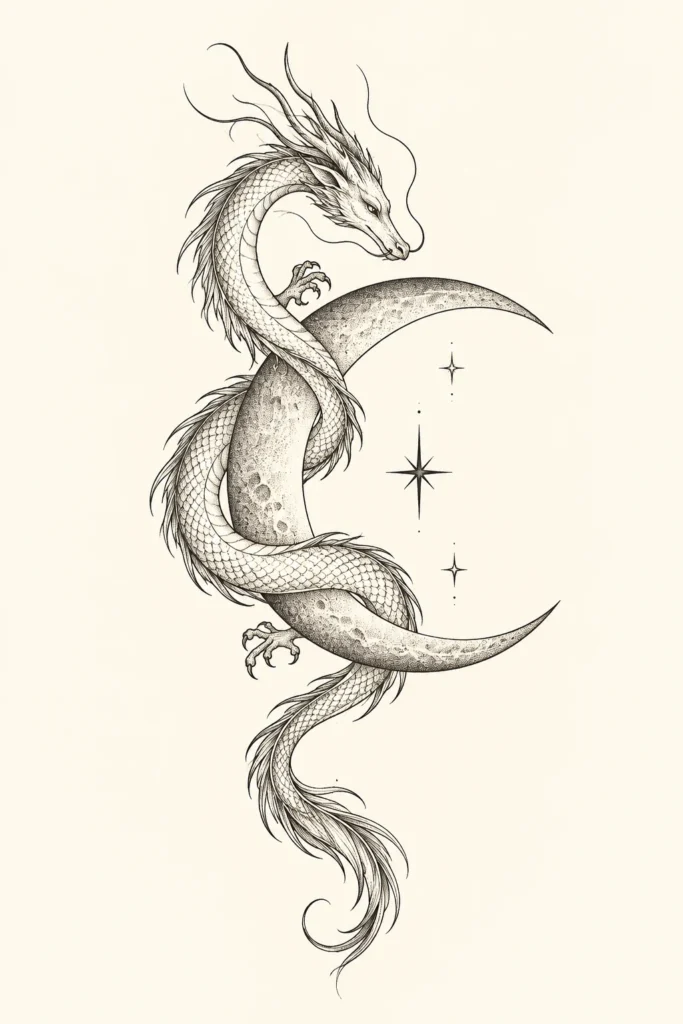
Pair a curved dragon with a crescent moon for a dreamy fantasy concept. The dragon could curl around the moon, fly beneath it, or form a loose circle beside it.
Choose one element to lead the composition. A large moon with a smaller dragon feels quiet and atmospheric; a prominent dragon with a little crescent feels more character-focused. A few carefully placed stars can finish the scene without crowding it.
Design direction: A winding dragon, crescent moon, and restrained celestial details.
4. Dragon and Flowers
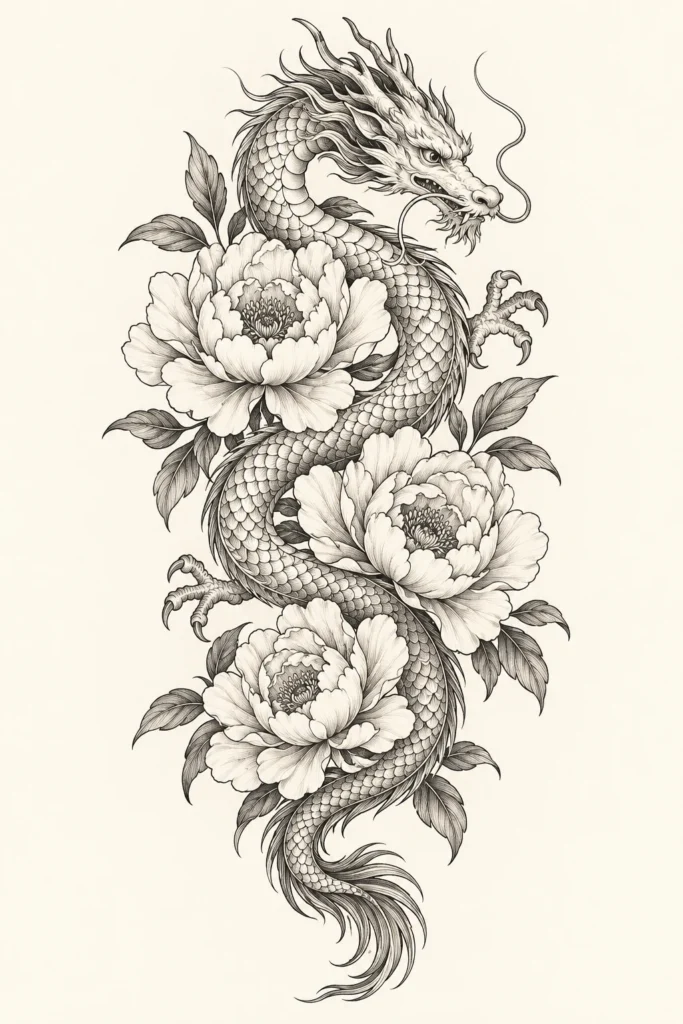
Combining a dragon with flowers creates a contrast between sharp claws, textured scales, and soft petals. Picture a dragon winding between open blooms, with its tail following the curve of a stem.
Choose the flowers for their shape or a personal connection. Large, open petals create a different mood from narrow leaves and small blossoms. Let the dragon remain easy to follow instead of hiding its body behind too many overlapping elements.
Design direction: Botanical linework framing one continuous dragon pose.
5. Coiled Dragon
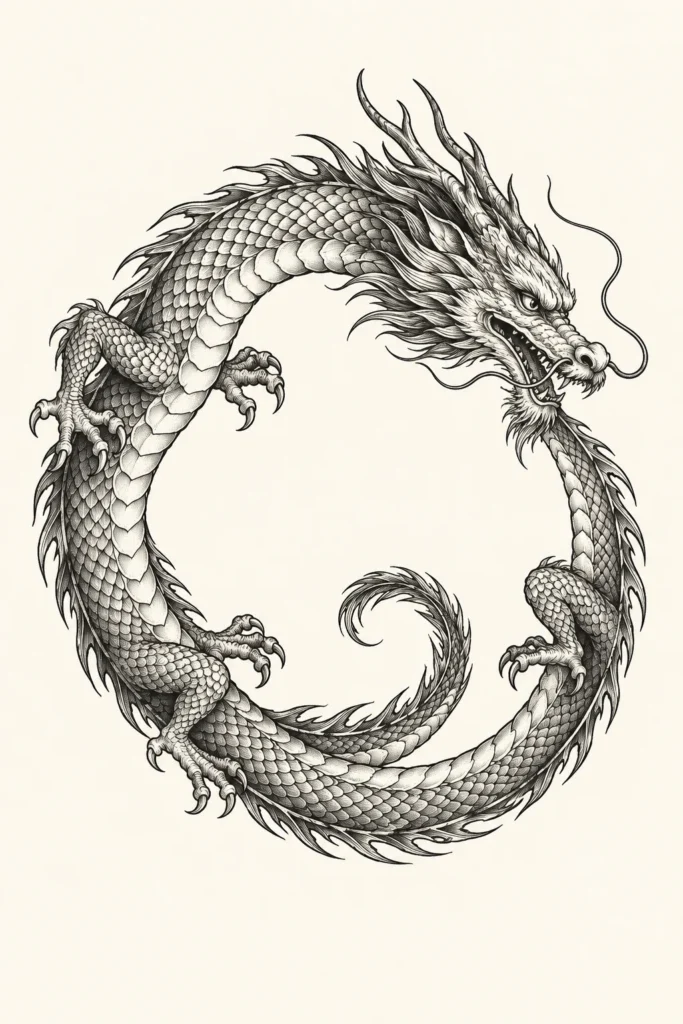
A coiled dragon turns the creature’s body into the structure of the design. Its head, limbs, and tail can gather into a rounded composition or stretch into a longer spiral.
The interesting part is the space between the curves. An open coil feels airy, while a tighter arrangement feels more concentrated and intense. Bring both versions to your artist if you like the idea but are unsure how dense you want it to look.
Design direction: An expressive head, a curling body, and intentional open space.
6. Bold Blackwork Dragon
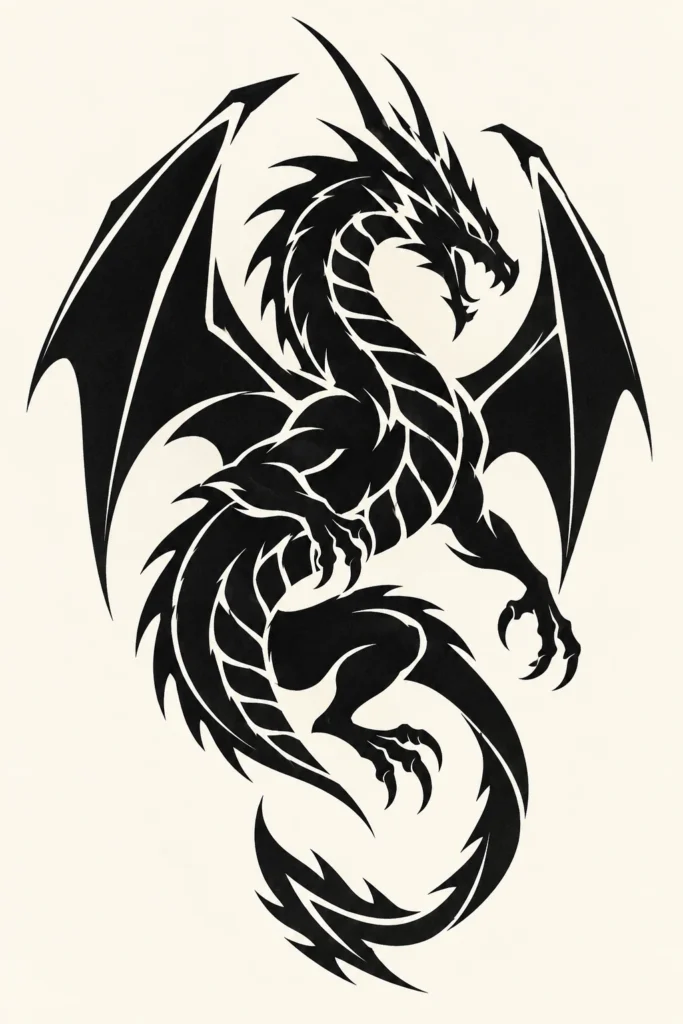
For a graphic statement, explore a dragon built from solid black shapes and areas of untouched skin. Angular wings, pointed horns, and a sweeping tail can give this concept a striking outline.
Decide where you want the strongest contrast. A dark body with open wings creates a different effect from broad black wings surrounding a lighter, more detailed torso. The design should feel balanced as a whole, not just impressive in one small section.
Design direction: Strong silhouette, substantial black areas, and deliberate negative space.
7. Red Dragon Concept
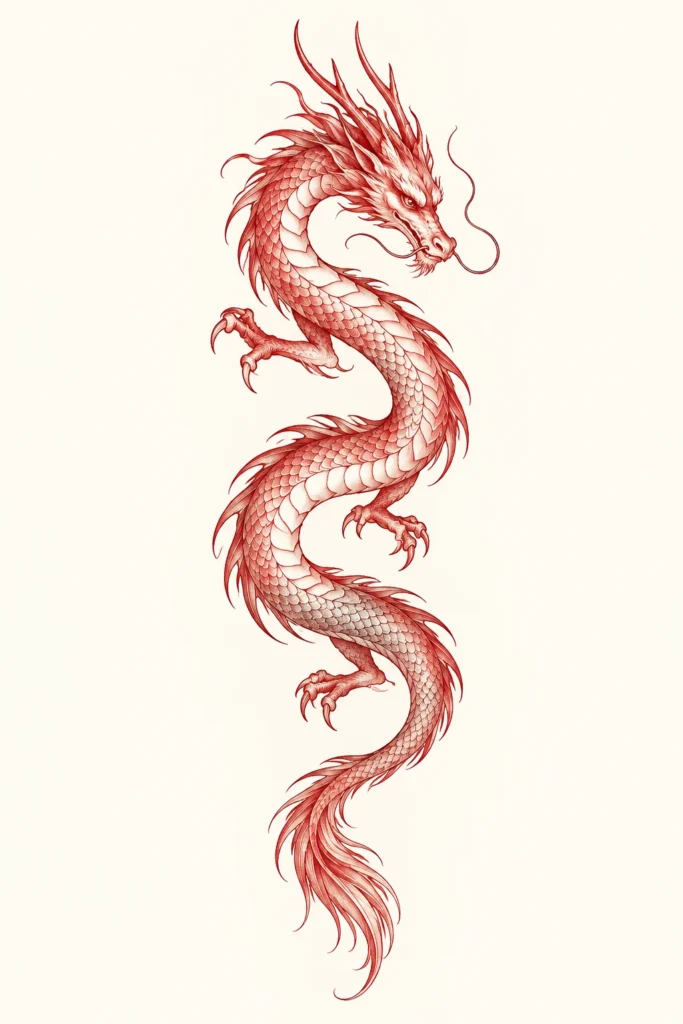
A red dragon offers another visual direction, whether you imagine a clean outline or a more detailed illustration. You could make the whole dragon red or use red selectively within a mostly black composition.
Keep the surrounding elements simple if you want the color to be the focus. Compare an unfilled outline with a shaded version before choosing your favorite. Discuss the color and execution with your artist using examples of their own work.
Design direction: A flowing dragon with a focused red palette.
8. Dragon with a Sword
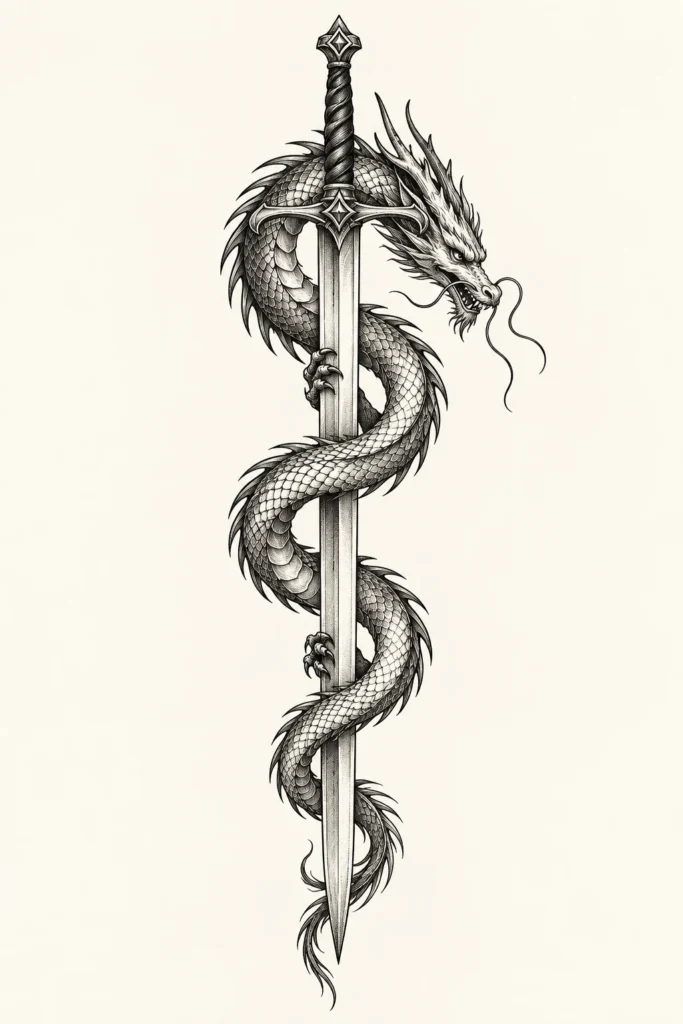
A dragon curling around a sword creates a fantasy illustration with a clear central axis. The straight blade contrasts with the creature’s curved body, giving the composition an immediate sense of structure.
Try a narrow, understated sword for a cleaner result or a decorative hilt for a more storybook feel. Leave enough room around the head and claws so those features do not disappear into the weapon’s details.
Design direction: A vertical sword crossed by a winding dragon.
9. Detailed Winged Dragon
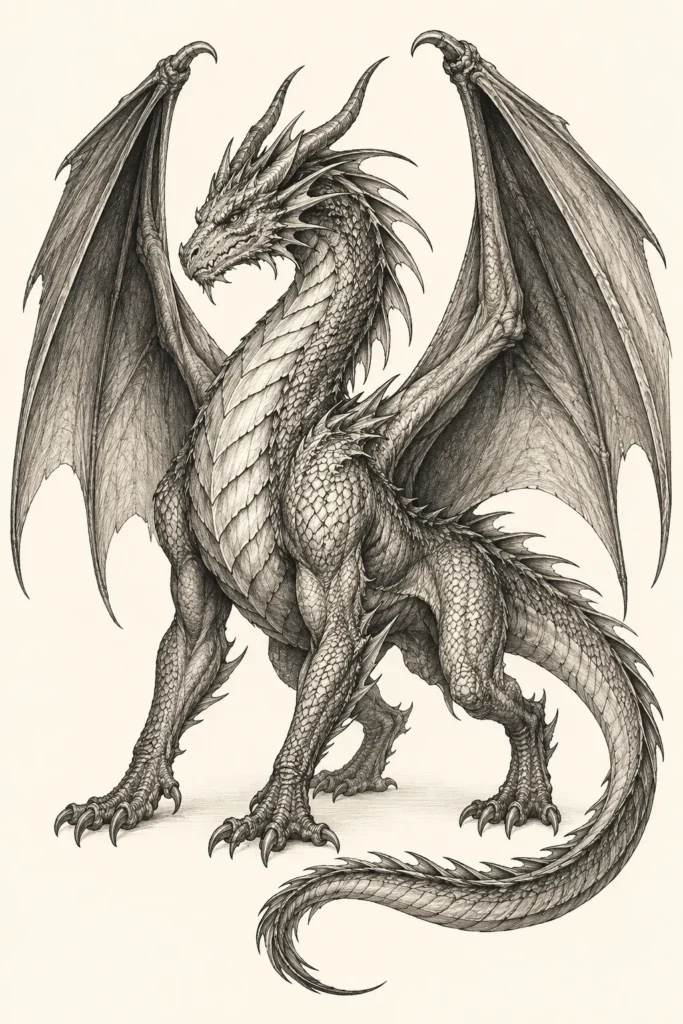
If you enjoy elaborate fantasy artwork, build the design around a winged dragon with an expressive face, textured scales, and layered shading. Start by choosing the pose: resting, climbing, turning, or flying.
Then decide which features deserve attention. Broad wings might lead the composition, or the focus could be a close view of the head and shoulders. You do not need every possible detail; a few clearly developed features can give the creature its personality.
Design direction: A dramatic pose with a clear focal point and selective texture.
Make the Idea Your Own
Pick two or three references and write down exactly what you like about each: the pose, linework, contrast, or accompanying elements. Also note anything you would remove. This gives your artist a clearer starting point than a large collection of unrelated images.
You can give a dragon tattoo a personal meaning—perhaps courage, imagination, or a connection to a favorite fantasy story—without treating that meaning as universal. If you want imagery from a specific cultural tradition, research that tradition and discuss it with an artist who understands it.
Whether you prefer a minimalist outline or a detailed winged creature, choose a direction that feels like you. Save your favorite concept and use it as the beginning of a custom design conversation.