
The dragonfly is a small creature with a large meaning. It spends most of its life underwater, then emerges, grows wings, and takes to the air — which is why people choose it to mark change, a fresh start, or a period of growth. It also stands for lightness and freedom: a dragonfly moves quickly, changes direction in an instant, and never seems weighed down by anything.
It is also a design that suits almost any style, from a lifelike insect with translucent wings to a single fine line on the ankle. The seven ideas below cover that range, so whether you want something detailed and colourful or something small and quiet, there is a version here that fits. A dragonfly also pairs easily with other small symbols — a flower, a moon, or a single word — if you want the piece to grow later without losing its meaning.
1. Realistic Dragonfly Tattoo
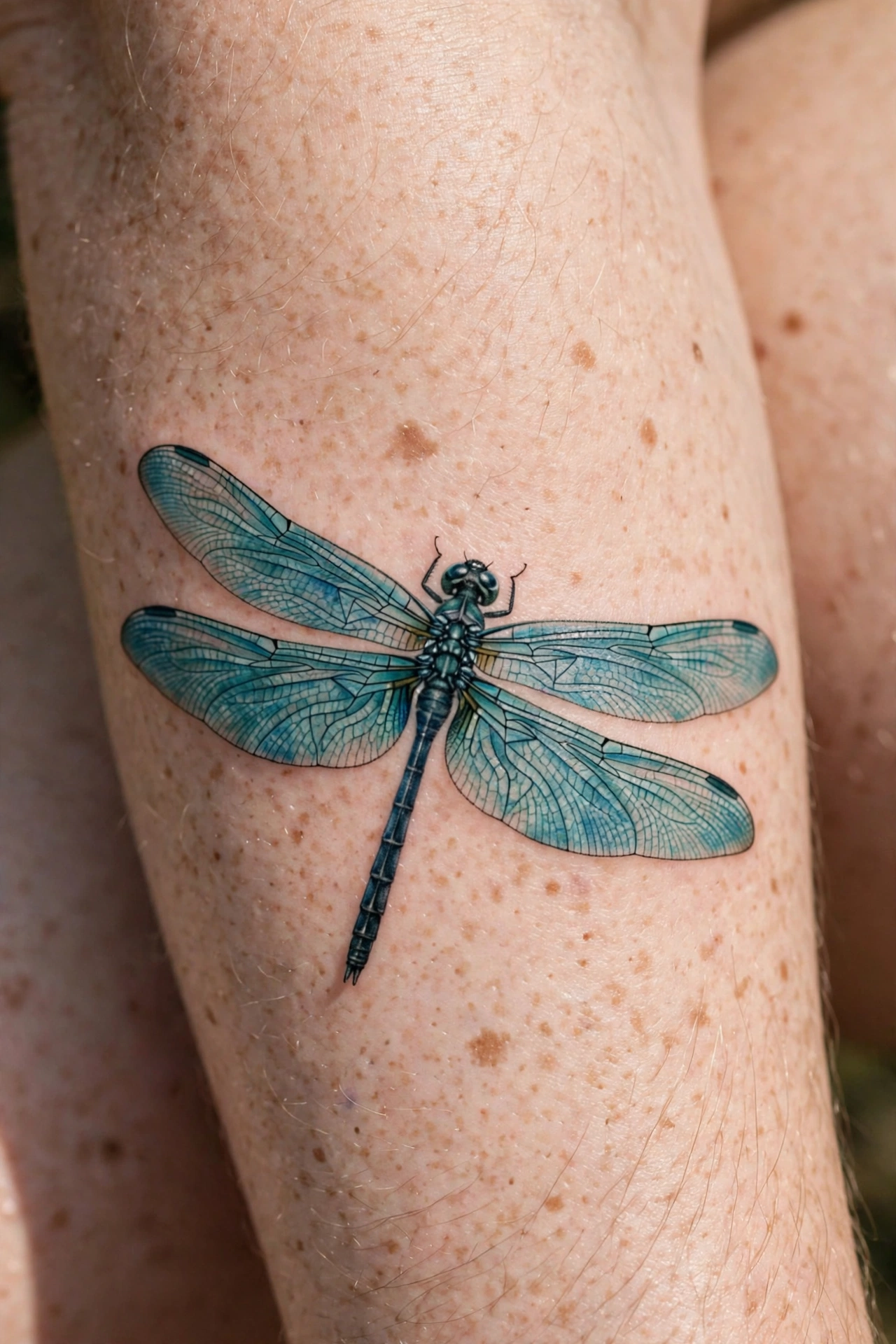
A realistic dragonfly aims to look like the insect itself: a slender body, four long wings with fine veins running through them, and a hint of iridescent blue or green catching the light. The wings are the hardest part to get right, and they are what make the design work — thin, slightly transparent, and drawn with enough detail that you can see the structure inside them. Good shading on the body gives the dragonfly depth without making it look heavy.
This style suits anyone who loves nature and wants a tattoo that feels true to life rather than decorative. Because the wing detail is so fine, it needs room: a realistic dragonfly squeezed too small loses the veins and the see-through quality that make it recognisable, so give your artist enough space to draw it properly. Bring a few reference photos of real dragonflies to your consultation, so your artist can match the wing shape and body markings of the species you like best.
Placement: The forearm or the upper arm, where the long wings have room to spread. A vertical version with the wings folded also works well down the calf or along the side of the ribs.
2. Watercolour Dragonfly Tattoo

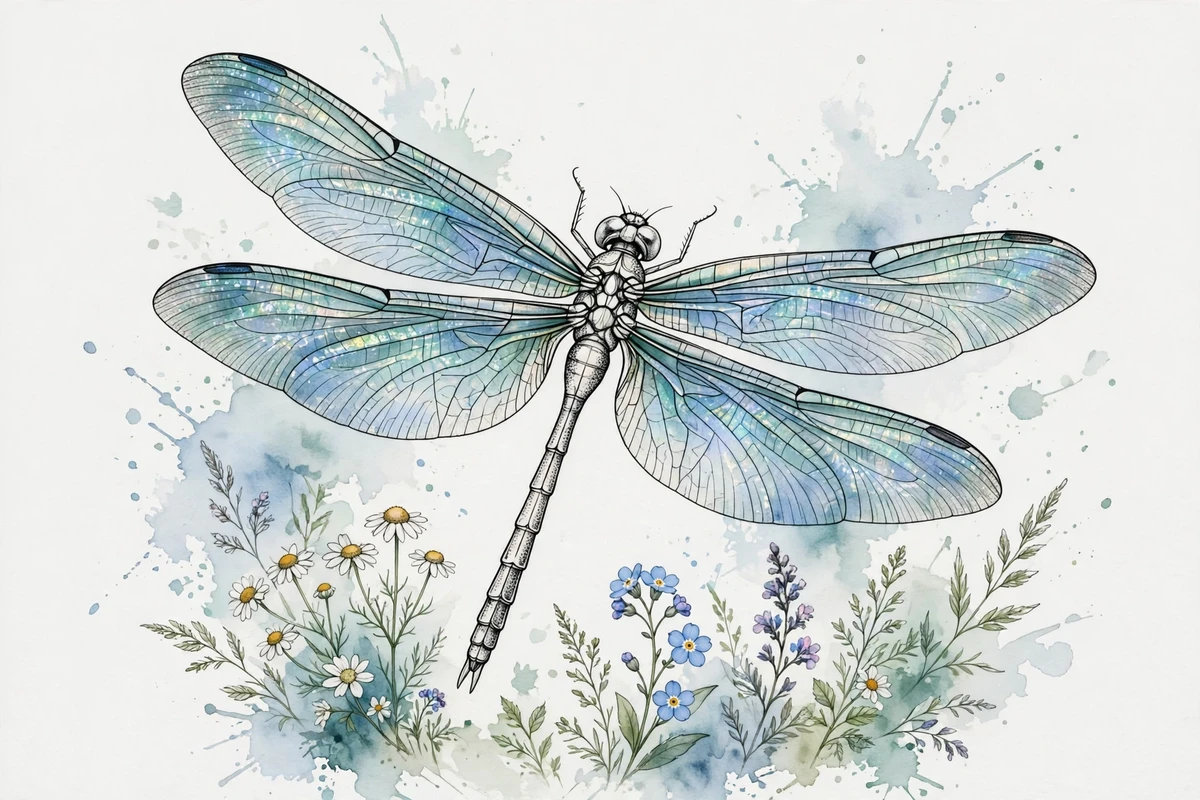
A watercolour dragonfly pairs a clear black outline of the insect with soft washes of colour bleeding gently past its edges. Teal, blue, and violet suit this design best, echoing the shimmer of a real dragonfly’s wings, and the painted feel gives a familiar symbol a softer, more artistic finish. The dragonfly itself keeps the tattoo readable, which matters because watercolour on its own can fade into a blur.
Ask your artist to keep the washes light rather than saturated, and to give the dragonfly a solid outline. Watercolour fades faster than black ink, so a defined body and wing shape is what keeps the tattoo looking like a dragonfly as the colour softens over the years. Plan for a touch-up after a few years if you want the washes to stay bright, and use sunscreen on the area — it is the simplest way to slow the fading.
Placement: The shoulder or forearm, where the colour has a flat patch of skin to spread across. A spot that sees a lot of sun will fade the colour faster, so keep that in mind if you spend time outdoors.
3. Minimalist Dragonfly Tattoo
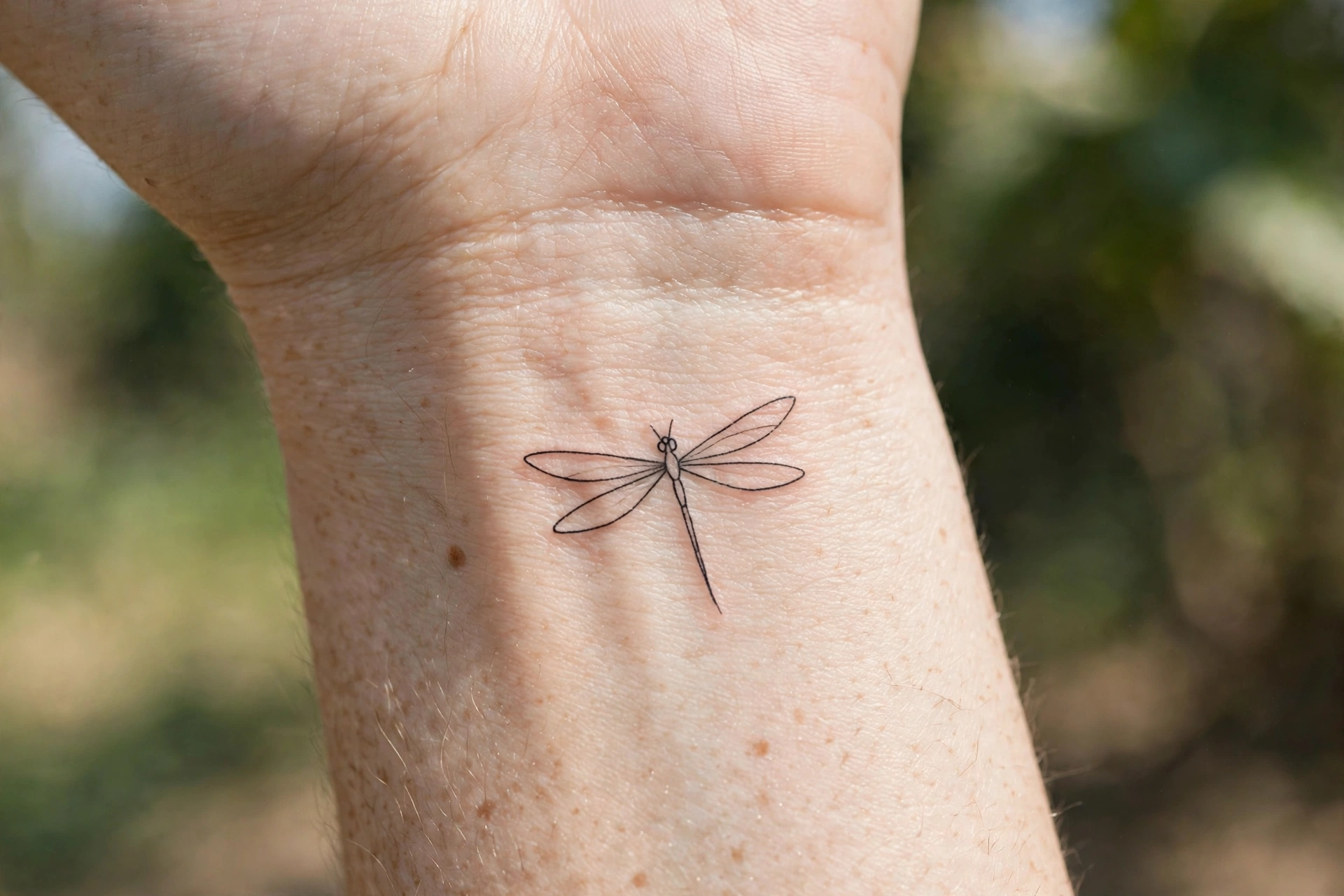
A minimalist dragonfly strips the design down to its essentials: a single fine line forming the body, two pairs of thin wings, and a small head. There is no shading to fade and no detail to lose, which is part of the appeal — the design looks the same years later as it did on day one. It is also one of the quickest dragonfly tattoos to get, and one of the easiest to hide.
For a first tattoo, this is a gentle place to start. The wrist or ankle gives you a spot that is visible to you every day but easy to keep private, and a small dragonfly there rarely feels like too much of a commitment. Choose an artist who does fine-line work regularly, since a thin, steady line is much harder to draw well than it looks, and a shaky line is the first thing you will notice.
Placement: The wrist or the inner forearm, where a small dragonfly sits naturally. Keep it to one small design — adding extra flowers or detail around a tiny dragonfly can crowd it and blur the clean lines.
4. Geometric Dragonfly Tattoo

A geometric dragonfly rebuilds the insect from straight lines, triangles, and dotwork inside a clean outline. The result feels modern and precise, almost like a drawing from a maths textbook, and it stands out from the more traditional dragonfly tattoos precisely because it drops the usual softness. The symmetry does the work here: when every line is even, the design looks sharp from any angle.
This style needs a steady hand and a flat patch of skin, since uneven lines are hard to hide in a geometric piece. It also ages well, because the bold shapes and clear spacing hold up as the ink settles. Some artists add dotwork shading inside the wings or a thin geometric frame around the insect, which gives the piece more depth without breaking the clean, structured feel.
Placement: The upper arm or the back of the forearm, where the skin is flat enough for straight lines to stay straight. Avoid placing it over a joint, where the skin folds and the geometry can distort.
5. Dragonfly and Flowers Tattoo
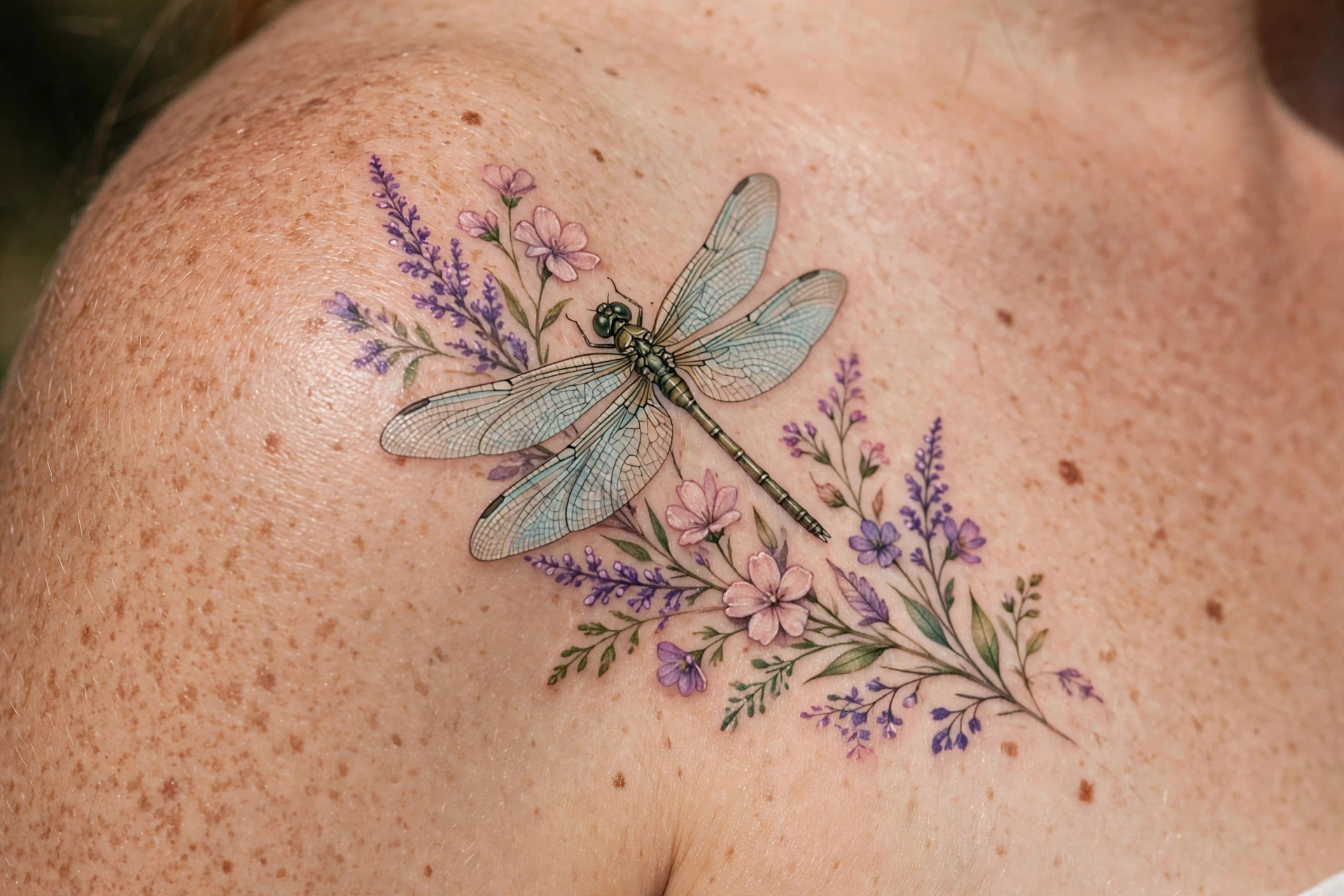
A dragonfly and flowers tattoo softens the insect with blooms: the dragonfly hovers above or rests among wildflowers, lavender, or small blossoms. The flowers add colour and a gentler feel, and they balance the dragonfly’s sharp, angular wings with something calm and natural. It suits anyone who loves the meaning of the dragonfly but wants the design to feel graceful rather than stark.
Keep the flowers in proportion — a few well-drawn blooms read better than a crowded bunch. The dragonfly should stay the clearest element so the design still reads as a dragonfly first, with the flowers as a beautiful frame around it. Soft pinks, purples, and greens work well here, and they let the dragonfly’s own blue or teal stand out instead of competing with it.
Placement: The shoulder or the upper back, where the dragonfly and flowers can spread out together. A longer, flowing version also works down the thigh, with the stems and blossoms running toward the knee.
6. Black-and-Grey Dragonfly Tattoo

A black-and-grey dragonfly drops the colour entirely and lets shading do the work: deep blacks in the body, soft greys in the wings, and fine dotwork to suggest the veins. The result is calmer and more timeless than a colour dragonfly, and it suits anyone who wants the symbol without the brightness. It also tends to age well, since black and grey ink holds its contrast longer than colour.
Because there is no colour to carry the design, the shading has to be done well. A good artist will build the wings up in light layers of grey so they still look thin and see-through, and keep the outlines crisp so the shape stays clear as the ink settles. Look at healed black-and-grey work in your artist’s portfolio before you book, since fresh photos can hide how the shading settles over time.
Placement: The back or the chest, where a larger black-and-grey piece has room for the shading to breathe. It also works on the forearm, kept to a medium size so the wing detail stays visible.
7. Small Dragonfly Tattoo
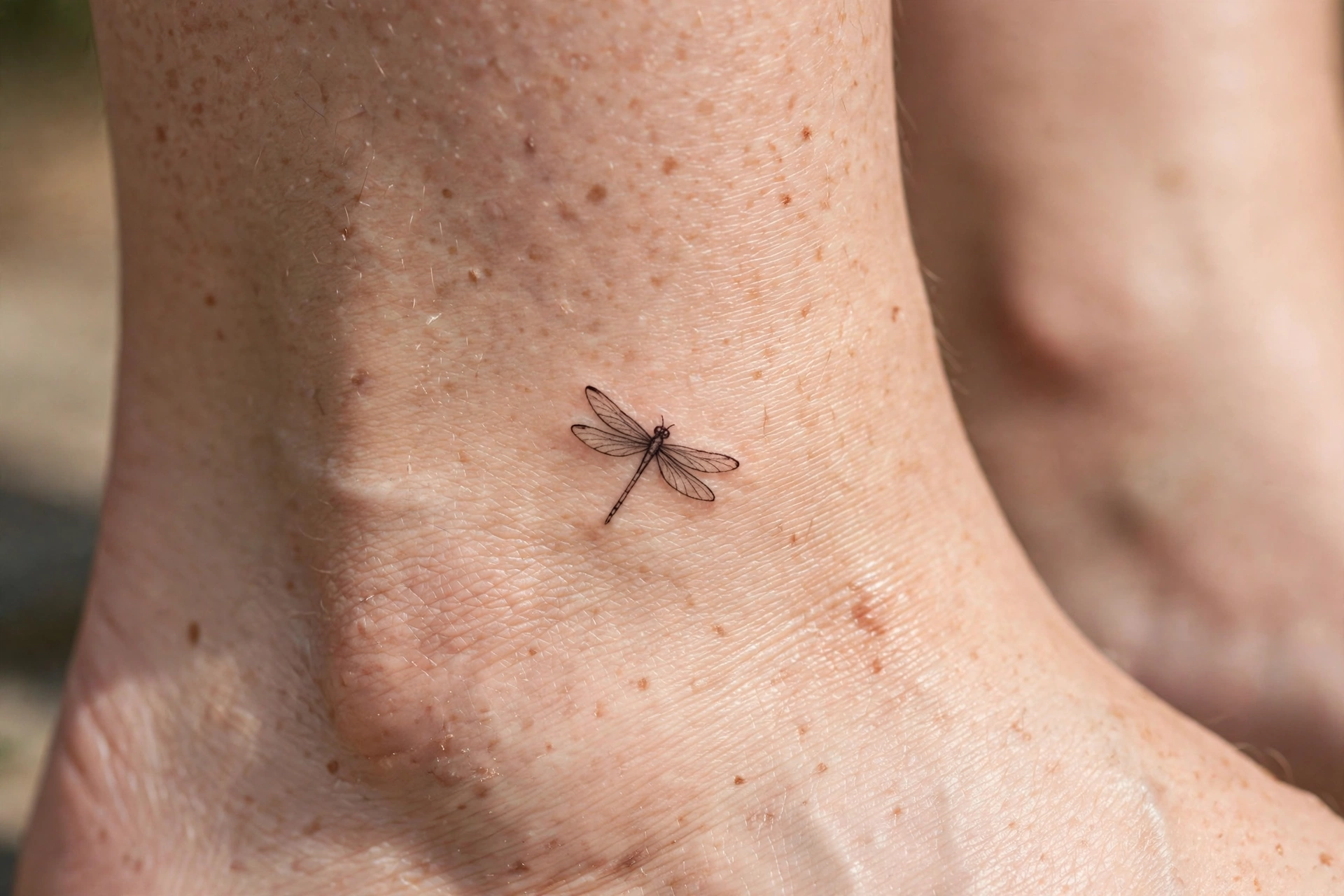
A small dragonfly is the quietest version of this design: a tiny insect, often no bigger than a coin, drawn in fine black ink with just enough detail to read as a dragonfly. It carries the same meaning as a large one — change, lightness, freedom — but it says it softly. It is also one of the easiest dragonfly tattoos to place, since it fits almost anywhere.
This is a good choice if you want a tattoo that is mostly for you rather than for showing off. The ankle, the back of the neck, or behind the ear all work well, and a small dragonfly in any of those spots is easy to cover when you need to. It also leaves room to add to the piece later — a second tiny dragonfly, a small flower, or a short line of text — without the original design feeling crowded.
Placement: The ankle or behind the ear, where a tiny dragonfly sits naturally. Keep the wings simple at this size — too much vein detail on a very small design will blur as the ink settles.
A dragonfly tattoo works because the meaning is already built into the insect — a creature that changes completely, then flies light and free. Pick the style that matches how bold you want to be: minimalist, geometric, or small for something clean and quiet; a realistic dragonfly or a black-and-grey one for something detailed and timeless; watercolour or flowers when you want the design to feel softer and more colourful. Whichever you choose, keep the design sized to the spot, and take your time choosing an artist whose past work matches the style you want. A dragonfly that fits its space will look good for years, while one squeezed into too small a patch loses the wing detail that makes it worth having.