
An urgent care kit is a stocked set of medical supplies for injuries and symptoms that are more serious than a scraped knee but don’t need an ER — sprains, burns, allergic reactions, fevers, and cuts that need real wound care, not just a bandage. It sits between a basic first-aid box and an actual clinic visit, and it’s one of the simplest home safety upgrades a household can make.
Urgent Care Kit vs First Aid Kit
People use these terms interchangeably, but they’re not the same thing. A first aid kit handles cuts and scrapes. An urgent care kit handles a wider range of situations, including ones involving medication.
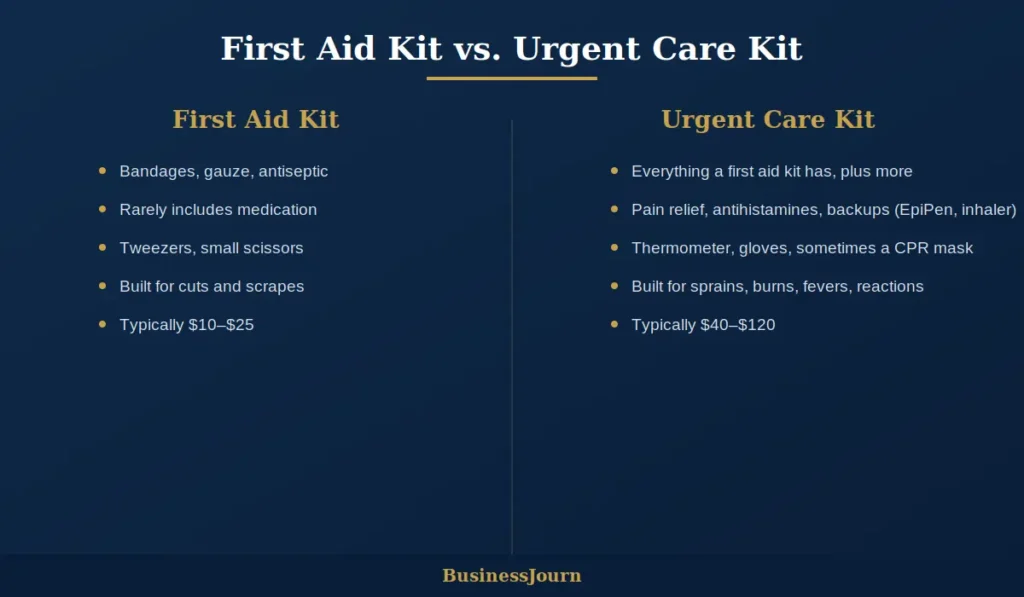
| Feature | Basic First Aid Kit | Urgent Care Kit |
|---|---|---|
| Wound care | Bandages, gauze, antiseptic | Same, plus burn gel and larger dressings |
| Medications | Rarely included | Pain relief, antihistamines, sometimes prescription backups (EpiPen, inhaler) |
| Chronic condition supplies | Not included | Glucose tablets, blood pressure cuff, backup inhaler |
| Tools | Tweezers, small scissors | Same, plus thermometer, gloves, sometimes a CPR mask |
| Typical use case | Minor cuts, blisters | Allergic reactions, fevers, sprains, minor burns |
| Typical cost | $10–$25 | $40–$120 depending on contents |
If you only ever deal with the occasional paper cut, a first aid kit covers you. If your household includes kids, an allergy, or a chronic condition, you need the wider urgent care version.
Is an Urgent Care Kit Worth It? Cost vs Value Breakdown
Yes, for most households — and here’s the actual math instead of a vague “better safe than sorry.”
Average Cost of a Pre-Made Kit vs. Building Your Own
| Option | Approximate Cost | Completeness | Customization | Convenience |
|---|---|---|---|---|
| Budget DIY | $25–$45 | Covers basics only | High | Low — you’re sourcing everything |
| Mid-range DIY | $50–$90 | Covers most scenarios | High | Medium |
| Premium DIY | $100–$150+ | Comprehensive, including chronic-condition backups | Highest | Medium |
| Pre-made commercial kit | $30–$70 | Usually basics-only unless labeled “family” or “premium” | Low — fixed contents | Highest |
A pre-made kit saves you time. A DIY kit saves you money and gets you exactly what your household actually needs, because you’re not paying for ten extra items you’ll never use.
Pros of buying pre-made:
- No research or shopping list needed
- Ready in one purchase
- Usually organized in a labeled case already
Cons of buying pre-made:
- Often missing items specific to your family (allergy meds, pediatric doses, chronic condition supplies)
- Contents skew toward cheap fillers to hit a price point
- You’ll likely still need to add 5–10 items yourself anyway
Pros of building your own:
- Every item is something you’ll actually use
- Easier to track expiration dates because you know exactly what’s in it
- Scales to your household size and needs
Cons of building your own:
- Takes an hour or two to research and shop
- Easy to forget a category (tools, or family-specific meds) if you’re not working from a list
Cost of a Kit vs Cost of an Urgent Care Visit
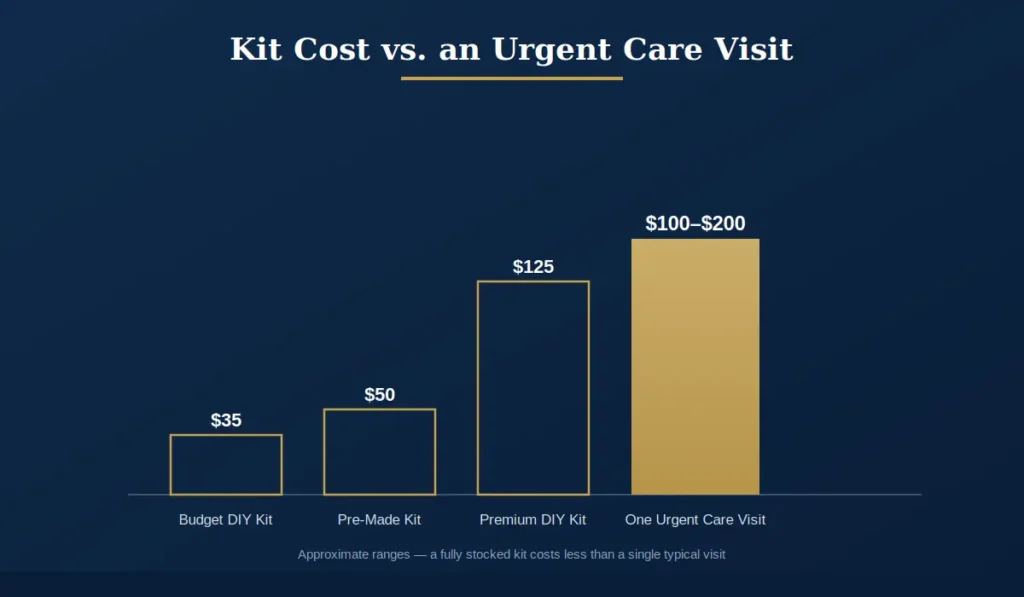
This is the comparison that actually answers “is it worth it.” A single urgent care visit without insurance typically runs somewhere between $100 and $200 for a straightforward visit, and more if any tests or treatment are involved. A well-stocked household kit costs less than that one visit, and it handles the exact category of minor issues — small burns, mild allergic reactions, sprains, fevers — that would otherwise send you to a clinic paying that fee each time.
The kit doesn’t replace urgent care for anything serious. It replaces the visits you didn’t actually need to make.
Think of a typical year in a household with young kids: a scraped-up fall off a bike, a bee sting that puffs up an arm, a fever that spikes on a Saturday night. Treated at home with a stocked kit, that’s a tube of antiseptic, some antihistamine, and a thermometer reading. Treated as three separate urgent care visits, that’s several hundred dollars before anything more serious even happens. The kit pays for itself the first time it’s actually used for something real.
When Buying Pre-Made Makes More Sense Than DIY
Use this quick check before you decide:
Buy pre-made if:
- You need something today and don’t have time to shop around
- Your household is healthy with no chronic conditions or specific allergy needs
- You just want a baseline kit for a car or travel bag
Build your own if:
- Anyone in your household has asthma, diabetes, or a severe allergy
- You have young children and need pediatric-specific items
- You want to control what’s actually in it and avoid filler items
- You’re setting up more than one kit (home, car, travel) and want consistency across them
What Should Be in an Urgent Care Kit?
Wound Care Essentials
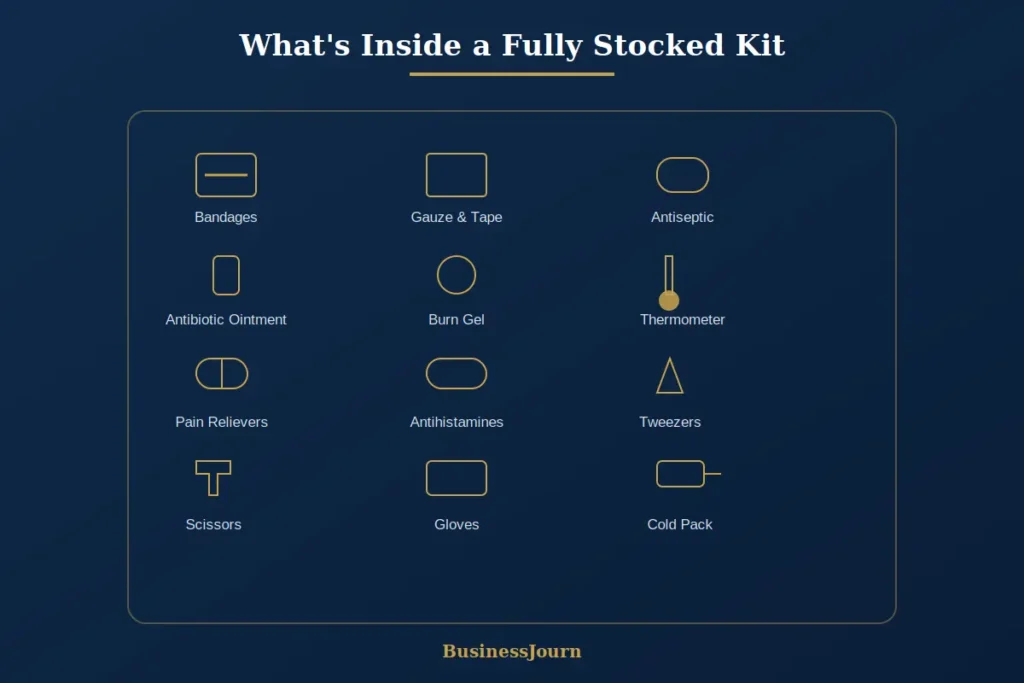
- Adhesive bandages in a few sizes
- Sterile gauze pads and medical tape
- Antiseptic wipes or solution
- Antibiotic ointment
- Burn gel or cream
These handle the bulk of what actually happens at home: cuts, scrapes, small burns from cooking, blisters.
Pain, Fever, and Allergy Relief
- Acetaminophen and ibuprofen (having both matters — some people can’t take one or the other, and kids’ dosing differs)
- A digital thermometer
- Antihistamine tablets
- Hydrocortisone cream for rashes or bites
Tools and Accessories
- Tweezers (for splinters and ticks)
- Small scissors
- Disposable gloves
- A small flashlight with fresh batteries
- Instant cold pack
Medications Worth Including (and Which Need a Prescription)
Over-the-counter pain relievers, antihistamines, and antacids need no prescription and belong in every kit. Prescription items are different, and this is where people get confused.
If someone in your household has a prescribed epinephrine auto-injector, inhaler, or insulin, keeping a backup in the kit is genuinely useful — but it has to be one that’s actually prescribed to that person, properly labeled, and tracked for its own expiration date. You can’t stock a kit with someone else’s prescription or one bought without a script; that’s both a legal issue and a safety one, since dosing is personalized. Talk to the prescribing doctor about keeping a backup unit specifically for the kit if this applies to your family.
The FDA has also noted that some epinephrine auto-injectors retain partial potency for a period after their printed expiration date, but that’s not a reason to skip replacing one on schedule — it’s a reason to never let one lapse to begin with. Treat the printed date as the real deadline.
What NOT to Include
- Expired medications “just in case” — they lose potency and some degrade into something you don’t want to take
- Prescription medications that aren’t labeled or aren’t for someone in your household
- Loose pills without their original packaging (you lose the dosing information and expiration date)
- Anything requiring refrigeration unless your kit has a way to keep it cold
- Duplicate tools you already have easy access to elsewhere in the house (no need for three pairs of scissors)
Building Kits for Different Scenarios
A single “one size fits all” kit is how you end up with a first aid box in your closet and nothing in your car. Build by scenario instead.
Home Kit
This is your most complete kit, and the one everything else gets scaled down from. Stock full sizes rather than travel quantities:
- Every item from the wound care, pain relief, and tools lists above, in full-size packaging
- A written list of each household member’s current medications and dosages
- Any prescribed backups (EpiPen, inhaler) specific to your family
- A first aid manual or printed instructions for anyone who might need to act without you there
Keep it somewhere accessible but out of reach of young kids — storage specifics are covered later in this guide.
Car Kit
Heat and cold extremes matter here — skip anything that degrades in a hot trunk. Focus on:
- Bandages, gauze, antiseptic wipes
- Pain relievers in a sealed container
- A cold pack (the instant chemical kind, not gel)
- A seatbelt cutter and small flashlight
Travel Kit
Compact and TSA-compliant if flying. Prioritize:
- Bandages, antiseptic wipes, pain relievers
- Antihistamines and motion sickness tablets
- Any personal prescriptions, in original labeled packaging
- A waterproof pouch to keep it all in one place
Office/Workplace Kit
If you’re stocking this for a small business rather than personal use, check your local occupational safety requirements — in the US, OSHA doesn’t mandate specific contents but does require a kit “adequate for the hazards” of the workplace, and ANSI Z308.1 is the standard most compliant kits are built to. For a personal desk kit, the basics (bandages, pain relievers, antiseptic) cover most office incidents.
Outdoor/Hiking Kit
Add to the base kit:
- Moleskin for blisters
- An elastic bandage for sprains
- Tick-removal tweezers
- Insect repellent and sunscreen
- A whistle and emergency blanket for longer trips
| Kit Type | Must-Have Extras | Storage Location | Check Frequency |
|---|---|---|---|
| Home | Full medication set, thermometer | Hall closet or kitchen cabinet | Every 6 months |
| Car | Heat-stable items, seatbelt cutter | Glovebox or trunk organizer | Every 6 months (heat degrades items faster) |
| Travel | TSA-compliant sizes, personal prescriptions | Carry-on | Before each trip |
| Office | ANSI-standard basics | Break room or supply closet | Every 6 months, per workplace policy |
| Outdoor | Blister/sprain care, insect protection | Backpack, easily reachable pocket | Before each trip |
Tailoring Your Kit to Your Household
Kits for Families With Young Children
Add pediatric-dosed pain relievers, saline drops for stuffy noses, gentle-adhesive bandages that don’t hurt on removal, and a rectal or ear thermometer if that’s what you use for infants.
Kits for Elderly Family Members or Chronic Conditions
Add a blood pressure cuff, glucose testing supplies for diabetes, backup inhalers for asthma or COPD, and a written list of current medications and dosages — useful for the person themselves and for anyone else who might need to help them in an emergency. The CDC’s chronic disease guidance consistently points to this kind of written medication record as one of the simplest things a household can do to prevent a manageable flare-up from turning into an ER visit.
Kits for Pet Owners
Add pet-safe antiseptic (many human antiseptics aren’t safe for animals), a muzzle or soft wrap for an injured pet who might bite out of pain, and your vet’s after-hours contact number written down, not just saved in a phone that might be dead when you need it.
When to Use Your Kit vs When to Seek Urgent Care
This section is for general guidance only and isn’t a substitute for professional medical advice. If you’re ever unsure about the severity of an injury or symptom, err toward calling a doctor or going in.
Signs You Should Treat at Home
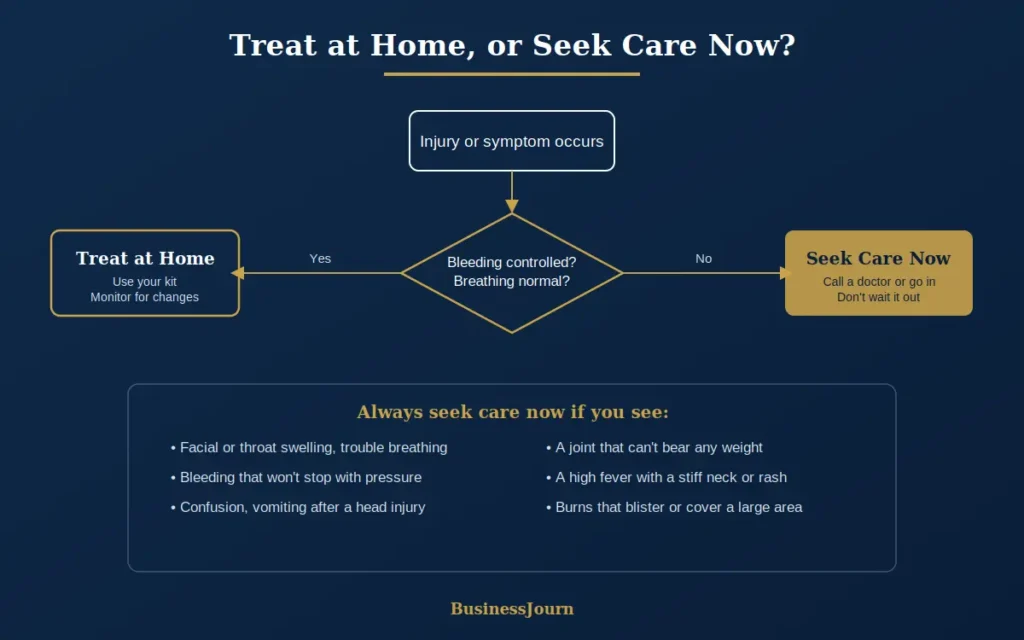
The general rule: if bleeding is controlled, breathing is normal, and the person can still function close to normal, your kit is the right tool. That covers most of what actually happens on an ordinary week — a cut that stops with pressure, a burn that reddens but doesn’t blister, hives from a known trigger with no facial swelling, a low fever in someone otherwise acting fine, or a sprain that still bears weight.
Signs You Need Professional Care Immediately
These are the red flags your kit isn’t built to handle. The American Red Cross and most emergency medicine guidance treat these as go-now signs, not wait-and-see ones:
- Bleeding that doesn’t stop after several minutes of direct pressure
- Burns that blister, cover a large area, or involve the face or hands
- Any swelling of the face, lips, or throat, or difficulty breathing
- A high fever, especially in an infant, or a fever paired with a stiff neck or rash
- A suspected broken bone, or a joint that can’t bear any weight at all
- A head injury with confusion, vomiting, or any loss of consciousness
The table below is the fast-reference version for the specific situations your kit is most likely to face.
| Symptom | Treat at Home | Seek Care Now |
|---|---|---|
| Cut | Bleeding stops with pressure | Won’t stop bleeding, or is deep |
| Burn | Redness only | Blistering, large area, or on face/hands |
| Allergic reaction | Mild hives or itching | Facial swelling or breathing trouble |
| Fever | Low-grade, otherwise fine | High fever, stiff neck, infant under 3 months |
| Joint injury | Swelling, still bears weight | Can’t bear weight, visible deformity |
Maintaining Your Kit: What Actually Expires and When
Items With Expiration Dates to Track
Medications, ointments, and anything with an adhesive (bandages included, eventually) all have real expiration dates. Past that date, medications can lose potency, and adhesives can dry out and stop sticking when you actually need them to.
Items That Last Indefinitely (But Still Need Checking)
Scissors, tweezers, and a thermometer don’t expire, but batteries do, and thermometers drift out of calibration over time. Check that tools still work, not just that they’re present.
A Maintenance Schedule You’ll Actually Follow
- Every 6 months: Go through the whole kit. Toss and replace anything expired. Check thermometer batteries.
- Before any trip: Quick check of the travel kit specifically — personal prescriptions especially.
- After any use: Replace whatever you used immediately, not “next time you think of it.”
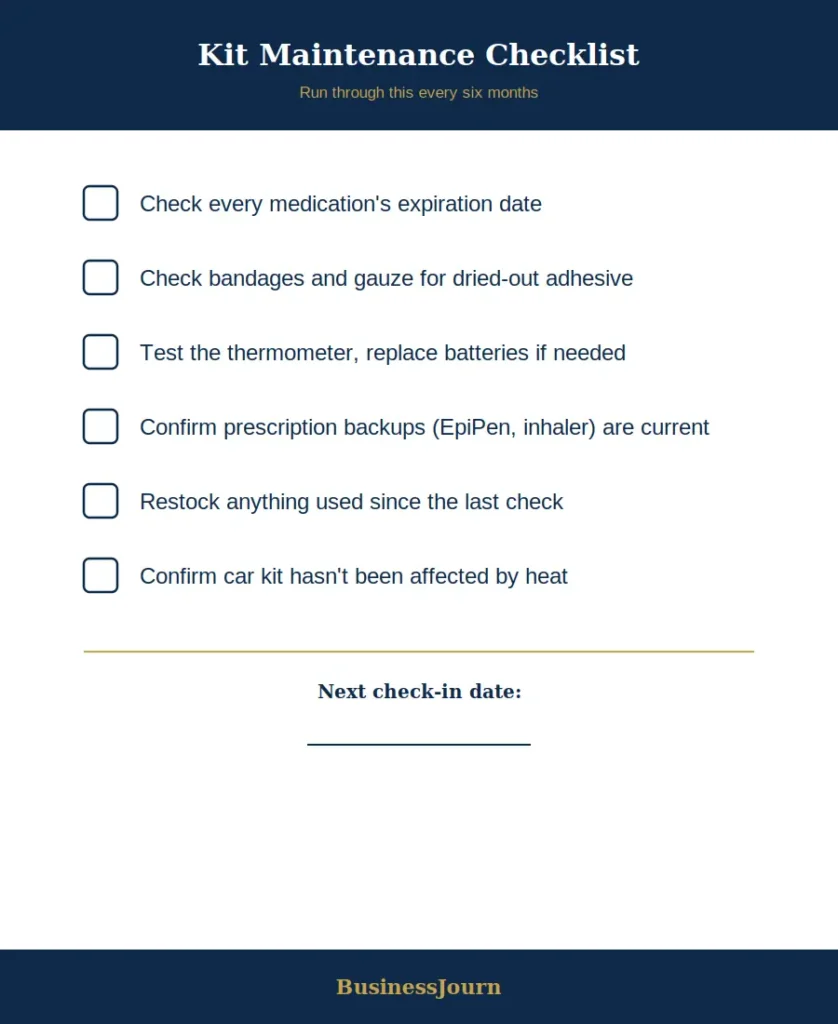
Biannual audit checklist:
- Check every medication’s expiration date
- Check bandage/gauze packaging for damage or dried-out adhesive
- Test thermometer and replace batteries if needed
- Confirm any prescription backups (EpiPen, inhaler) are current
- Restock anything used since the last check
- Confirm car kit hasn’t been affected by heat exposure
Where to Store Your Kit
Keep it somewhere cool, dry, and easy to reach in an actual emergency — a hall closet, a kitchen cabinet, or a labeled shelf works. Avoid bathrooms if you can; humidity from showers degrades adhesives and some medications faster than normal storage would. For a car kit, keep it out of direct sun exposure, since a hot trunk speeds up expiration on almost everything inside.
FAQs
What’s the difference between a first aid kit and an urgent care kit?
A first aid kit covers minor cuts and scrapes. An urgent care kit is broader, adding medications, allergy relief, and tools for handling sprains, burns, and reactions that go beyond basic wound care.
Is it cheaper to buy a pre-made kit or build your own?
Pre-made kits often cost less upfront, but they’re usually missing items specific to your household, so you end up buying extras anyway. Building your own typically costs more time but less money once you factor in what you’d add to a pre-made kit regardless.
How much does a basic first aid kit cost?
A basic kit runs about $10 to $25 for the essentials. A fuller urgent care kit with medications and tools typically runs $40 to $120 depending on what you include.
What should be in a car emergency kit?
Bandages, antiseptic wipes, pain relievers in sealed packaging, an instant cold pack, a seatbelt cutter, and a small flashlight — prioritize items that hold up in heat since a car interior gets hot.
How often should I check and update my kit?
Every six months for a full audit, plus a quick check before any trip and immediate restocking any time you use something from it.
Do I need a prescription to include an EpiPen in my kit?
Yes. An epinephrine auto-injector has to be prescribed to a specific person in your household, properly labeled, and tracked for its own expiration — it isn’t something you can add without a prescription.