
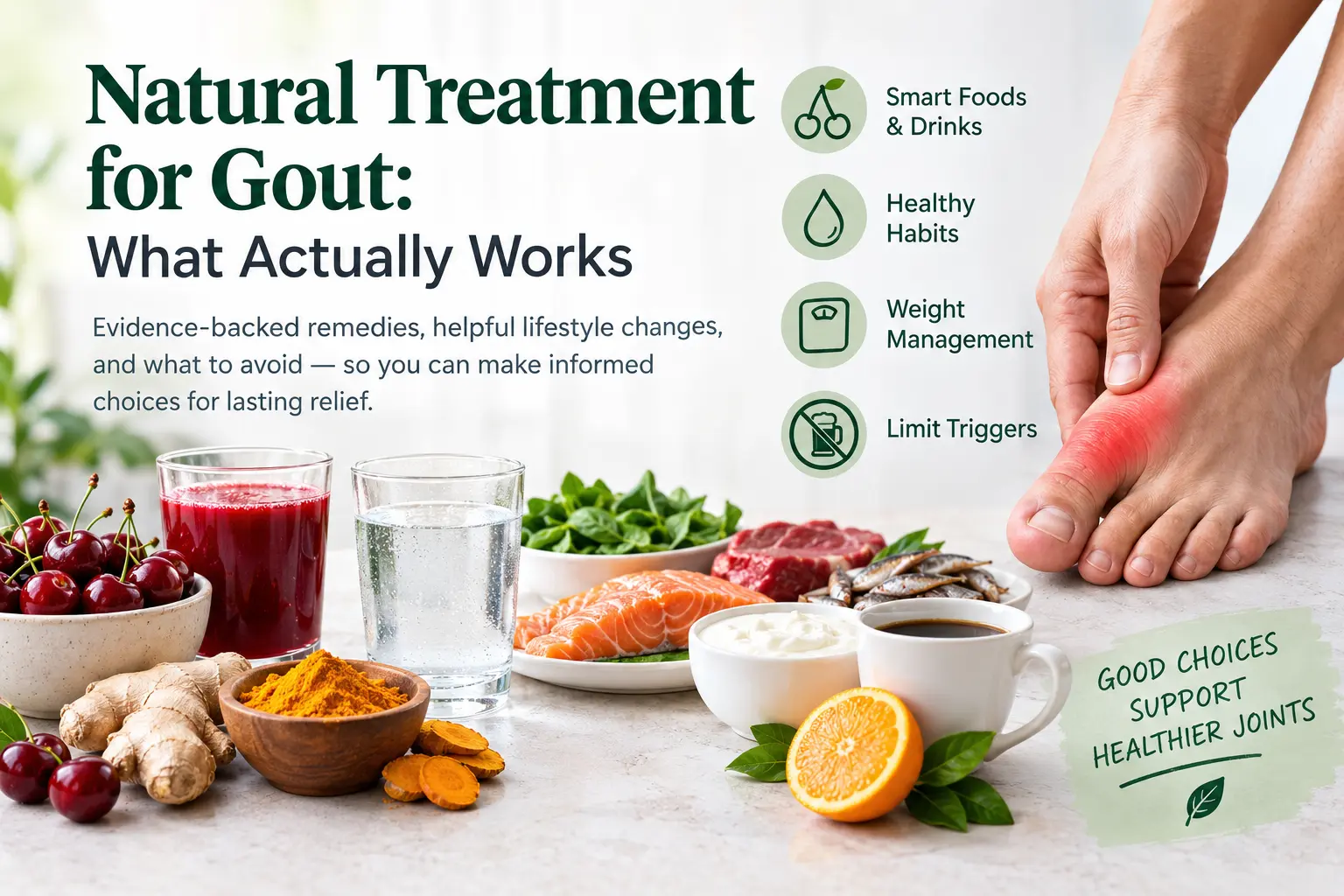
Gout is caused by a buildup of uric acid that forms sharp crystals in a joint — most often the big toe — triggering sudden, intense pain, swelling, and redness. Some natural approaches genuinely help, especially around diet and lifestyle, but a lot of what circulates online blends solid science with folk remedies that have never been tested. This breaks down which is which, so you’re not guessing.
This isn’t a substitute for medical care. Gout that’s frequent, severe, or left untreated can damage joints and contribute to kidney stones, so natural approaches work best alongside a doctor’s guidance, not instead of it.
What Natural Treatment Can (and Can’t) Do for Gout
Natural remedies are most useful for two things: lowering your baseline uric acid over time through diet and weight management, and taking the edge off symptoms during a mild flare. They’re not a reliable way to treat a severe attack on their own, and they don’t replace uric acid-lowering medications like allopurinol for people who need them long-term. Think of natural treatment as the maintenance layer underneath whatever medical care you’re already getting, not a replacement for it.
Remedies With Real Research Support
Tart Cherries and Cherry Juice
This is the natural remedy with the strongest evidence behind it. Multiple studies have linked cherry consumption — fresh, frozen, or as juice — to lower uric acid levels and fewer gout flares, likely due to anthocyanins, the compounds that give cherries their deep red color and appear to reduce inflammation. A glass of tart cherry juice daily is the most common way people incorporate this.
Weight Management
Carrying excess weight increases uric acid production and makes it harder for the kidneys to clear it efficiently. Gradual, sustained weight loss — not crash dieting, which can actually trigger flares by rapidly releasing uric acid — is one of the most evidence-backed long-term strategies for reducing gout frequency.
Hydration
Drinking enough water helps the kidneys flush uric acid out of the body more effectively, reducing the chance it crystallizes in a joint. There’s no exotic trick here — plain water, consistently, throughout the day is what the evidence supports.
Cutting Back on Alcohol and Purine-Heavy Foods
Purines break down into uric acid, so foods high in them — organ meats, certain seafood (anchovies, sardines, mussels), and red meat — can trigger flares in people prone to gout. Beer is particularly linked to gout risk, partly from its purine content and partly from how alcohol affects uric acid clearance. Reducing both is one of the most well-supported dietary changes available.
Remedies With Weaker or Mixed Evidence
Turmeric and Ginger
Both contain compounds (curcumin in turmeric, gingerol in ginger) with anti-inflammatory properties in lab and animal studies. Human evidence specific to gout is limited but not absent, and both are generally safe as food ingredients or teas. Worth trying as a complement to the stronger measures above — not a primary strategy.
Coffee
Some observational studies associate regular coffee consumption with lower uric acid levels, but the research is mixed and hasn’t established coffee as a treatment. If you already drink coffee, this isn’t a reason to stop; if you don’t, it’s not strong enough evidence to start.
Vitamin C
A few studies suggest vitamin C may modestly lower uric acid levels, though results are inconsistent and effect sizes are small. Getting vitamin C through citrus fruits and vegetables is a reasonable, low-risk addition — high-dose supplementation hasn’t shown clearly superior results and isn’t necessary to get this potential benefit.
Popular Remedies With Little to No Scientific Backing
These show up constantly in gout home-remedy lists, but the evidence behind them is thin, anecdotal, or limited to animal studies:
- Apple cider vinegar — commonly recommended, but there’s no solid human research showing it lowers uric acid or reduces gout symptoms.
- Baking soda in water — sometimes suggested to “alkalize” the body; there’s no reliable evidence this affects uric acid levels, and regularly consuming baking soda can raise sodium intake significantly, which is a real concern for anyone with blood pressure or kidney issues.
- Activated charcoal — no meaningful evidence it affects uric acid; it’s also known to interfere with the absorption of medications if taken around the same time.
- Celery and celery seed — traditionally used and anecdotally popular, but rigorous research is scarce, and there’s no established effective amount.
- Hibiscus and dandelion tea — some animal studies hint at an effect on uric acid, but human evidence doesn’t exist yet.
None of these are necessarily dangerous in normal food amounts, but they shouldn’t be relied on as your gout strategy, and a few (baking soda, activated charcoal) carry their own caveats worth knowing about.
A Gout-Friendly Diet Checklist
- Drink water consistently through the day
- Limit red meat, organ meats, and high-purine seafood
- Cut back on beer and alcohol generally
- Add tart cherries or cherry juice regularly
- Favor low-fat dairy, which some research links to lower gout risk
- Manage weight gradually, not through crash diets
- Limit sugary drinks and foods high in fructose, which can raise uric acid
During an Active Flare: What Helps Right Now
- Rest the affected joint and keep weight off it
- Apply a cold pack (not direct ice) to reduce swelling and pain
- Elevate the joint above heart level when possible
- Stay hydrated
- Avoid alcohol and high-purine foods until the flare resolves
- Contact your doctor if pain is severe or this is a new or first-time attack, since prescription anti-inflammatories often work faster than natural options during an acute flare
Safety Notes and Drug Interactions to Know About
Natural doesn’t automatically mean risk-free, especially if you’re already on medication:
- High vitamin C doses can interact with some medications and, in rare cases, contribute to kidney stones in people already prone to them.
- Activated charcoal can reduce the absorption of oral medications, including gout drugs, if taken too close together.
- Baking soda adds meaningful sodium to your diet, a concern for anyone managing blood pressure.
- Herbal supplements aren’t regulated the same way medications are, so potency and purity can vary between brands.
If you’re on allopurinol, febuxostat, or another uric acid-lowering medication, mention any natural remedies you’re trying to your doctor or pharmacist so they can flag actual interaction risks specific to your situation.
When to See a Doctor
Natural approaches work best for prevention and mild symptom relief. See a doctor if:
- This is your first suspected gout attack, so it can be properly diagnosed
- Pain is severe or the joint is very swollen, red, or hot
- You have a fever alongside joint pain, which can signal a joint infection rather than gout
- Attacks are becoming more frequent despite diet and lifestyle changes
- You have kidney disease, since it changes what’s safe to take and how uric acid is managed
FAQs
Can gout be cured naturally without medication?
For some people with mild, infrequent gout, diet and lifestyle changes can meaningfully reduce flares. For others — especially with high uric acid levels or frequent attacks — medication is genuinely necessary to prevent joint damage, and natural approaches work best alongside it rather than as a replacement.
How much cherry juice should I drink for gout?
Most studies showing benefit used roughly one to two cups of tart cherry juice or a similar serving of whole cherries daily, though there’s no single medically established dose. Talk to your doctor if you’re combining it with medication changes.
Does apple cider vinegar really lower uric acid?
There’s no solid human research confirming this. It’s low-risk in small food amounts, but it shouldn’t be relied on as an actual treatment.
What foods should I avoid completely with gout?
No food needs to be avoided completely for everyone, but organ meats, certain high-purine seafood, and beer are the items most consistently linked to flares, so scaling them back matters more than eliminating any single food entirely.
Is it safe to combine natural remedies with gout medication?
Most food-based remedies (cherries, hydration, dietary changes) are safe alongside medication. Supplements and less common remedies (activated charcoal, high-dose vitamin C) are where interactions are more likely, so it’s worth checking with a doctor or pharmacist first.