
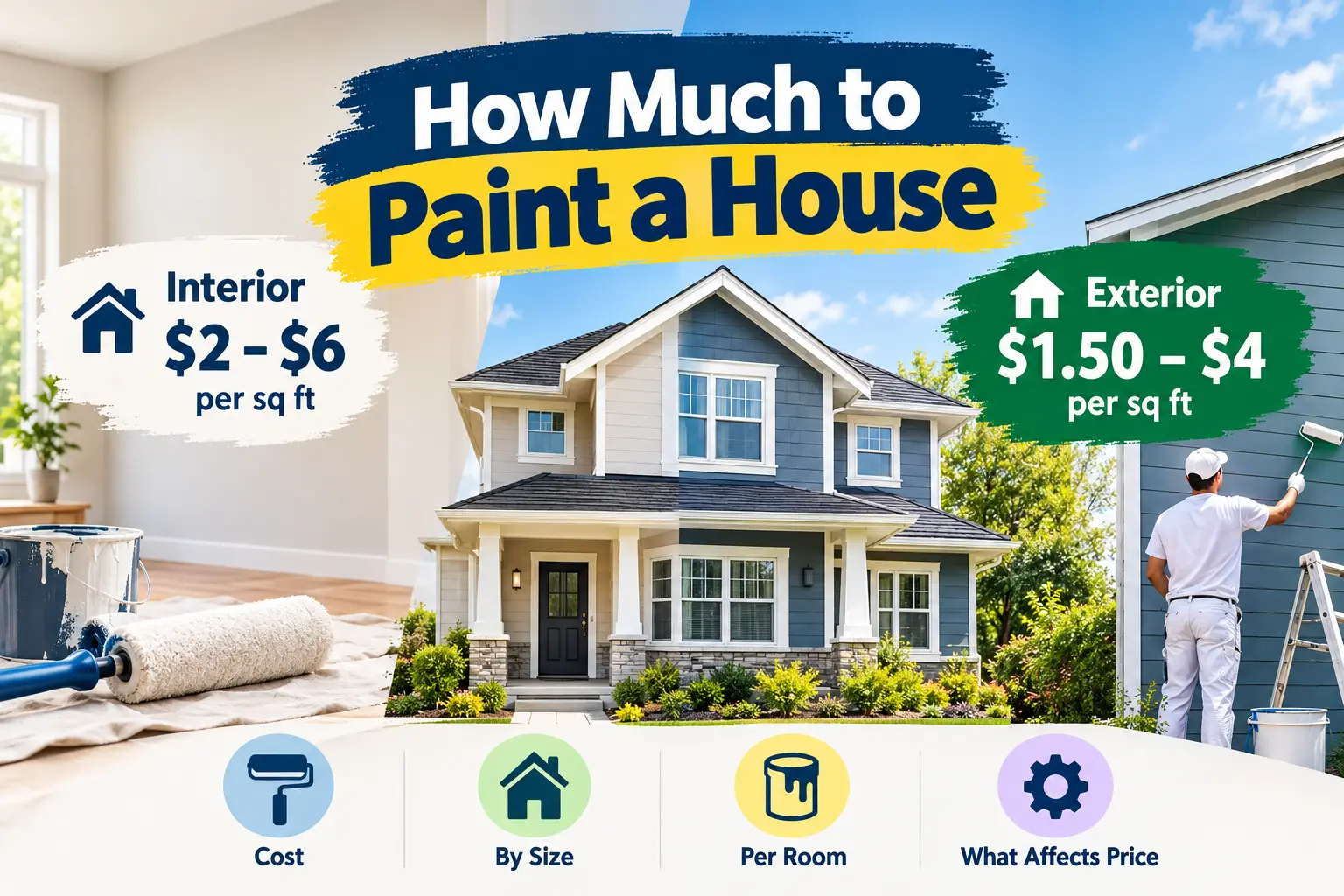
Interior painting typically costs $2 to $6 per square foot, and exterior painting runs about $1.50 to $4 per square foot, with a national average exterior job landing around $3,177 according to NerdWallet’s cost breakdown. For a full interior repaint of an average home, that usually means somewhere between $2,000 and $12,000 depending on size and scope. Here’s how those numbers break down by house size, project type, and what’s actually driving the price up or down.
Interior Painting Costs
Cost by House Size
| Home Size | Interior Painting Cost |
|---|---|
| 1,000 sq ft | $2,000 – $6,000 |
| 1,500 sq ft | $3,000 – $9,000 |
| 2,000 sq ft | $4,000 – $12,000 |
| 2,500 sq ft | $5,000 – $15,000 |
| 3,000 sq ft | $6,000 – $18,000 |
The wide range at every size comes down to scope: a quote covering walls only sits at the low end, while one that adds trim, doors, ceilings, and accent walls climbs toward the high end.
Cost by Room (If You’re Not Doing the Whole House)
Not every project is a full repaint. If you’re budgeting for one or two rooms:
- Small room (bedroom, bathroom): roughly $200-$500
- Medium room (living room, kitchen): roughly $400-$900
- Large or open-concept space: $800-$1,800+
These per-room numbers assume walls only, in reasonably good condition. Add roughly 20-30% if you’re also painting trim, doors, and ceilings in the same room.
Exterior Painting Costs
Cost by House Size
| Home Size | Exterior Painting Cost |
|---|---|
| 1,000 sq ft | $1,500 – $4,000 |
| 1,500 sq ft | $2,250 – $6,000 |
| 2,000 sq ft | $3,000 – $8,000 |
| 2,500 sq ft | $3,750 – $10,000 |
| 3,000 sq ft | $4,500 – $12,000 |
Why Exterior Costs More Than Interior
At a glance, exterior per-square-foot pricing looks similar to or even lower than interior — but total exterior jobs often end up costing more because exterior surfaces are simply larger (siding, trim, soffits, and multiple stories add up fast) and because prep work is heavier. Power washing, scraping old paint, caulking gaps, and priming bare wood all take real time, and a second story usually means scaffolding or lift rental, which adds labor cost that an interior job never has.
What Actually Drives the Price
A handful of factors explain most of the difference between a $2,000 quote and a $10,000 one:
- Labor is typically the largest single cost. Prep work — patching, sanding, caulking, masking — often takes longer than the actual painting.
- Surface condition. Peeling paint, water damage, or drywall repairs add hours before a brush ever touches the wall.
- Paint quality. Premium paint costs more per gallon but often needs fewer coats and lasts longer, which can make it cheaper over time even though the upfront number is higher.
- House height and access. A single-story ranch is far faster and safer to paint than a three-story Victorian with steep gables.
- Number of colors and coats. Multiple accent colors, dark-to-light color changes, and extra coats all add labor time.
- Trim, doors, and ceilings. These are frequently quoted separately from wall square footage and can meaningfully change the total.
DIY vs Hiring a Professional
Doing it yourself mainly saves on labor, which is usually the biggest line item — but it comes with real tradeoffs.
DIY costs typically cover just paint, primer, brushes, rollers, tape, and drop cloths — often $300-$800 for an average room-by-room interior project, or $1,000-$2,500 in materials for a full exterior job (before factoring in equipment rental like ladders or sprayers).
What DIY doesn’t include: your own time (a full exterior repaint can take a weekend crew of pros days, and a solo DIYer weeks), the learning curve on cutting clean lines and avoiding drips, and the risk of redoing sections that don’t hold up — a poorly prepped exterior paint job can start peeling within a couple of years instead of lasting the 7-10 years a well-prepped professional job typically does.
Where hiring a pro tends to pay off: exteriors (especially multi-story), any surface with existing damage or lead paint concerns in older homes, and any job where a clean, even finish matters more than saving money upfront. If your home was built before 1978, the EPA’s Lead Renovation, Repair and Painting Program is worth a look before disturbing old paint — it lays out lead-safe practices and when a certified contractor is required.
How to Read a Painting Quote (and Spot a Lowball Bid)
A good quote should specify:
- Exact square footage or rooms covered, and whether trim/ceilings/doors are included
- Number of coats
- Paint brand and product line (not just “quality paint”)
- Prep work included — patching, sanding, caulking, priming
- Timeline and number of workers
- Whether cleanup and minor furniture moving are included
Warning sign: a quote significantly below others for the same scope is often cutting corners on prep work or using a single coat where two are standard — both of which show up later as an uneven finish or paint that fails early. Ask directly what’s included before assuming a lower number is simply a better deal.
Ways to Reduce Cost Without Cutting Corners
- Do your own furniture moving and wall prep (patching small holes, light sanding) before the crew arrives
- Get three quotes to see the real range for your specific project, not just a national average
- Paint during a contractor’s slower season (often late fall/winter in most regions) for better pricing
- Choose one main color with a single accent rather than multiple colors per room
- Skip ceiling or trim painting in this round if the budget is tight, and do it in a future pass
FAQs
How much does it cost to paint a 2,000 sq ft house?
Interior painting for a 2,000 sq ft home typically runs $4,000 to $12,000, and exterior painting runs about $3,000 to $8,000, depending on scope and condition.
Is it cheaper to paint a house yourself?
Materials alone are cheaper — often a few hundred to a couple thousand dollars depending on project size — but DIY costs your own time and carries a higher risk of a finish that doesn’t hold up as long as professional prep and application.
How often should a house be repainted?
Interiors typically need repainting every 5-10 years depending on wear, while exteriors usually last 7-10 years with proper prep, though harsh climates or cheaper paint can shorten that.
Does painting a house increase its value?
A fresh, well-done paint job — especially exterior — is one of the more cost-effective improvements for curb appeal and can help a home sell faster, though the exact return varies by market and how outdated the previous paint job was.
What’s included in a typical painting quote besides paint and labor?
Most professional quotes bundle in prep work (patching, sanding, caulking), primer where needed, and cleanup, though it’s worth confirming this explicitly since scope varies between contractors.