 protects fiber optic networks, ensures laser safety, prevents damage, and meets IEC standards)
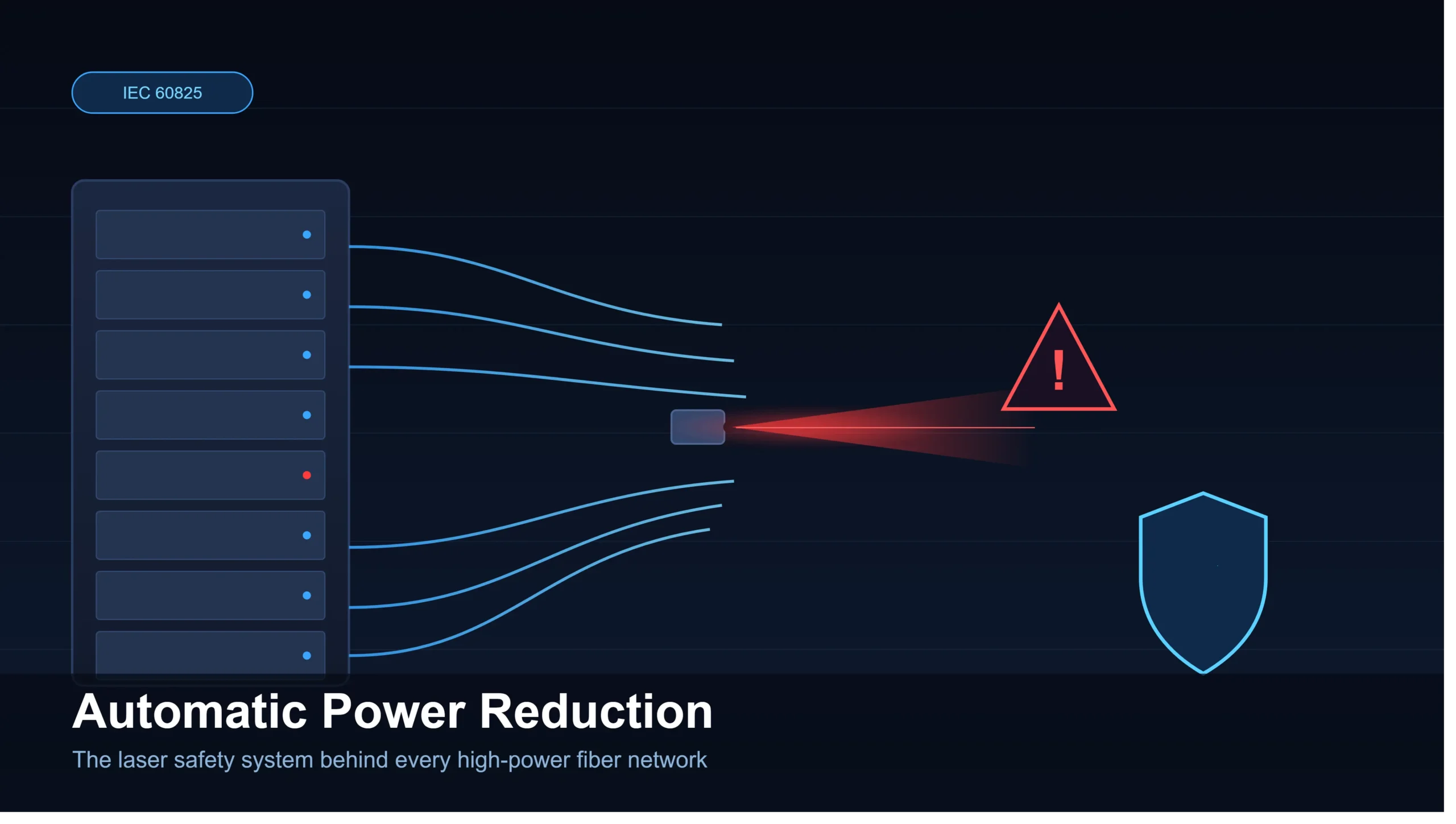
High-speed fiber optic networks rely on powerful laser signals to transmit data across long distances. In systems such as EDFA amplifiers, DWDM transport networks, CATV distribution systems, and long-haul optical links, these lasers can operate at power levels high enough to damage equipment and pose a serious eye-safety hazard if a fiber is disconnected.
This is where Automatic Power Reduction (APR) becomes essential.
APR is a built-in safety mechanism that automatically lowers or shuts down optical output power when a fiber break, open connector, or abnormal link condition is detected. It protects technicians, prevents connector damage, helps networks comply with international laser safety standards, and allows many systems to recover automatically once the fault is repaired.
In this guide, you’ll learn:
- What Automatic Power Reduction is
- Why it matters in optical networks
- How APR works step by step
- The difference between APR and APC
- Common trigger conditions
- Laser safety standards (IEC 60825)
- Real-world applications
- Troubleshooting and best practices
What Is Automatic Power Reduction (APR)?
Automatic Power Reduction (APR) is a laser safety feature used in fiber optic communication equipment. When the system detects that the optical path has been interrupted—such as a fiber cut, unplugged connector, severe attenuation, or loss of signal (LOS)—it rapidly reduces the transmitter output to a safe level or turns the laser off completely.
Simple definition
- Normal operation: Laser transmits at full power.
- Fault detected: Fiber is disconnected or signal is lost.
- APR activates: Output power drops to an eye-safe standby level.
- Link restored: The system safely returns to normal operation.
Think of APR as the emergency airbag of an optical network. It does nothing during normal operation, but reacts instantly when a dangerous condition occurs.
Why Is APR Important?
Modern optical amplifiers can output +20 dBm to +27 dBm or more of invisible infrared light (around 1550 nm). That is enough power to create serious hazards.
The hidden danger: invisible infrared light
Unlike visible lasers, 1550 nm light cannot be seen by the human eye. Because it is invisible:
- You may not realize a fiber is active.
- Your natural blink reflex will not protect you.
- Exposure can occur before you react.
What APR protects against
- Eye injury: Prevents exposure to hazardous laser power.
- Connector damage: Reduces overheating at contaminated fiber ends.
- Fiber fuse effect: Prevents destructive thermal damage inside the fiber.
- Regulatory violations: Helps equipment meet international laser safety standards.
- Network downtime: Many APR systems automatically recover after repair.
Optical Power Levels and Safety Risk
Understanding optical power helps explain why APR is necessary.
| Optical Power | Typical Risk Level |
|---|---|
| 0 dBm (1 mW) | Generally eye-safe in normal use |
| +10 dBm (10 mW) | Caution required |
| +17 dBm (50 mW) | Potentially hazardous |
| +20 dBm (100 mW) | Dangerous if exposed |
| +27 dBm (500 mW) | Severe laser hazard |
Many EDFA amplifiers operate in the hazardous range, which is why APR is standard in professional optical transport equipment.
How Automatic Power Reduction Works
APR is not just a simple on/off switch. It is a closed-loop safety system that continuously monitors the optical link.
Step 1: Continuous monitoring
The equipment measures:
- Receive optical power (Rx)
- Return loss
- Link supervision signals
- Amplifier operating conditions
Step 2: Fault detection
If the received signal suddenly disappears or drops below a threshold, the system assumes the fiber path may be open.
Common detection methods:
- Loss of Signal (LOS)
- Low receive power
- Abnormal return loss
- Remote fault indication
Step 3: Immediate power reduction
The transmitter output is reduced to:
- A very low standby level, or
- Completely off
This usually happens within milliseconds.
Step 4: Safe recovery
The system periodically sends low-power probe pulses to check whether the fiber has been reconnected.
Once a stable optical path is detected, the transmitter gradually returns to full power automatically.
APR Working Flow
Here is the complete sequence:
Normal link active
Fiber disconnected / damaged
Loss of signal detected
APR reduces laser power
Low-power probe pulses sent
Fiber repaired / reconnected
Normal power restored automatically
This automatic recovery is one of APR’s biggest advantages because it often avoids a manual site visit.
What Triggers APR?
APR activates only during abnormal conditions.
Most common triggers
- Fiber cut
- Patch cord unplugged
- Dirty connector causing severe reflection/loss
- Excessive bend loss
- Failure of the remote optical device
- Loss of supervision signal in transport equipment
Real-world example
A technician disconnects a patch cord from a high-power EDFA.
Without APR:
- The connector emits full laser power into open air.
With APR:
- The amplifier detects the open link.
- Output drops to a safe level within milliseconds.
- The technician can safely reconnect the fiber.
Why Infrared Lasers Are Dangerous
Most optical communication systems use wavelengths around 1310 nm or 1550 nm.
The human eye cannot see these wavelengths, but the retina can still absorb the energy.
Why this matters
- No visible warning.
- No blink reflex.
- Energy is focused by the eye’s lens onto the retina.
- Damage can be permanent.
This is why technicians are trained to never look into a fiber connector, even if it appears dark.
Laser Safety Classes Explained
International standards classify laser products by hazard level.
| Class | Description |
|---|---|
| Class 1 | Eye-safe during normal operation |
| Class 1M | Safe unless viewed with optics |
| Class 2 | Visible low-power lasers |
| Class 3R | Moderate hazard |
| Class 3B | Direct exposure hazardous |
| Class 4 | Severe eye and fire hazard |
High-power EDFAs are often internally Class 3B or Class 4, but APR helps ensure exposed connectors become effectively Class 1 during fault conditions.
APR vs APC: Don’t Confuse Them
These terms are frequently mixed up.
| Feature | APR | APC |
|---|---|---|
| Full name | Automatic Power Reduction | Automatic Power Control |
| Main goal | Safety | Signal stability |
| When active | During faults only | All the time |
| What it does | Reduces/shuts down laser power | Fine-tunes laser power |
| User impact | Protects people and hardware | Maintains consistent optical output |
Easy analogy
- APC = Cruise control (keeps speed constant).
- APR = Emergency brake/airbag (activates during danger).
Professional optical equipment usually includes both.
Benefits of Automatic Power Reduction
| Benefit | Why it matters |
|---|---|
| Eye safety | Prevents hazardous laser exposure |
| Connector protection | Avoids overheating and burning |
| Standards compliance | Required for many regulated markets |
| Automatic recovery | Reduces maintenance effort |
| Lower repair costs | Prevents fiber and ferrule damage |
| Improved reliability | Responds instantly to physical faults |
The Fiber Fuse Effect
One of the most expensive failures in optical systems is the fiber fuse effect.
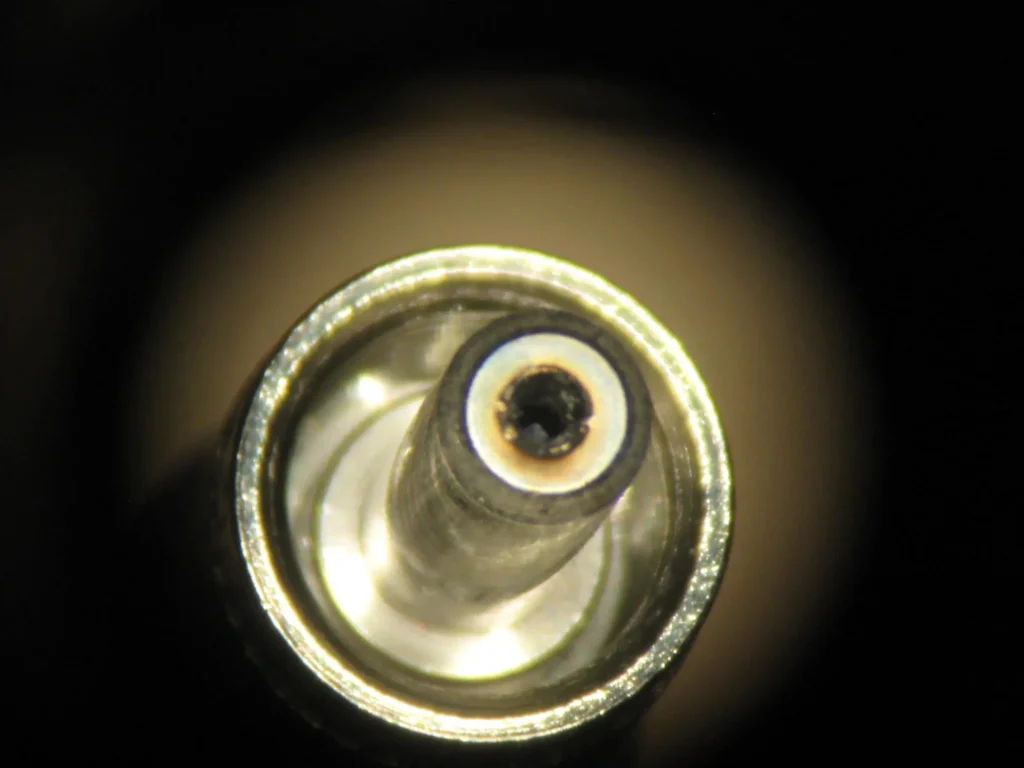
How it happens
- A connector becomes contaminated with dust or oil.
- High optical power is present.
- The contamination absorbs energy and heats up.
- The fiber core is damaged.
- The connector ferrule may melt or crack.
Repair often requires:
- Replacing connectors
- Cleaning fiber paths
- Re-terminating cables
- Testing the entire link
APR greatly reduces the chance of this occurring when a connector is accidentally opened.
Where Is APR Used?
APR is common in high-power optical systems.
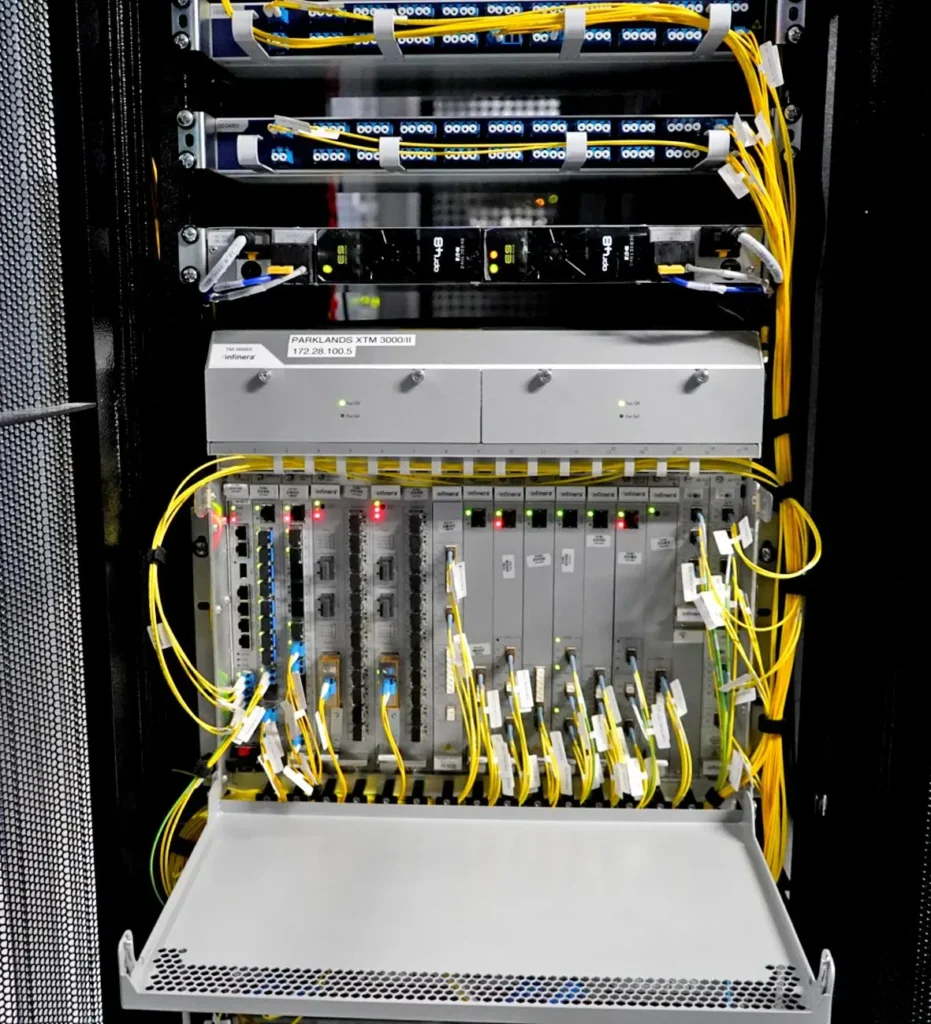
Typical applications
- DWDM transport networks
- Long-haul fiber links
- Metro optical networks
- CATV optical distribution
- FTTH headend equipment
- Optical amplifier shelves
- Research and laboratory fiber systems
- Military and industrial fiber networks
Standard short-range SFP modules usually operate at much lower power and may not require APR.
Standards and Compliance
APR is closely tied to laser safety regulations.
Key standards
- IEC 60825-1 – General laser product safety classification
- IEC 60825-2 – Safety requirements for optical communication systems
- FDA laser regulations (21 CFR 1040) – U.S. laser safety requirements
- CE marking – European compliance
- RoHS – Environmental compliance (often paired with CE products)
For equipment sold in Europe and many international markets, compliance with IEC 60825 is often mandatory.
Common APR Alarms
Network operators may see alarms such as:
| Alarm | Meaning |
|---|---|
| APR Active | Power has been reduced for safety |
| Loss of Signal (LOS) | Receive signal disappeared |
| Low Rx Power | Received optical power below threshold |
| Laser Shutdown | Transmitter disabled |
| APR Recovery | System attempting to restore service |
An APR Active alarm usually indicates a physical fiber problem, not a software bug.
Troubleshooting APR Problems
Symptom: APR keeps activating repeatedly
Check these in order:
- Clean all connectors with proper fiber cleaning tools.
- Inspect for broken or bent patch cords.
- Measure receive power with an optical power meter.
- Verify the remote device is transmitting.
- Check for excessive attenuation in the link.
- Inspect amplifier alarms and logs.
Quick diagnostic table
| Symptom | Likely Cause |
|---|---|
| APR after maintenance | Unseated connector |
| APR every few minutes | Intermittent fiber bend or dirty connector |
| No recovery after repair | Remote transmitter still offline |
| Low power alarm + APR | Excessive link loss |
| Multiple channels affected | Amplifier or line card fault |
Best Practices
For technicians
- Never look into a fiber connector.
- Use a fiber identifier or power meter.
- Wear laser safety glasses when required.
- Verify APR is enabled on high-power equipment.
For network operators
- Keep connectors clean.
- Monitor LOS and APR alarms.
- Test return loss during commissioning.
- Document optical power levels.
- Replace damaged patch cords immediately.
Common Myths About APR
Myth 1: APR reduces network speed
False. APR has zero effect during normal operation.
Myth 2: APR replaces laser safety procedures
False. Technicians must still follow standard laser safety practices.
Myth 3: APR is only for EDFAs
False. It is also used in many high-power transport modules and optical line systems.
Myth 4: APR causes latency
False. The monitoring circuit operates independently of the data path.
Frequently Asked Questions
What does APR stand for in fiber optics?
APR stands for Automatic Power Reduction.
What triggers APR?
Typically loss of signal (LOS), fiber disconnection, severe attenuation, or abnormal optical conditions.
How fast does APR react?
Most systems react within milliseconds.
Does APR turn the laser completely off?
Some systems shut down completely; others reduce power to a very low eye-safe level.
Will the network stay down after APR activates?
Usually not. Many systems automatically restore power once the fiber is repaired.
Is APR required by law?
For many high-power optical products sold in regulated markets, compliance with IEC 60825 safety requirements is mandatory.
What is the difference between APR and APC?
- APR = safety during faults
- APC = stable power during normal operation
Can APR be disabled?
Some equipment allows configuration changes, but disabling APR is generally not recommended and may violate safety requirements.
Do standard SFP modules have APR?
Most short-range SFPs do not need it because they operate at much lower power levels.
Does APR protect connectors?
Yes. By reducing power when a connector is opened, APR helps prevent overheating and fiber-fuse damage.
Conclusion
Automatic Power Reduction (APR) is one of the most important safety features in modern fiber optic networks. It continuously monitors the optical link and reacts within milliseconds when a fiber is disconnected or a hazardous condition occurs.