
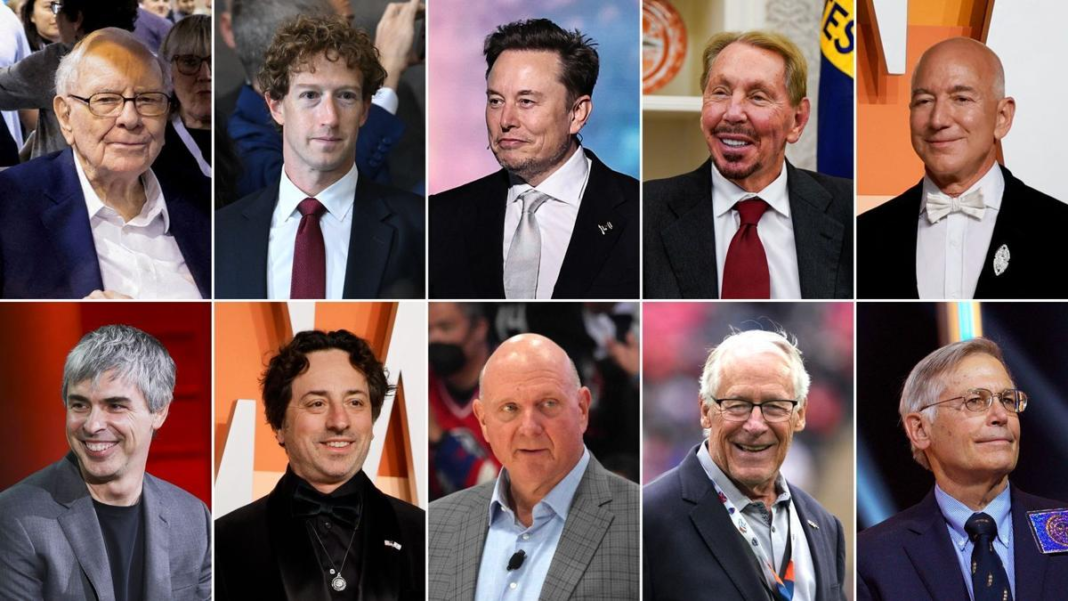
Ask ten people to name the richest person in American history, and you’ll probably get ten different answers. Some will say Elon Musk. Others will point to John D. Rockefeller, the oil baron whose fortune once swallowed nearly a tenth of the entire U.S. economy. Both answers are defensible, and that’s exactly what makes the topic of the richest Americans in history so fascinating.
Comparing wealth across a century and a half is trickier than it sounds. A dollar in 1900 doesn’t behave like a dollar today, so economists lean on tools like inflation adjustment and GDP-share calculations to put old fortunes on a level playing field with modern ones. Once you do that, the rankings start to look very different from a simple Forbes list. This guide walks through the industrialists, entrepreneurs, and athletes who have held the title, how their fortunes were built, and how they stack up once you crunch the numbers.
Who Are the Richest Americans in History?
When people talk about the richest Americans in history, they’re usually referring to a small group of individuals whose wealth, once adjusted for inflation or measured as a share of the national economy, dwarfs even today’s tech billionaires. This list spans over 150 years and several completely different economic eras: the unregulated industrial boom of the late 1800s, the corporate expansion of the 20th century, and the technology-driven wealth explosion of the last two decades.
What ties them together isn’t the industry they worked in. It’s timing. Each of these figures got to a new frontier, oil, steel, railroads, software, electric vehicles, before the rest of the market caught on, and rode that head start to a scale of wealth that has rarely been matched since.
The Gilded Age: Where American Mega-Wealth Began
John D. Rockefeller
No conversation about the richest Americans in history gets far without starting here. John D. Rockefeller built Standard Oil into a near-total monopoly over American oil refining, at one stage controlling something close to 90 percent of the country’s output. By 1913, his fortune equaled roughly 1.5 to 2 percent of the entire U.S. GDP.
That share-of-the-economy calculation is why Rockefeller still tops most historical rankings today. Guinness World Records and multiple economic historians place his GDP-adjusted fortune at around $631 billion in today’s terms, a figure so large it would make him the wealthiest person alive even now, ahead of any sitting tech billionaire. Using a simpler inflation-only method, his fortune looks much smaller, closer to $20-30 billion, which shows just how much the choice of calculation method matters when ranking historical wealth.
Andrew Carnegie
Andrew Carnegie arrived in the United States as a poor Scottish immigrant and built Carnegie Steel into the engine room of American industrial growth. In 1901, he sold the company to financier J.P. Morgan for $480 million, a sale that, measured against the size of the economy at the time, would translate to several hundred billion dollars today.
What separates Carnegie from most names on this list is what happened next. Rather than hoarding his fortune, he spent his remaining years giving almost all of it away, funding thousands of public libraries, universities, and cultural institutions across the country. His famous belief that a person who dies rich, dies disgraced, still shapes how modern billionaires think about philanthropy.
Cornelius Vanderbilt
Cornelius Vanderbilt made his first fortune in shipping before pivoting hard into railroads, eventually controlling a rail empire that connected much of the American Northeast and Midwest. When he died in 1877, his estate was valued at around $100 million, an amount that, adjusted for his share of the era’s economy, is estimated in the range of $185 billion today.
Vanderbilt’s story is a reminder that the richest Americans in history weren’t all oil or steel men. Transportation and infrastructure created some of the earliest and largest fortunes in the country, long before Silicon Valley existed.
John Jacob Astor
Often credited as America’s first self-made multimillionaire, John Jacob Astor built his wealth through fur trading before shifting into New York City real estate, a move that proved remarkably prescient as Manhattan property values climbed for the next two centuries. Estimates of his inflation-adjusted peak fortune range widely, from roughly $110 billion to $156 billion, depending on the method used.
Astor’s fortune matters historically because it set the template that later tycoons would follow: get into a booming industry early, then quietly convert that money into real estate and long-term assets.
The Modern Era: Technology Rewrites the Rankings
For more than a century, Rockefeller’s fortune was treated as the benchmark nobody would beat. That’s no longer true. Elon Musk’s combined stakes in Tesla and SpaceX, particularly after SpaceX’s blockbuster 2026 public offering, pushed his net worth past the trillion-dollar mark, a figure that now represents a larger share of U.S. GDP than Rockefeller controlled at his own peak.
Behind Musk, the modern wealth rankings are dominated almost entirely by technology and finance:
- Larry Ellison, co-founder of Oracle, has seen his fortune swing dramatically alongside the AI-driven cloud computing boom, briefly touching the $300-400 billion range.
- Jeff Bezos remains one of the wealthiest people on the planet even after transferring a significant share of his Amazon stock to his ex-wife MacKenzie Scott during their divorce, with his fortune still sitting well above $250 billion.
- Mark Zuckerberg has ridden Meta’s dual identity as both a social media giant and an AI infrastructure company to a net worth in the $200-billion-plus range.
The pattern is clear. Where 19th-century fortunes were built on physical resources, oil, steel, rail, land,21st-century fortunes are built on platforms, software, and increasingly, artificial intelligence.
Sports Fortunes: A Newer Chapter in the Story
No modern discussion of the richest Americans in history is complete without mentioning professional sports, a sector that has quietly produced some of the most impressive self-made fortunes of the last three decades.
Michael Jordan stands well above every other athlete on record. His NBA salary across 15 seasons added up to roughly $90 million, a relatively modest sum compared to what came after. His long-running partnership with Nike and the wildly successful Air Jordan brand, combined with the sale of his majority stake in the Charlotte Hornets, pushed his net worth to an estimated $4.3 billion by 2026, making him the richest former athlete in American history and one of the clearest examples of how off-court business decisions can outweigh even a legendary playing career.
Tiger Woods ranks among the wealthiest athletes as well, with career earnings, largely driven by a Nike partnership worth hundreds of millions over nearly three decades, pushing him past the billion-dollar mark and making him one of the first active athletes to reach that milestone.
LeBron James has also joined the billionaire club, building his fortune through NBA contracts, his SpringHill media company, a stake in the Boston Red Sox ownership group, and a wide portfolio of endorsement deals.
Team ownership has become another major wealth accelerator. Owners like Jerry Jones of the Dallas Cowboys and Steve Ballmer of the LA Clippers have seen the value of their franchises climb into the tens or even hundreds of billions of dollars, proving that owning a piece of American sports can rival running a Fortune 500 company.
Comparing the Fortunes: A Snapshot Table
| Name | Era / Industry | Estimated Peak Fortune (Inflation/GDP-Adjusted) |
|---|---|---|
| John D. Rockefeller | Oil (Standard Oil) | ~$631 billion (GDP-share method) |
| Elon Musk | Technology (Tesla, SpaceX) | ~$900 billion – $1.1 trillion |
| Andrew Carnegie | Steel | ~$400-460 billion |
| Cornelius Vanderbilt | Shipping & Railroads | ~$185 billion |
| John Jacob Astor | Fur Trade & Real Estate | ~$110-156 billion |
| Larry Ellison | Technology (Oracle) | ~$300-400 billion |
| Jeff Bezos | E-commerce (Amazon) | ~$250-270 billion |
| Mark Zuckerberg | Technology (Meta) | ~$200-230 billion |
| Michael Jordan | Sports & Endorsements | ~$4.3 billion |
Note: Historical fortunes are notoriously difficult to compare directly. Economists use different methods, straightforward inflation adjustment versus a person’s share of national GDP, and these can produce wildly different results for the same individual. Both methods are respected, but the GDP-share approach tends to favor older fortunes since it accounts for how dominant a person’s wealth was relative to a much smaller overall economy.
Why These Rankings Keep Changing
Wealth rankings aren’t static, and that’s part of what makes tracking the richest Americans in history an ongoing story rather than a settled list. Stock market swings alone can move a modern billionaire’s net worth by tens of billions of dollars in a single week, something that simply wasn’t possible in Rockefeller’s era, when fortunes were built on physical assets that changed value slowly.
The United States now has more than 900 billionaires and tens of millions of millionaires, a scale of wealth creation with no real historical parallel. New fortunes are emerging constantly, particularly around artificial intelligence, but the biggest jumps in the rankings still tend to come from the same handful of dominant companies, a pattern that echoes the concentrated industries of the Gilded Age more than most people realize.
Conclusion
From Rockefeller’s oil monopoly to Musk’s rocket and electric vehicle empire, from Carnegie’s steel mills to Michael Jordan’s sneaker deal, the richest Americans in history each represent the dominant economic force of their particular moment. The industries change. The pattern doesn’t. Spot an emerging sector before anyone else fully understands its potential, dominate it aggressively, and the rest of the economy eventually catches up to you. That pattern connected a 19th-century oil refiner in Cleveland to a 21st-century rocket company in Texas, and it will almost certainly produce the next name on this list too.
FAQs
1. Who is considered the richest American in history?
John D. Rockefeller is traditionally considered the richest American in history when wealth is measured as a share of GDP, with estimates around $631 billion in today’s dollars. Elon Musk has since surpassed him using standard net-worth tracking after SpaceX’s 2026 IPO.
2. Is Elon Musk richer than John D. Rockefeller?
By raw net worth using modern tracking methods, yes. But when historians measure Rockefeller’s fortune as a percentage of the U.S. economy at the time, his fortune still rivals or exceeds Musk’s in relative terms.
3. How much was Andrew Carnegie worth?
Carnegie sold Carnegie Steel for $480 million in 1901, a sum equivalent to several hundred billion dollars today depending on the adjustment method used.
4. Who is the richest athlete in American history?
Michael Jordan holds that title, with an estimated 2026 net worth of $4.3 billion, driven primarily by his Nike partnership and the sale of the Charlotte Hornets.
5. Why do net worth estimates for historical figures vary so much?
Because there’s no single agreed-upon method for inflation adjustment. Straight CPI-based inflation produces much smaller figures than GDP-share calculations, which measure how large someone’s fortune was relative to the entire national economy.
6. Who are the richest Americans alive today?
As of 2026, the top of the list includes Elon Musk, Larry Ellison, Jeff Bezos, and Mark Zuckerberg, with fortunes ranging from roughly $200 billion to over $900 billion.
7. Did any Gilded Age tycoons give away their fortunes?
Yes. Andrew Carnegie famously spent his later years giving away nearly all his wealth, funding libraries, universities, and cultural institutions across the United States.
8. How many billionaires are there in the United States today?
As of 2025, the U.S. is home to more than 900 billionaires, alongside nearly 24 million millionaires, a scale of wealth concentration with no true historical precedent.
9. What industries have produced the richest Americans in history?
Oil, steel, railroads, and real estate dominated the 19th century, while technology, e-commerce, and more recently artificial intelligence have driven the largest fortunes of the modern era.
10. Is Jeff Bezos still one of the richest Americans despite his divorce settlement?
Yes. Even after transferring a significant portion of his Amazon shares to MacKenzie Scott, Bezos remains one of the wealthiest people in the world, with a net worth still exceeding $250 billion.
See More: Cynthia Blaise: The Hollywood Dialect Coach Behind the Voices You Know