
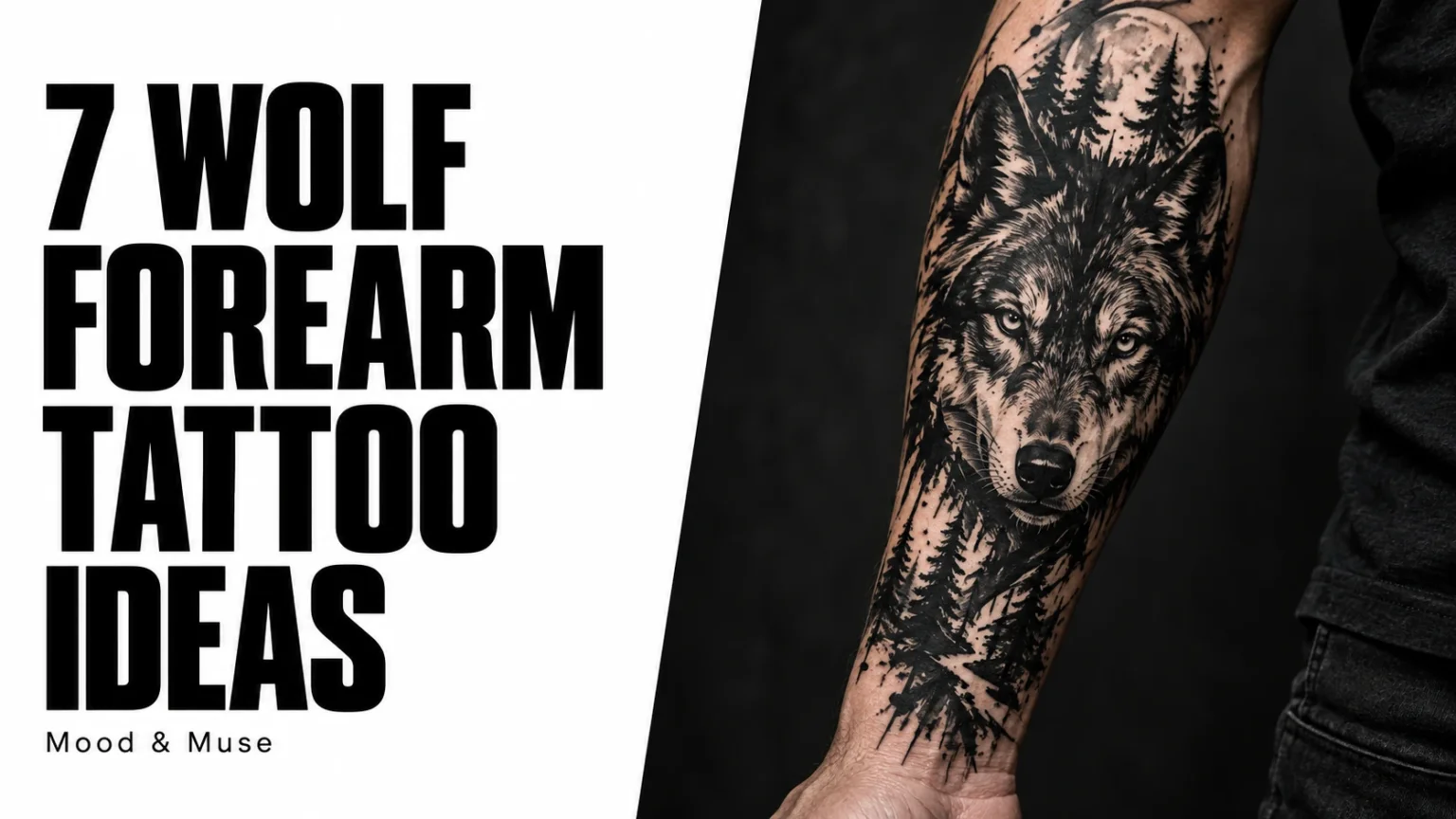
A wolf tattoo can command attention with just its eyes, pointed ears, and a strong outline. The forearm gives those features a natural direction: a broad head toward the elbow, then fur or supporting artwork tapering toward the wrist. The most useful starting point is choosing the overall shape you want to see on your arm.
These seven wolf forearm tattoo ideas explore very different approaches to that shape. You will find solid blackwork, split geometric artwork, realistic portraits, and designs that bring in the moon or a forest. Compare the images, then use the placement notes to decide which details you would like your artist to develop.
1: Bold Blackwork Wolf Forearm Tattoo
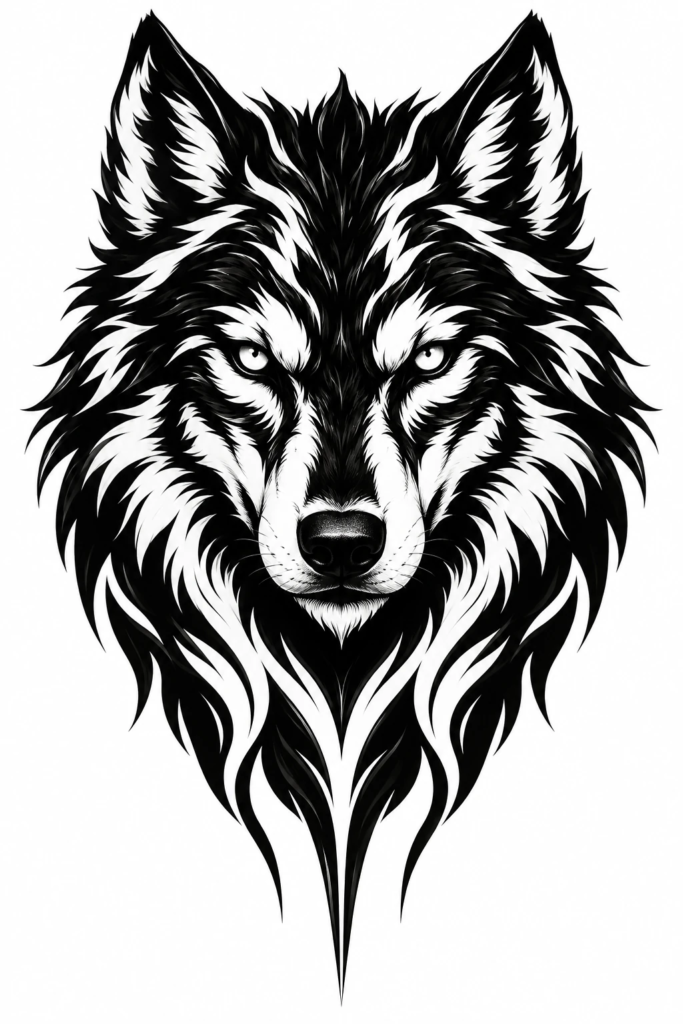
This blackwork wolf relies on a direct stare and sweeping dark shapes. The face remains recognizable at a glance because the eyes and muzzle sit inside clear areas of contrast. Long curves in the lower mane give the design a pointed finish, which offers a useful starting shape for the narrowing space above the wrist.
Picture the ears toward the elbow and the longest central point toward the hand. Before adding any background, compare the design on its own: the silhouette already provides a strong focal point. To personalize it, ask for a calmer expression, broader white channels, or a shorter mane. The aim is to keep the face clear while adjusting the outer shape to your forearm.
Design direction: A front-facing portrait with large black shapes and open skin between them.
2: Split Geometric Wolf Forearm Tattoo
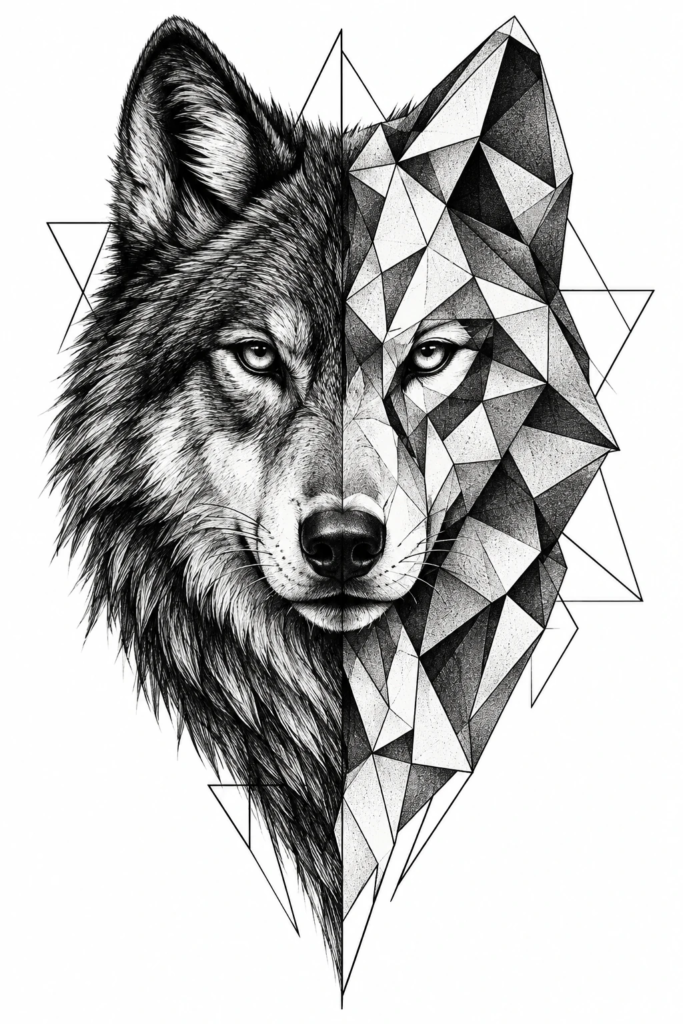
A split geometric wolf puts two drawing styles into one face. One side uses textured fur; the other uses angular facets. The shared eye line and central muzzle hold the composition together, so the split feels intentional. A few surrounding triangles echo the angles without taking attention away from the wolf.
This idea suits someone who enjoys both detailed animal portraits and structured graphic artwork. Start by deciding how obvious you want the division to be. A straight center split looks precise, while a gradual transition could feel more organic. Keep the outside geometry selective, especially when planning a narrow placement. Ask your artist to show the face at actual size so you can judge the eyes and the smallest facets.
Design direction: Aligned facial features, contrasting textures, and a restrained geometric frame.
3: Realistic Wolf Portrait on the Outer Forearm
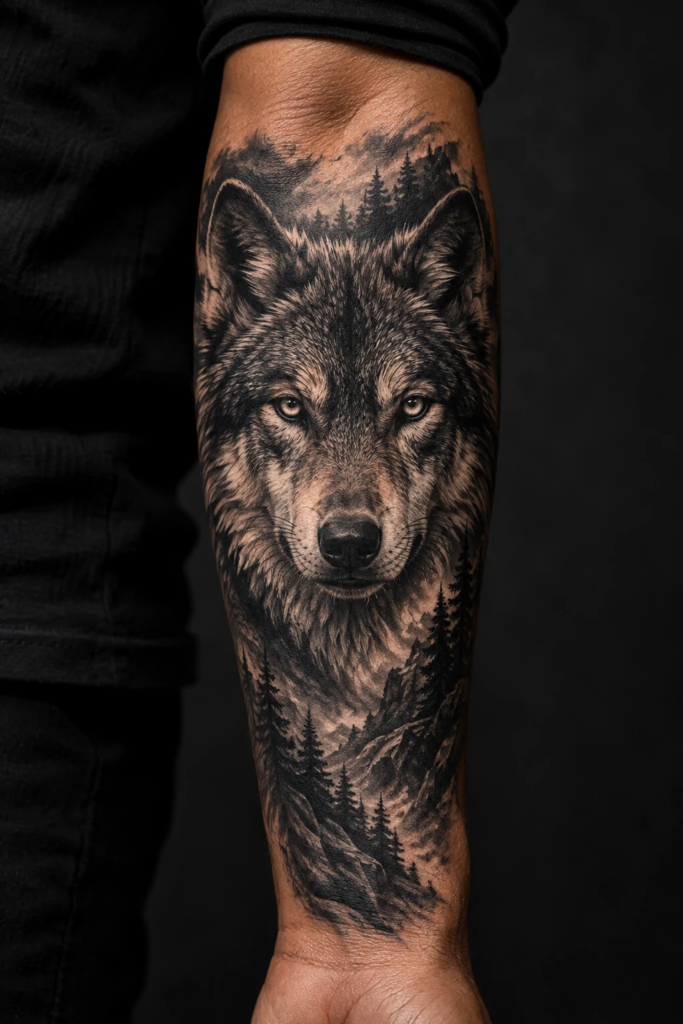
A realistic wolf portrait draws its character from the expression. In this concept, lighter eyes stand out against dark fur, and the muzzle provides a clear center. Small forest details surround the portrait, but the wolf remains the largest element. The close-up placement image shows how the composition can occupy much of the forearm.
Choose the expression before choosing the scenery. An alert, closed-mouth wolf has a different mood from a snarling animal, even with similar shading. For your artist reference, identify what matters most: the gaze, the fur direction, or the shape of the face. Then discuss which background details to simplify. A strong portrait does not need every strand of fur or every tree to receive equal attention.
Design direction: An expressive face with deeper shadows around the eyes and a quieter background.
4: Howling Wolf and Moon Forearm Tattoo
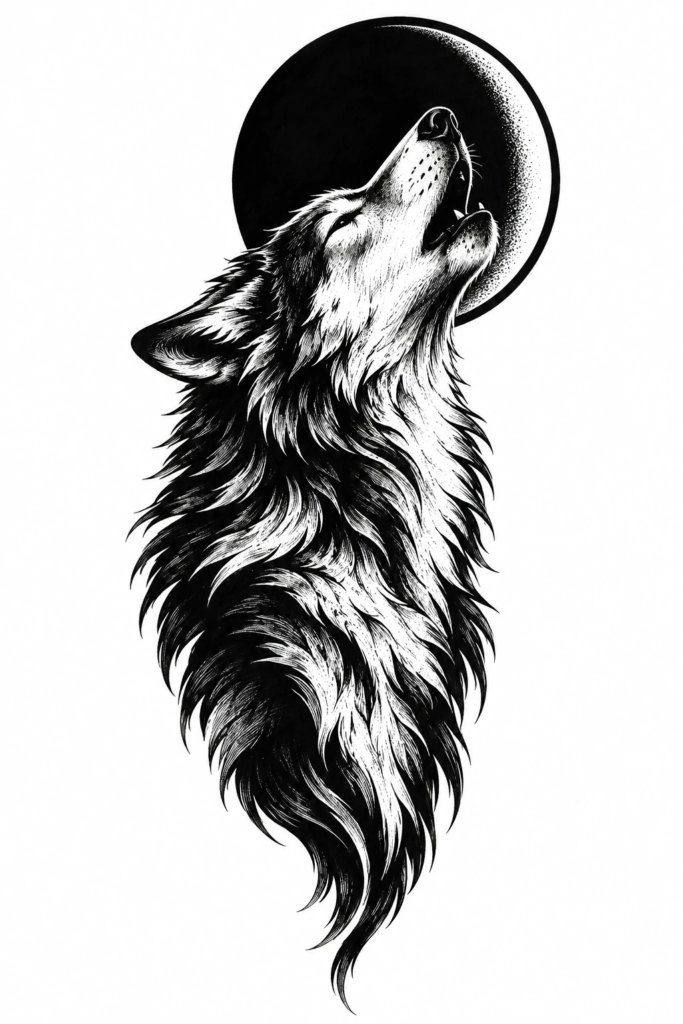
A howling wolf changes the movement of the composition. Its lifted muzzle leads the eye upward, while the neck and flowing fur carry the design down the arm. The dark moon behind the head creates a bold circular counterpoint to the long silhouette. White gaps separate the muzzle from the moon so the profile remains readable.
This concept is worth considering if you prefer a side view to a direct stare. Decide whether the moon should be a dominant dark shape or a smaller accent. The illustrated version feels dramatic because the moon and fur share the same strong black tone. For a more open design, your artist could reduce the moon or use a simple outline while keeping the wolf as the main subject.
Design direction: An upward-facing profile, one moon shape, and a long flowing neck.
5: Wolf and Forest Forearm Tattoo
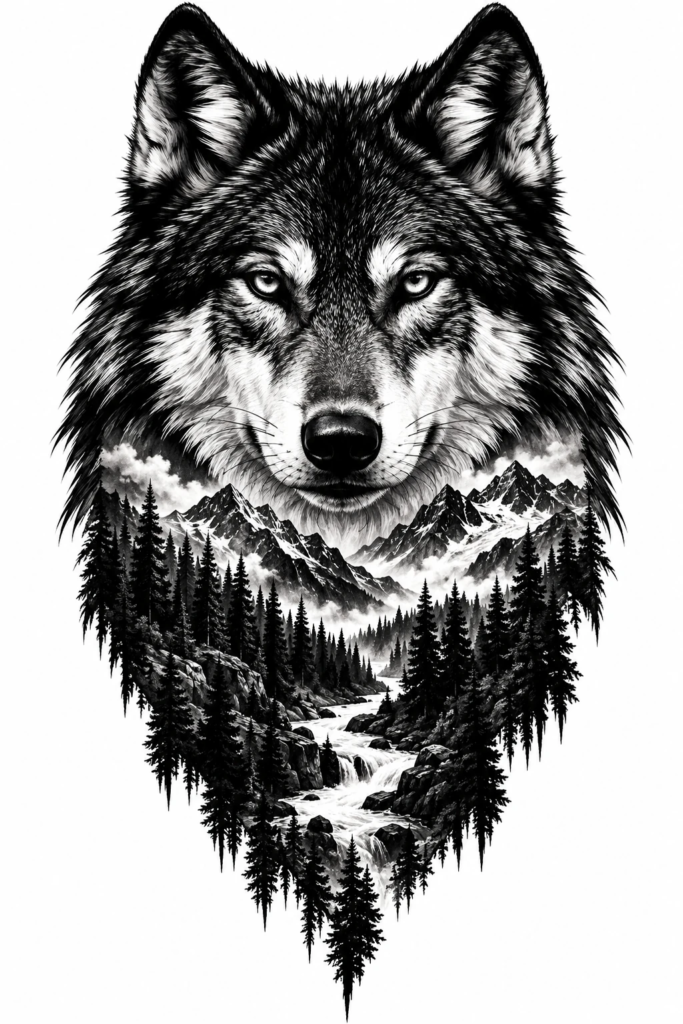
A wolf and forest tattoo can connect an animal portrait with a landscape you enjoy. Here, mountains sit beneath the face, pine trees form the lower edges, and a bright river creates a path through the darker scenery. The landscape follows the wolf’s tapered outline instead of sitting inside a separate rectangular picture.
The challenge is deciding which part should lead. This version keeps the eyes and muzzle prominent, then uses the river to guide attention downward. If the landscape reminds you of a specific place, bring your own reference for the mountain profile or tree shapes. Your artist can simplify that reference to fit the available space. For a smaller design, reduce the scenery to a few tree silhouettes rather than compressing the entire scene.
Design direction: A dominant wolf face above a simplified landscape with a clear light pathway.
6: Angular Blackwork Wolf Tattoo
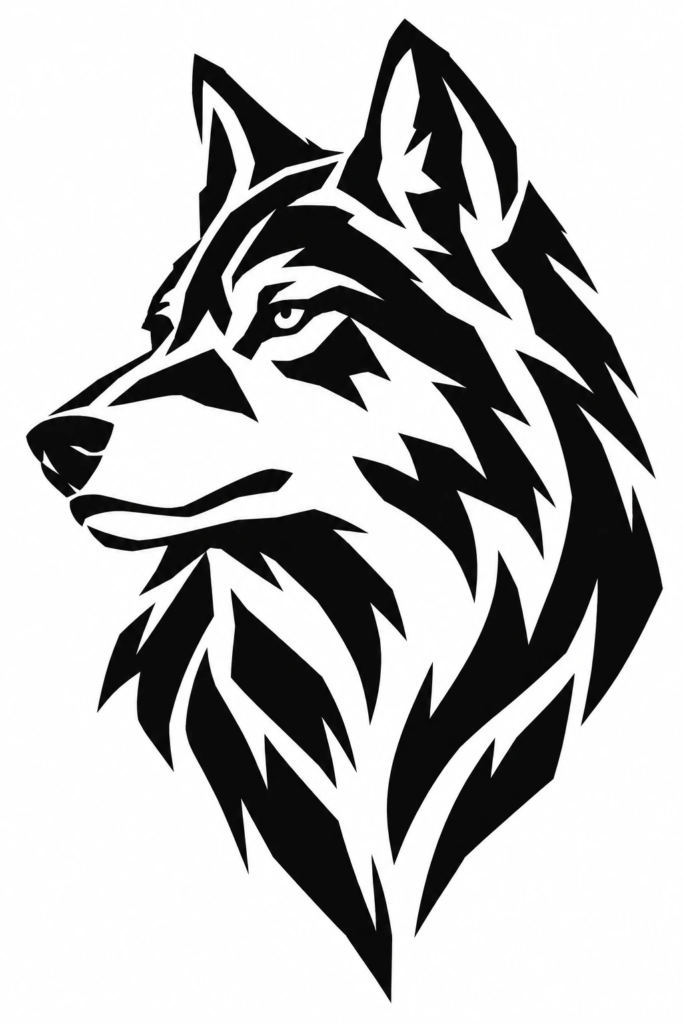
This angular wolf strips the idea back to broad planes and a sharp outline. A long muzzle, upright ears, and one visible eye create the expression without realistic fur texture. The larger gaps between the black shapes give the design a more open appearance than the layered mane in the first concept.
Use this direction if you want a graphic animal portrait with fewer interior details. It can be a starting point for a more compact composition, though the final size still needs to suit the spacing your artist recommends. Turning the head slightly changes the mood and the way it sits along the arm. Compare a profile facing toward your body with one facing away before deciding which feels right when your arm rests.
Design direction: Broad dark planes, a clear muzzle, and minimal small details.
7: Wolf Forearm Tattoo with Flowing Wraparound Detail
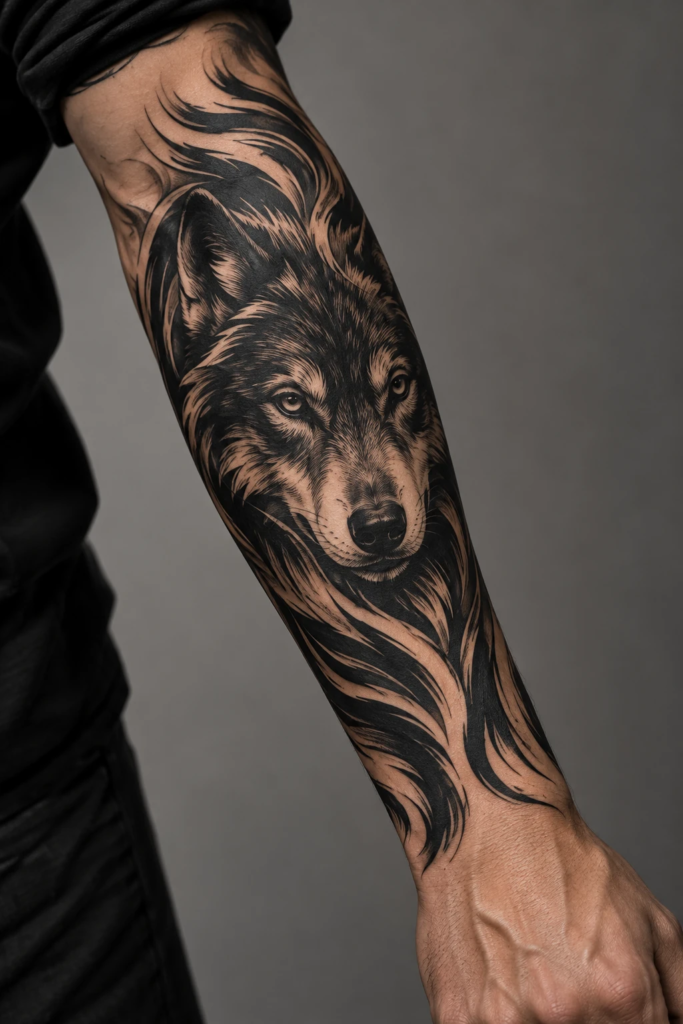
A wraparound composition uses the sides of the forearm as part of the design. The wolf face sits on the main visible surface, while elongated fur shapes travel around the arm. In this placement concept, curved black ribbons lead toward the wrist and create movement beyond the outline of the portrait.
Unlike a flat drawing, this idea needs to be considered from several angles. Ask your artist to plan where the eyes and muzzle will sit when your arm is relaxed, then check what becomes visible as you rotate it. Keep the central expression intact and let the supporting curves do the wrapping. If you may add more work later, discuss how the upper edge could connect to another piece without crowding the wolf.
Design direction: A clear portrait on one surface with supporting curves continuing around the sides.Request editsCtrl I
Choosing Your Wolf Forearm Tattoo
Start with your preferred silhouette. Blackwork gives you sweeping dark shapes; geometric designs introduce sharp structure; realism centers the animal’s expression. A moon or landscape adds another subject, so include one because you enjoy it, rather than filling every open area.
Save your two favorite concepts and tell your artist exactly what you like about each. Compare inner and outer forearm placement, the direction of the face, and how much space the artwork should occupy. Treat these images as inspiration for a custom drawing that fits your arm, not as finished stencils. A clear expression and a well-planned overall shape are useful priorities throughout that conversation.