
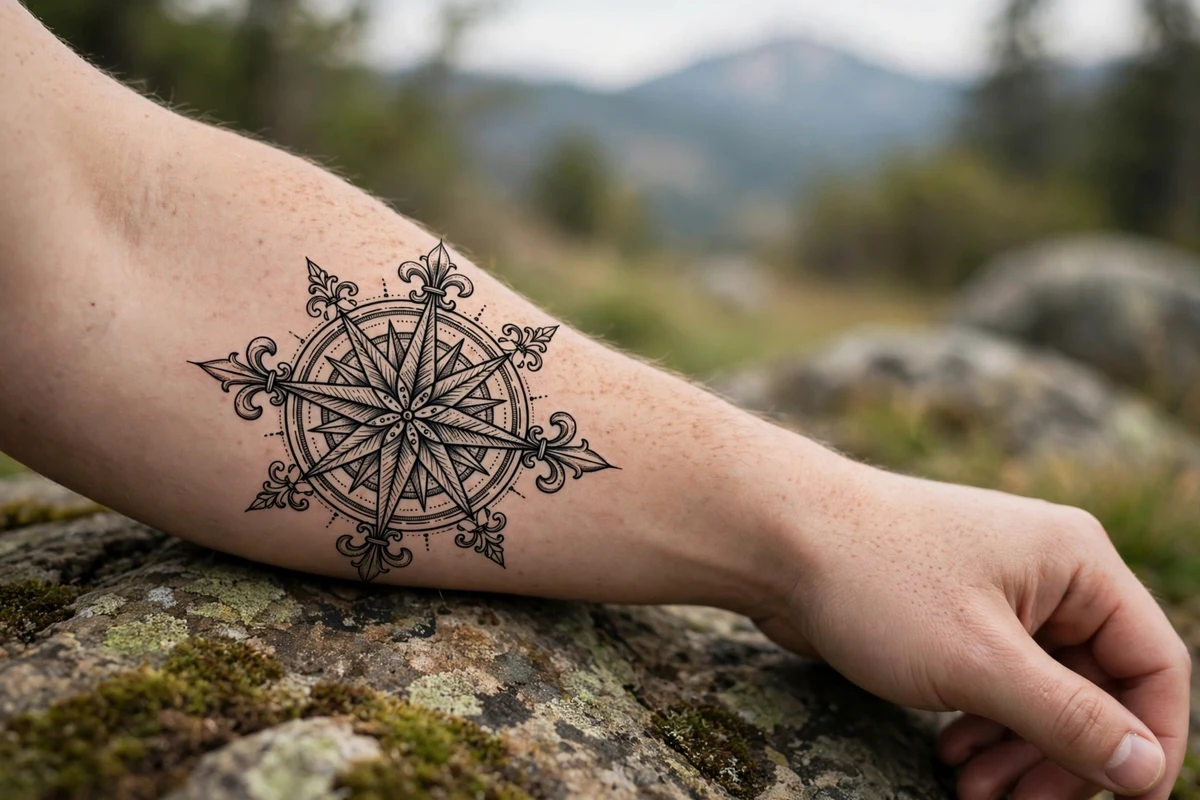
A compass is one of the oldest tattoo symbols there is, and it still works because it means something simple: finding your way. Sailors wore it as a guide home, and today travellers, hikers, and anyone starting a new chapter pick it for the same reason. It is a design that says direction without needing a single word.
The compass also suits almost any style, from a bold nautical piece to a single fine line on the wrist. The seven ideas below cover that range, so whether you want something detailed or something you barely notice, there is a version here that fits.
1. Classic Nautical Compass Tattoo
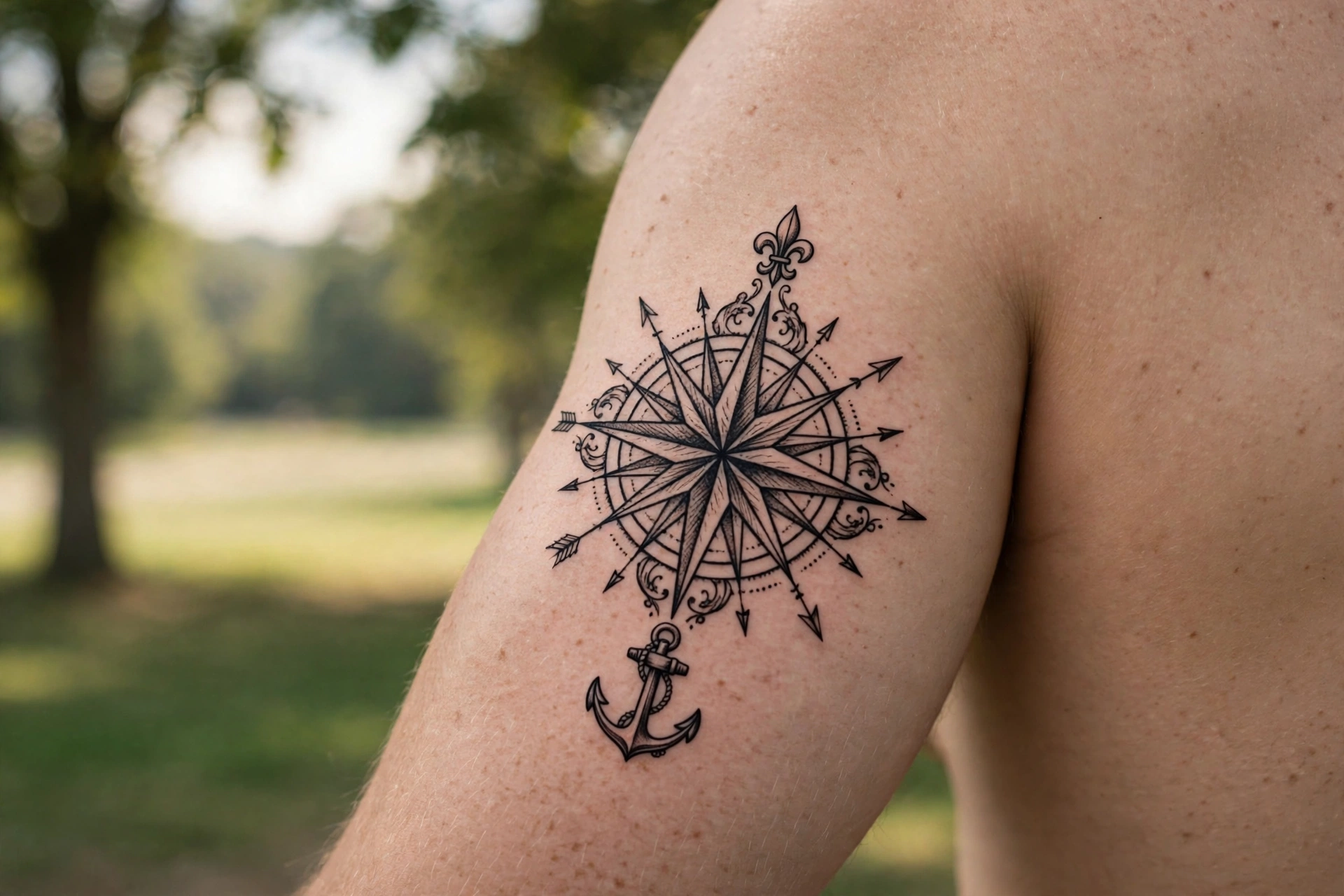
The classic nautical compass is the original version of this design: a round compass rose with long, pointed cardinal marks, often with a small anchor or a rope detail beside it. It is usually done in black ink with fine shading, and the clean geometry of the circle keeps it looking sharp even at a medium size. This is the compass tattoo most people picture first, and it has stayed popular because it reads clearly as a compass from across the room.
It suits anyone who likes traditional tattooing or has a real connection to the sea. Keep the detail balanced — a compass that is too small loses the fine points that make it look nautical, so give the artist enough room to draw the rose properly.
Placement: The upper arm or forearm, where the round shape sits flat and the design has room to breathe. It also works on the chest, centred so the circle stays symmetrical.
2. Minimalist Compass Tattoo
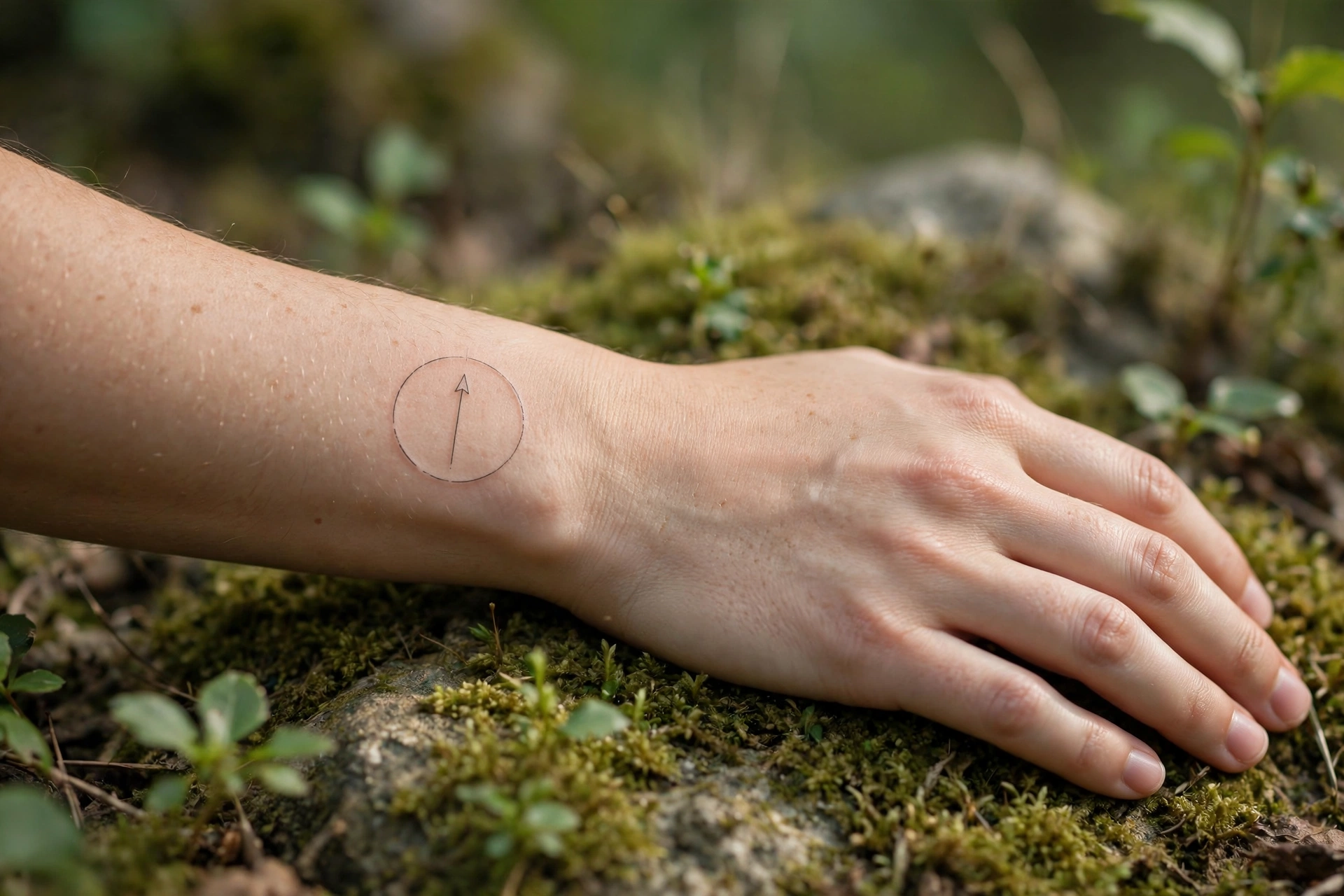
A minimalist compass strips the design down to its essentials: a thin circle, a single north arrow, and nothing else. There is no shading to fade and no detail to lose, which is part of the appeal — the design looks the same years later as it did on day one. It is also one of the quickest compass tattoos to get, and one of the easiest to hide.
For a first tattoo, this is a gentle place to start. The wrist or ankle gives you a spot that is visible to you every day but easy to keep private, and a tiny compass there rarely feels like too much of a commitment.
Placement: The wrist or the inner forearm, where a small circle sits naturally. Keep it to one small design — adding extra marks around a tiny compass can crowd it and blur the clean lines.
3. Compass with Map Tattoo
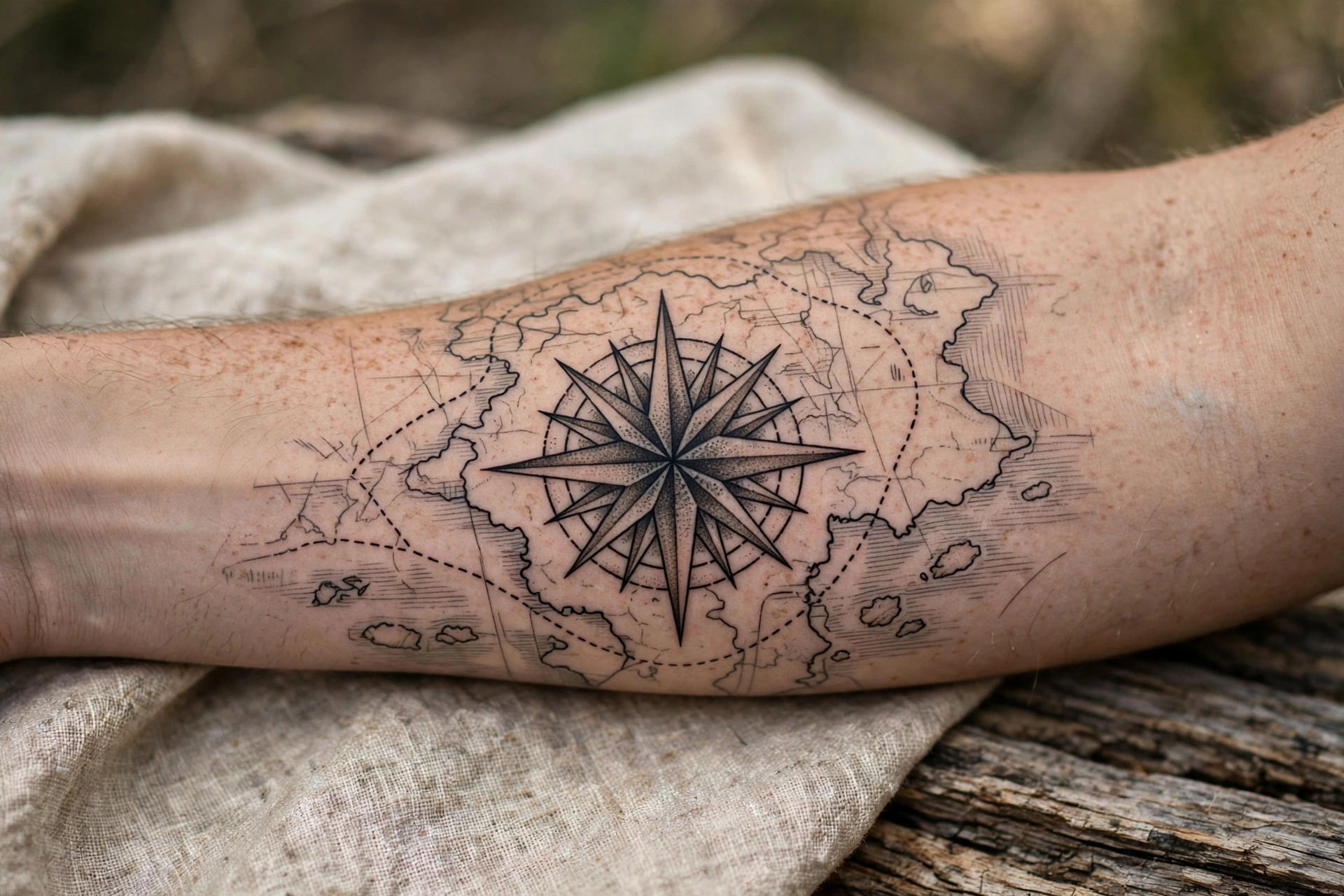
A compass with a map pairs the rose with faint map lines, coastlines, or a dotted route running across the skin. The map turns the compass from a symbol into a story: a journey you have taken, a place you call home, or a trip you are still planning. Black and grey ink suits this style best, since the map lines need to stay subtle so the compass stays the focus.
This design needs space to work, because the map detail disappears if it is squeezed too small. Talk to your artist about which part of the map matters most to you, and let them simplify the rest rather than trying to fit a whole coastline into a few inches.
Placement: The forearm or upper arm, where a wider, flat area lets the map spread out beside the compass. A long, narrow strip of map also works running down the forearm.
4. Compass Rose Tattoo
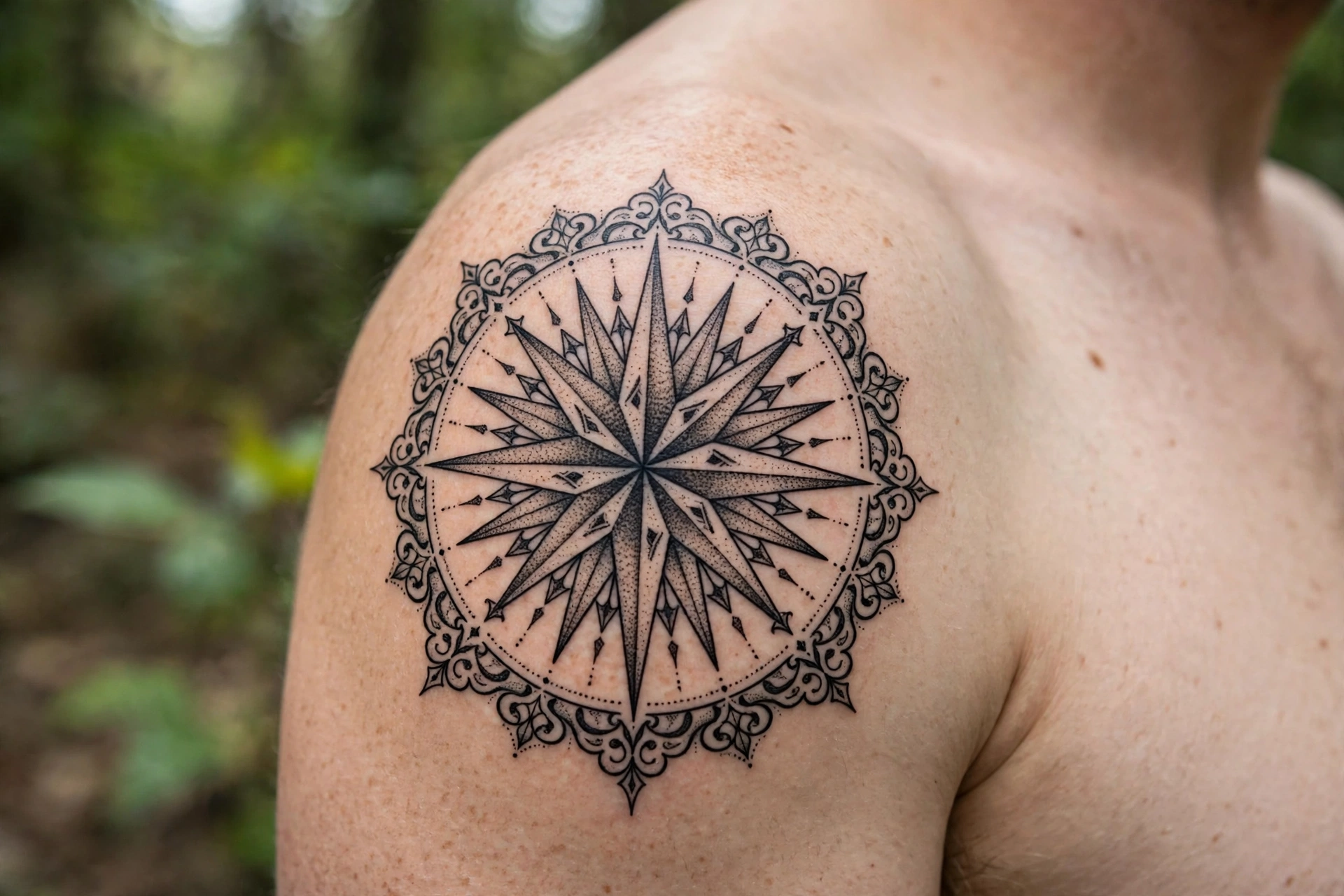
A compass rose tattoo takes the star-like rose at the centre of a compass and makes it the whole design. The long, pointed rays — usually four main points with smaller ones between them — give it a decorative, almost mandala-like feel, and fine dotwork shading adds depth without colour. It is bolder than a minimalist compass but cleaner than a full nautical piece, which makes it a good middle ground.
Because the rose is symmetrical, it rewards careful placement. A good artist will centre it precisely and keep the rays even, since any tilt is easy to spot on a design built from straight lines.
Placement: The shoulder or the centre of the upper back, where the symmetry of the rose can sit flat. It also works on the chest, centred over the breastbone.
5. Compass with Mountains Tattoo
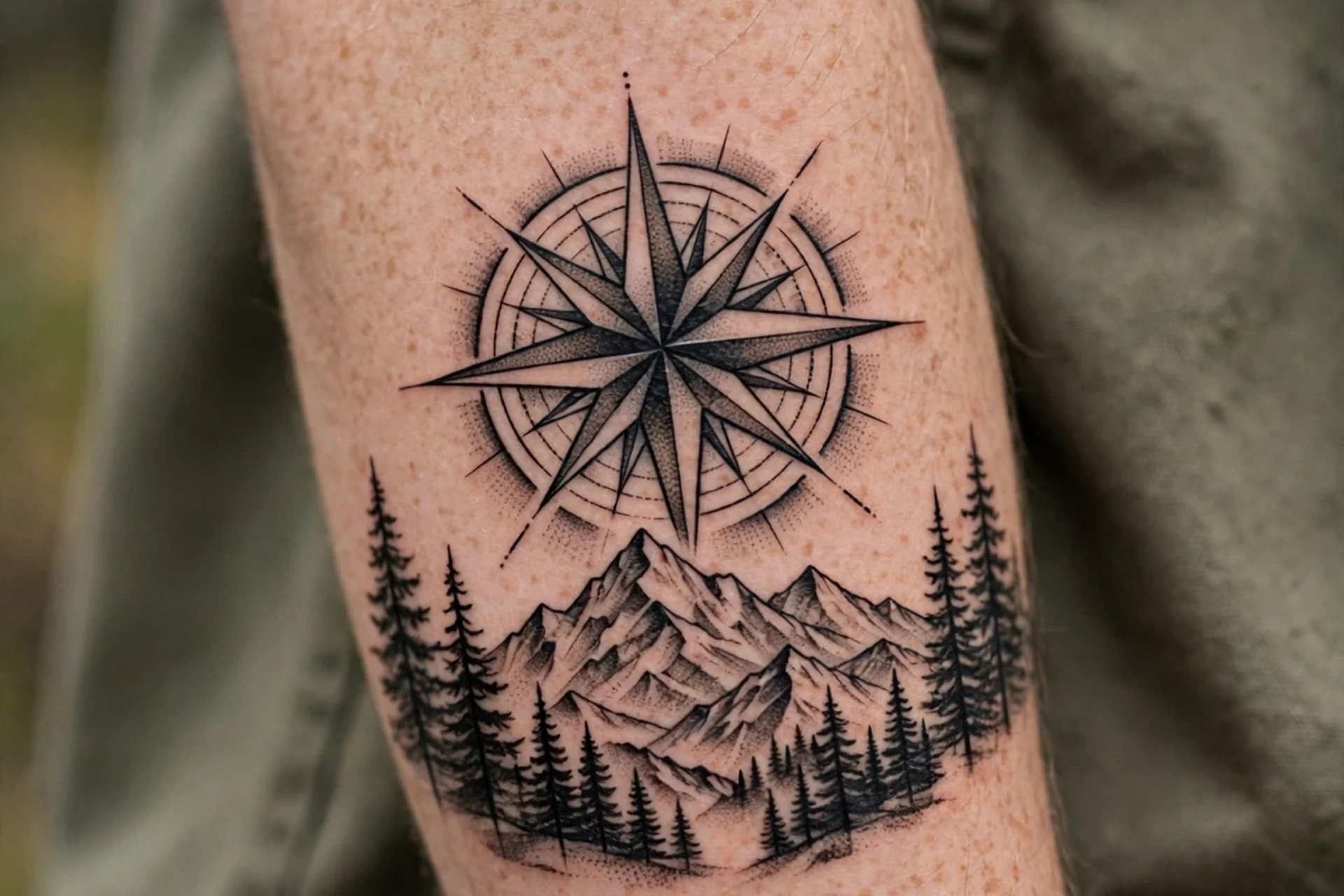
A compass with mountains is the hiker’s version of this design: a compass rose sitting above a small mountain range, often with a few pine trees at the base. It pairs the idea of direction with the outdoors, and it suits anyone who spends their free time on trails rather than at sea. Black and grey ink keeps it calm and timeless, though a touch of green in the trees works if you want a little colour.
Keep the mountains simple — two or three peaks with clean lines read better than a crowded range. The compass should stay the largest element so the design still reads as a compass first and a landscape second.
Placement: The forearm or calf, where the wide, low shape of the mountain range fits naturally. A vertical version with taller peaks also works on the upper arm.
6. Geometric Compass Tattoo
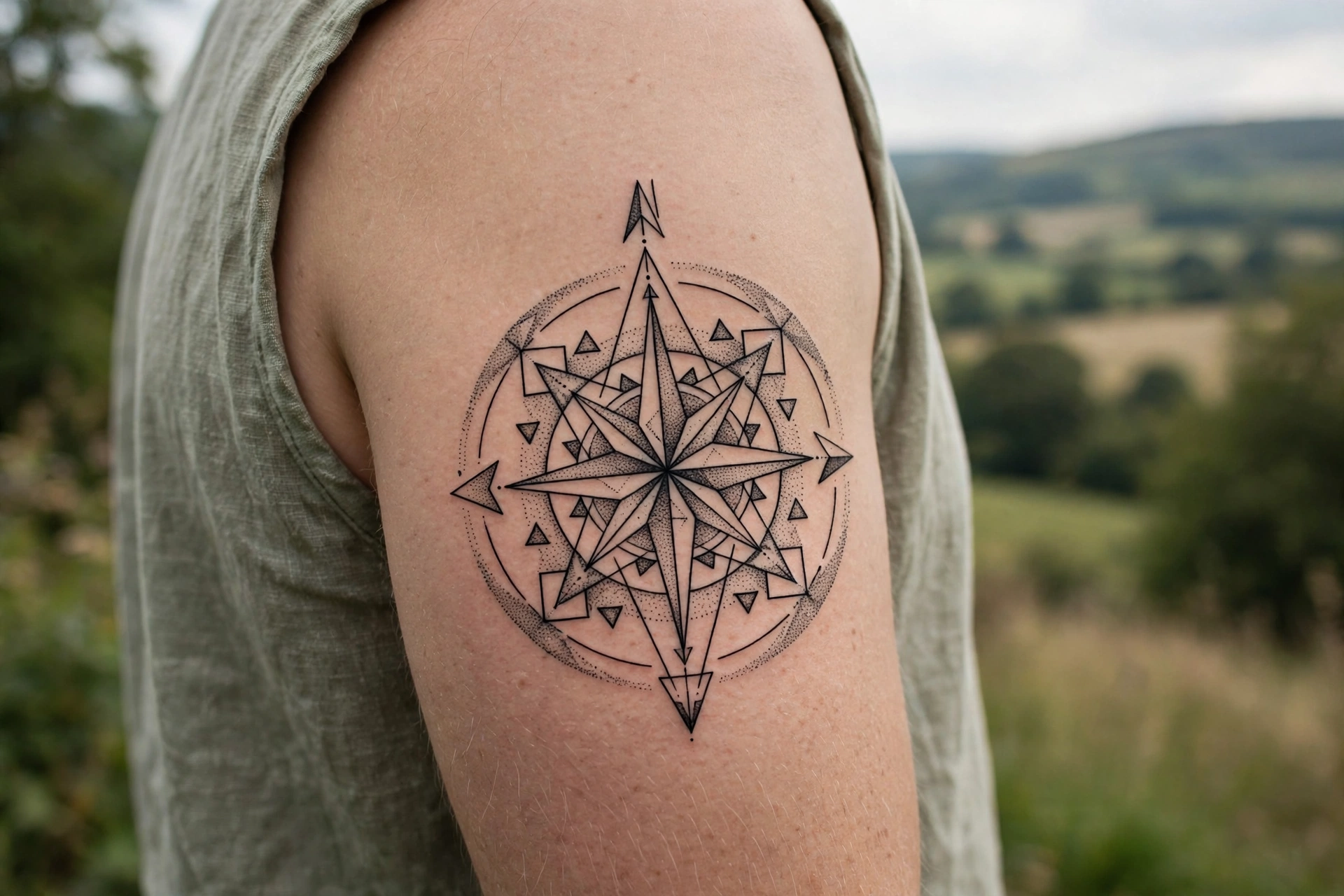
A geometric compass rebuilds the design from straight lines, triangles, and dotwork inside a clean circle. The result feels modern and precise, almost like a drawing from a maths textbook, and it stands out from the more traditional compass tattoos precisely because it drops the old-fashioned ornament. The symmetry does the work here: when every line is even, the design looks sharp from any angle.
This style needs a steady hand and a flat patch of skin, since uneven lines are hard to hide in a geometric piece. It also ages well, because the bold shapes and clear spacing hold up as the ink settles.
Placement: The upper arm or the back of the forearm, where the skin is flat enough for straight lines to stay straight. Avoid placing it over a joint, where the skin folds and the geometry can distort.
7. Watercolour Compass Tattoo
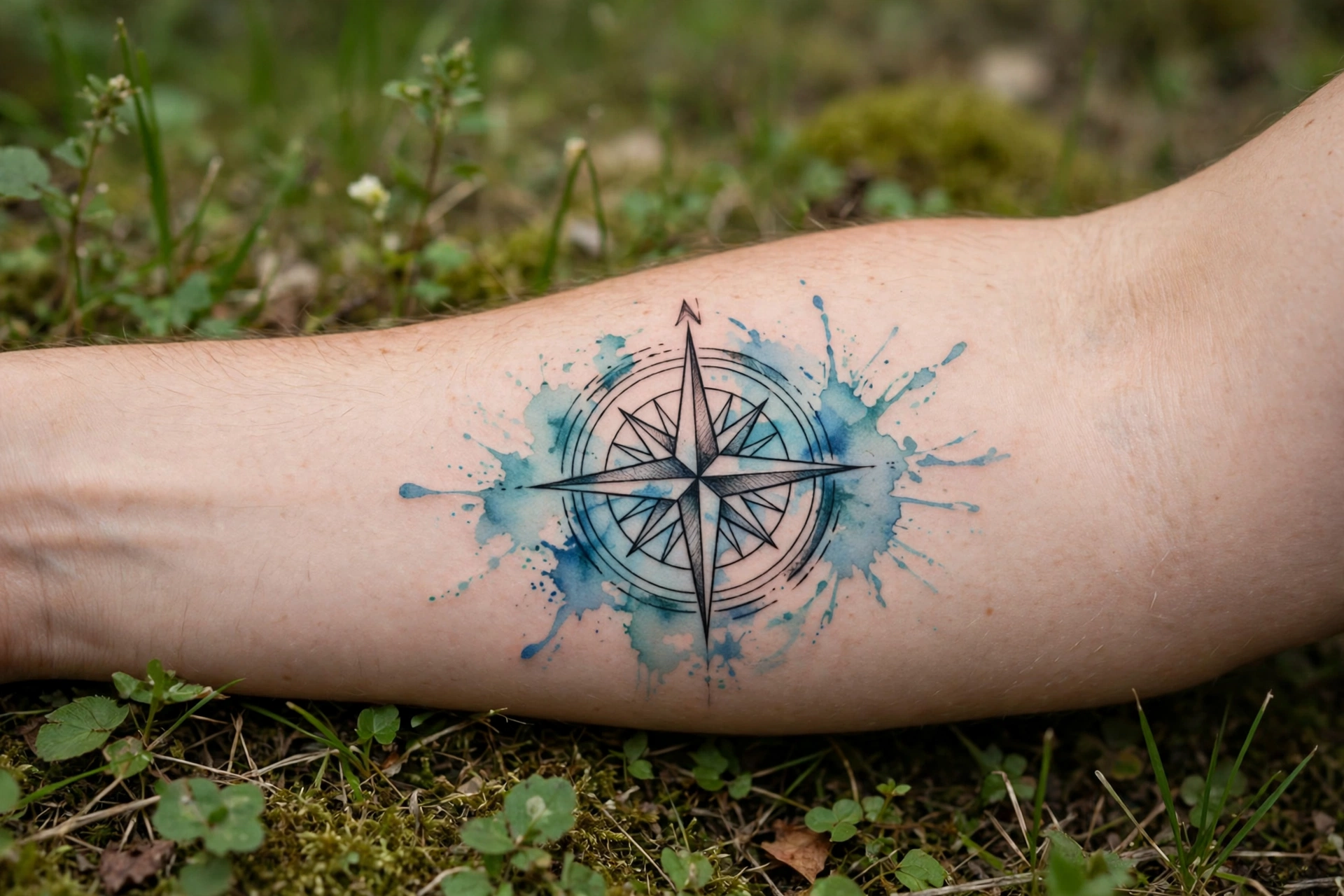
A watercolour compass pairs a clear black compass outline with soft washes of colour bleeding gently past its edges. Blues and teals suit this design best, echoing the sea and the sky, and the painted feel gives a familiar symbol a softer, more artistic finish. The compass itself keeps the tattoo readable, which matters because watercolour on its own can fade into a blur.
Ask your artist to keep the washes light rather than saturated, and to give the compass a solid outline. Watercolour fades faster than black ink, so a defined centre shape is what keeps the tattoo looking like a compass as the colour softens over the years.
Placement: The forearm or shoulder, where the colour has a flat patch of skin to spread across. A spot that sees a lot of sun will fade the colour faster, so keep that in mind if you spend time outdoors.
A compass tattoo works because the meaning is already built into the shape — direction, travel, and finding your way home. Pick the style that matches how bold you want to be: minimalist or geometric for something clean and modern; a classic nautical compass or a compass rose for something traditional; a map, mountains, or watercolour when you want the design to tell more of a story. Whichever you choose, keep the design sized to the spot. A compass that fits its space will look good for years, while one squeezed into too small a patch loses the detail that makes it worth having.
Related ideas
- 7 Wrist Tattoo Ideas — if you like small, easy-to-hide placements, the wrist article covers designs that work just as well at a small size, including a minimalist compass.
- 7 Moon Tattoo Ideas — a small crescent moon pairs well with a compass if you want a travel-themed piece with a second symbol.
- 7 Star Tattoo Ideas — the pointed rays of a compass rose share the same geometry as star designs, and the two sit naturally together.
- 7 Hand Tattoo Ideas — a small compass on the hand is a bold, visible choice if you want your direction on display.
- 7 Shoulder Tattoo Ideas — the shoulder gives a compass rose the flat, symmetrical space it needs to sit perfectly centred.