
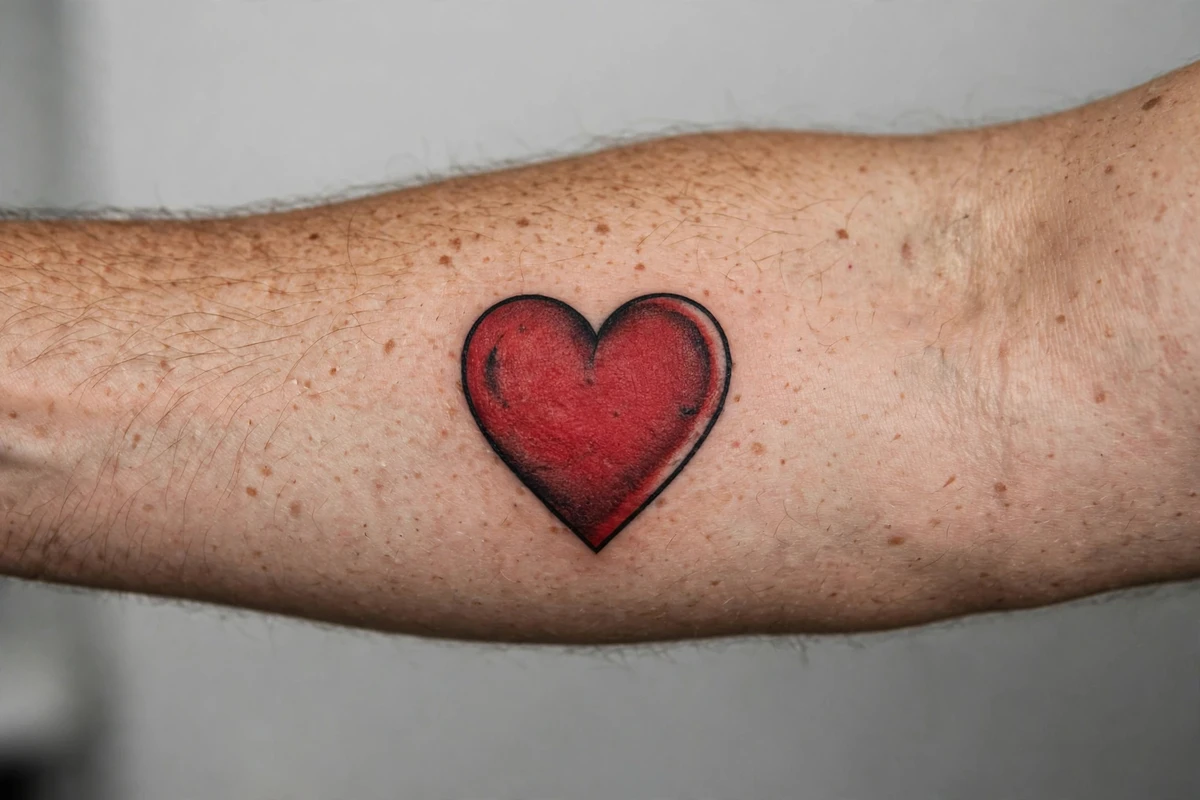
The heart is the most direct tattoo there is. It needs no explanation — everyone who sees it understands what it stands for. That simplicity is also what makes it hard to get wrong and easy to make your own. A small change in style, a different outline, a flower added to one side, and the same shape says something completely different.
Heart tattoos also suit almost any spot on the body, from a tiny design on the wrist to a detailed piece on the chest or upper arm. The seven ideas below cover that range, so whether you want something classic and bold or quiet and minimal, there is a version here that fits.
1. Classic Red Heart Tattoo
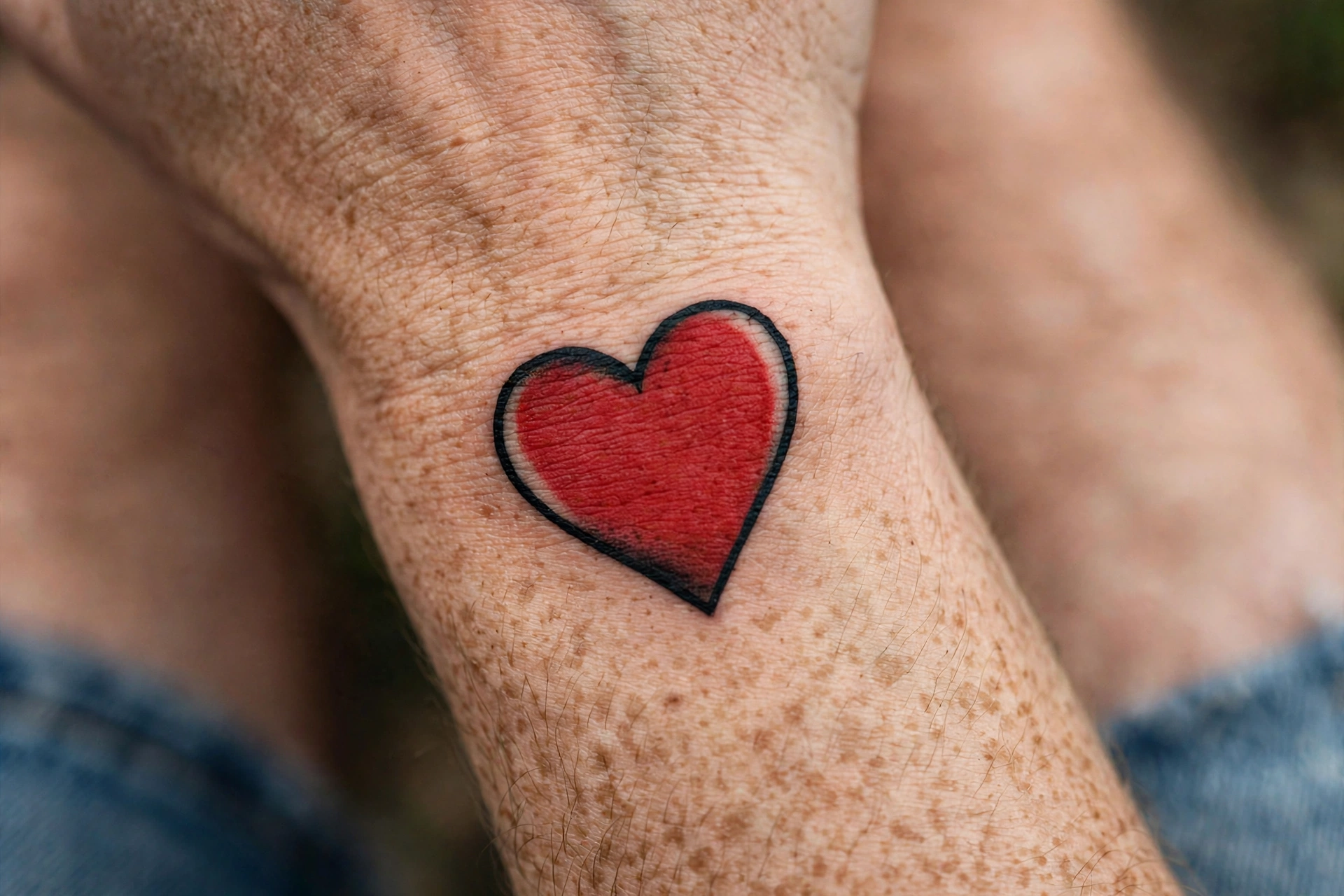
The classic red heart is the original heart tattoo: a bold red fill, a clean black outline, and a shape everyone recognises at a glance. It comes from old-school tattooing, where simple shapes and strong colours were the whole point, and it still works today because it does not try to be clever. A classic red heart looks just as good small on the wrist as it does larger on the forearm.
This is a good pick if you want a tattoo with no ambiguity about it. The red needs to stay bright, so ask your artist about how the colour holds up on your skin tone, and keep the outline crisp — a wobbly outline is the one thing that can spoil an otherwise simple design.
Placement: The wrist, forearm, or upper arm, where the shape sits flat and the red stays visible. Keep it at a size where the outline stays smooth — too small and the curves start to pinch together.
2. Fine-Line Heart Tattoo
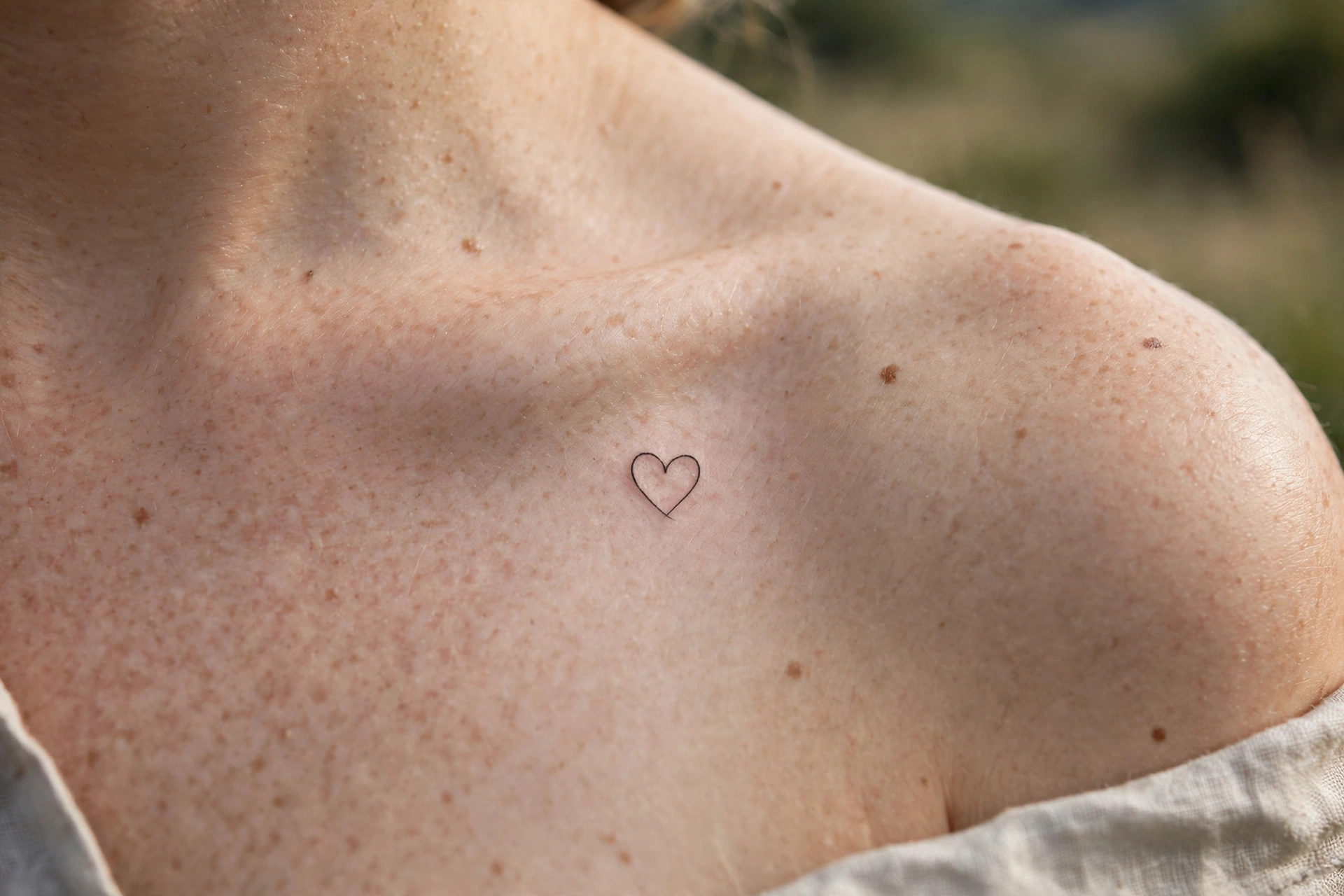
A fine-line heart tattoo uses one thin, precise line to draw the heart, with no fill and almost no shading. The result feels light and quiet on the skin, more like a sketch than a tattoo. It suits people who want the meaning of a heart without the boldness of a filled design, and it works well as a first tattoo because it is quick and easy to live with.
Because the design is so simple, the line itself has to be good. Ask your artist to keep the curves even and the join at the bottom of the heart neat, since there is nothing else in the design to hide a shaky line. A single heart on its own is usually enough — adding extra marks around it can crowd a design this delicate.
Placement: The collarbone, the inner wrist, or just above the ankle, where the skin is flatter and the thin line stays sharp. Avoid spots where the skin folds a lot, since fine lines blur faster there.
3. Anatomical Heart Tattoo
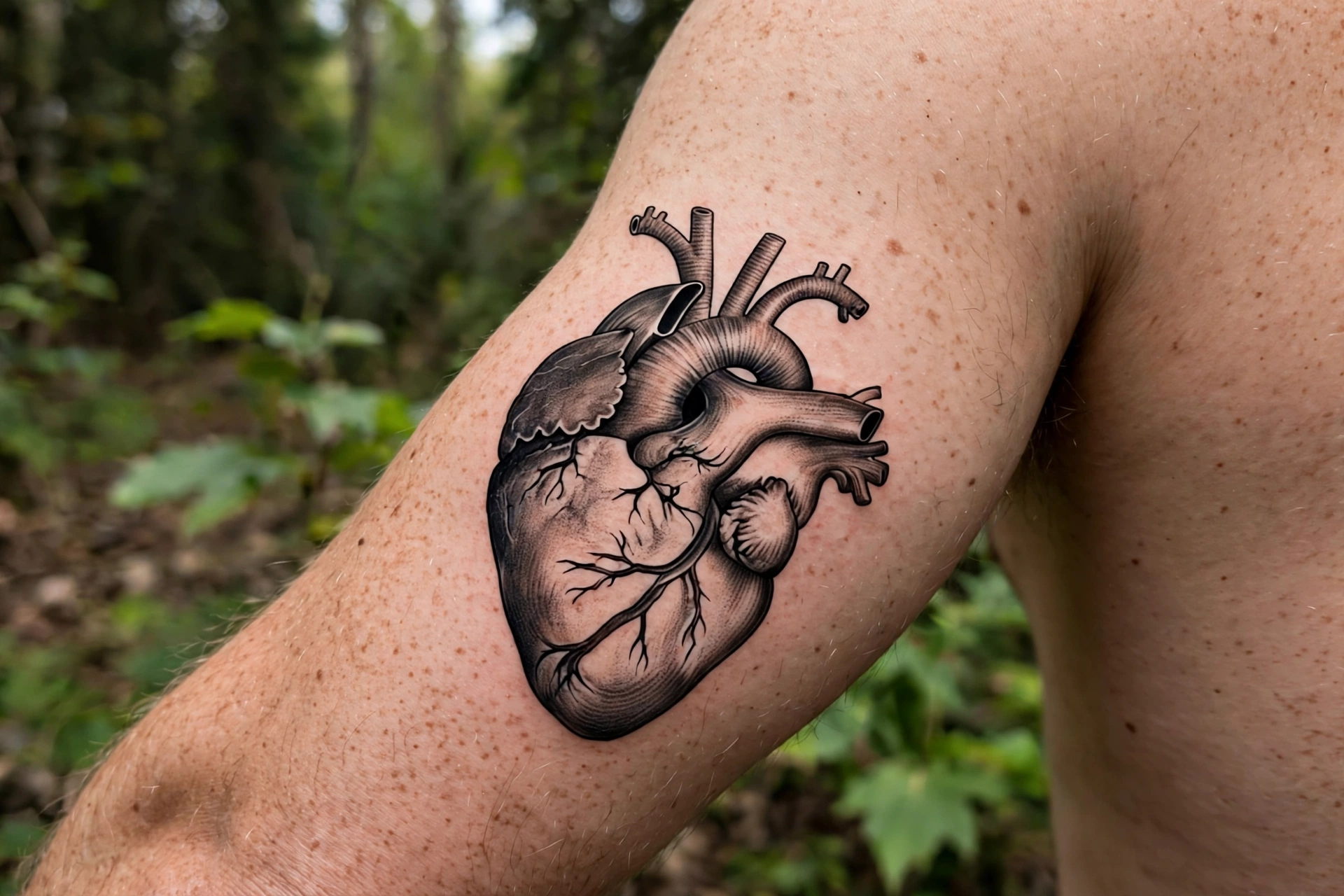
An anatomical heart tattoo shows the heart as it actually looks — the chambers, the vessels, the uneven shape — instead of the tidy symbol. It is the most detailed option in this list, and it suits people who like the idea of a heart that feels real rather than decorative. Shading in black and grey gives it depth, and a good artist can make it look almost like a drawing from an old medical book.
This style needs room. The detail that makes an anatomical heart interesting is the first thing to disappear if the design is squeezed too small, so do not try to fit one onto a fingertip or a tiny patch of skin. It also needs an artist who is comfortable with realistic shading, so look at their healed work before you commit.
Placement: The upper arm, forearm, or chest, where there is enough flat skin for the detail to hold. Keep the design at least a few inches across so the smaller shapes inside it stay readable.
4. Heart With Flowers Tattoo
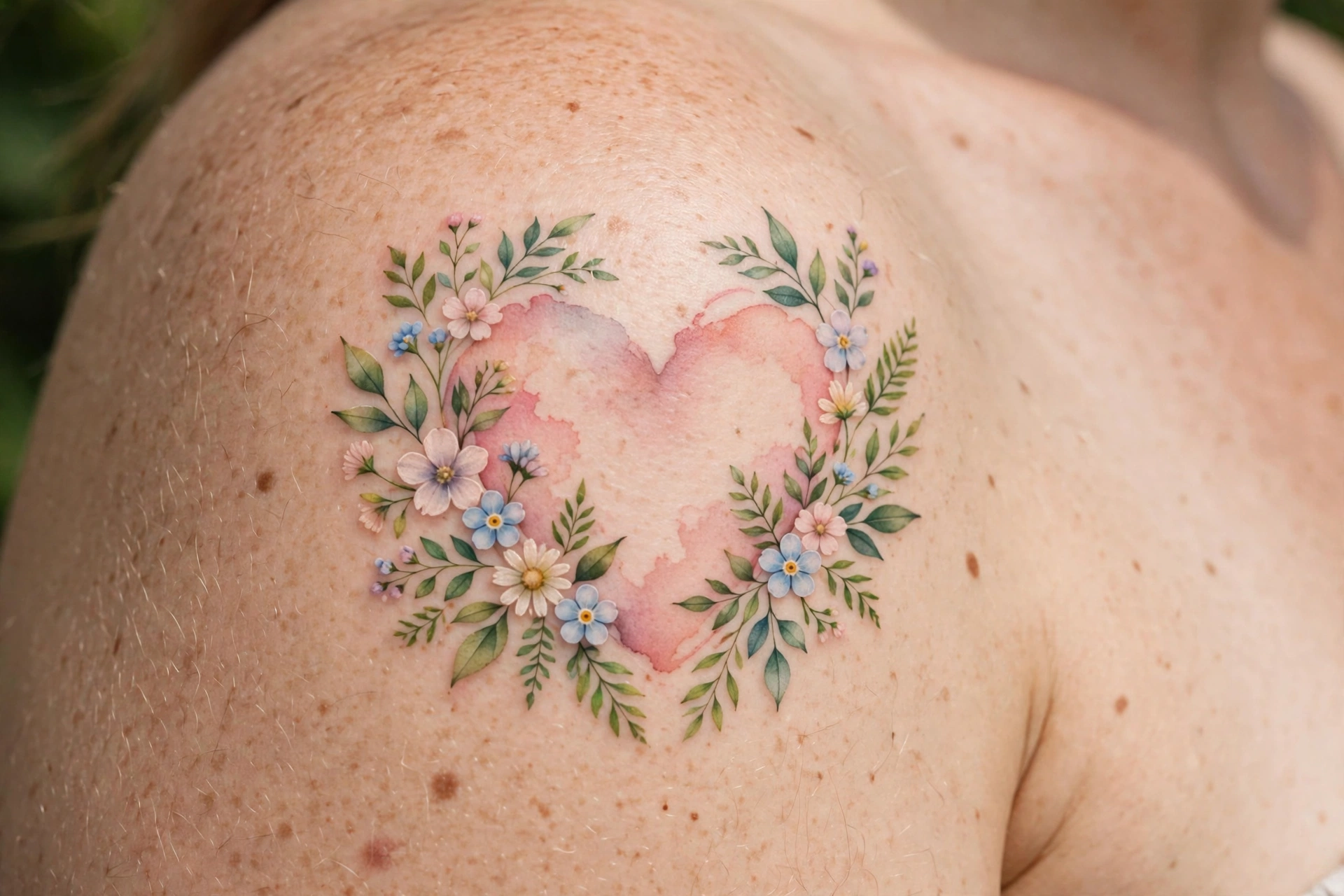
A heart with flowers softens the shape with something growing around it — a few small blooms, a sprig of leaves, or a single flower tucked into the curve of the heart. Flowers suit the heart because they are naturally curved and flowing, and they give you an easy way to personalise the design: a flower that means something to you, or simply one you like the look of. The colour of the flowers also gives the tattoo a warmth that a plain heart does not have.
Keep the flowers small and the stems thin, so they frame the heart instead of swallowing it. A heart buried under too many blooms stops reading as a heart, so let the shape stay clear and let the flowers sit around its edges.
Placement: The shoulder, the upper arm, or the side of the ribs, where the flowers have room to spread around the heart. A design that follows the curve of the shoulder looks more natural than one placed straight across it.
5. Broken Heart Tattoo
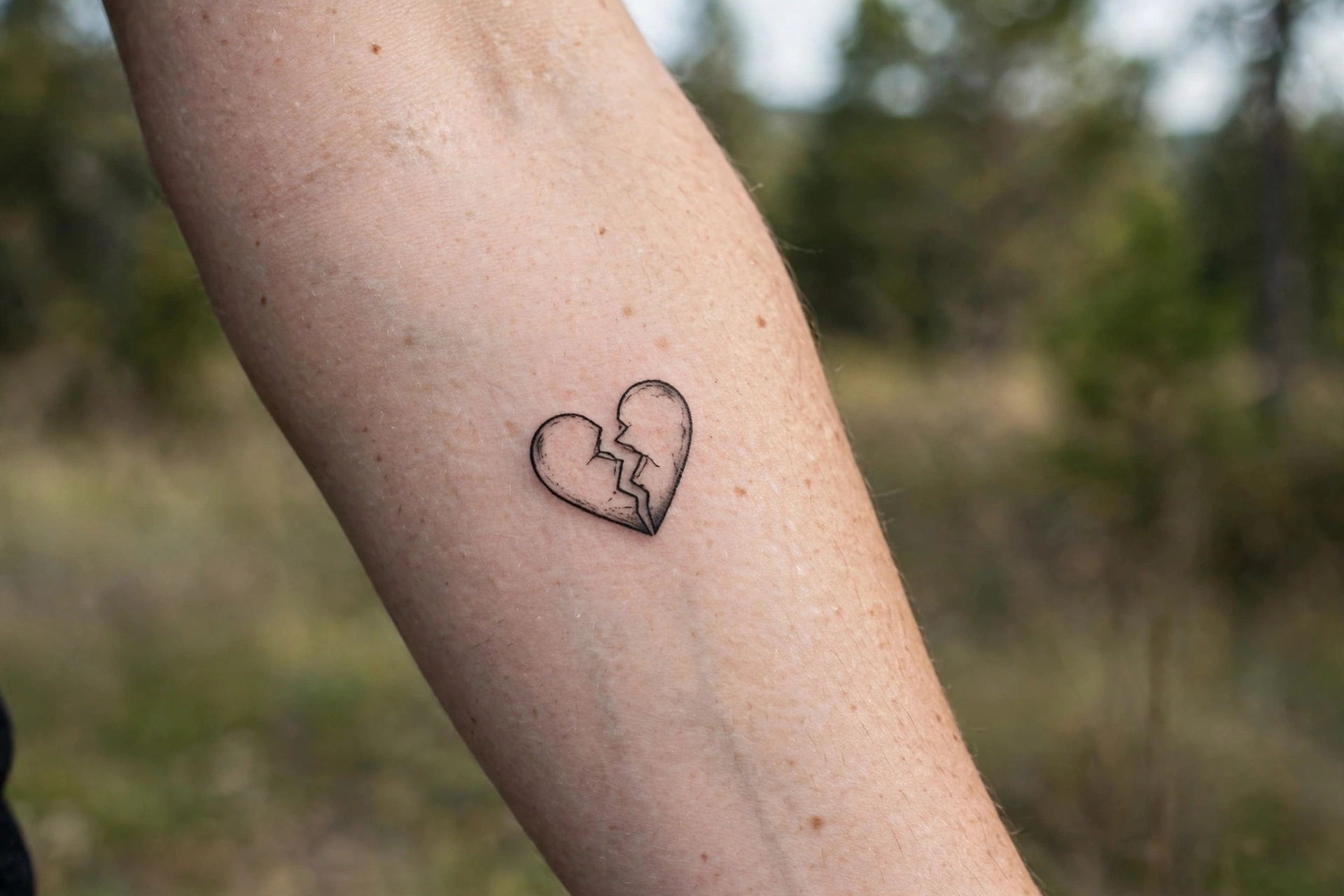
A broken heart tattoo is a heart split by a crack down the middle, sometimes with the two halves slightly apart. It is a design people usually choose after a hard time — the end of a relationship, a loss — and that is exactly why it works. It does not hide what happened. It marks it, plainly, in a shape everyone understands.
The crack is the whole design, so it needs to be drawn with care. A jagged split down the centre reads clearly; a crack that is too faint looks like a mistake in the outline. Some people keep it simple in black ink, while others add a small detail like a stitch across the break — either way, keep the extra detail to one thing, so the split stays the focus.
Placement: The forearm, the chest over the heart, or the wrist, where the design is easy to see. Keep it small and simple — a large broken heart can look heavier than the feeling it is meant to carry.
6. Heart With Banner Tattoo
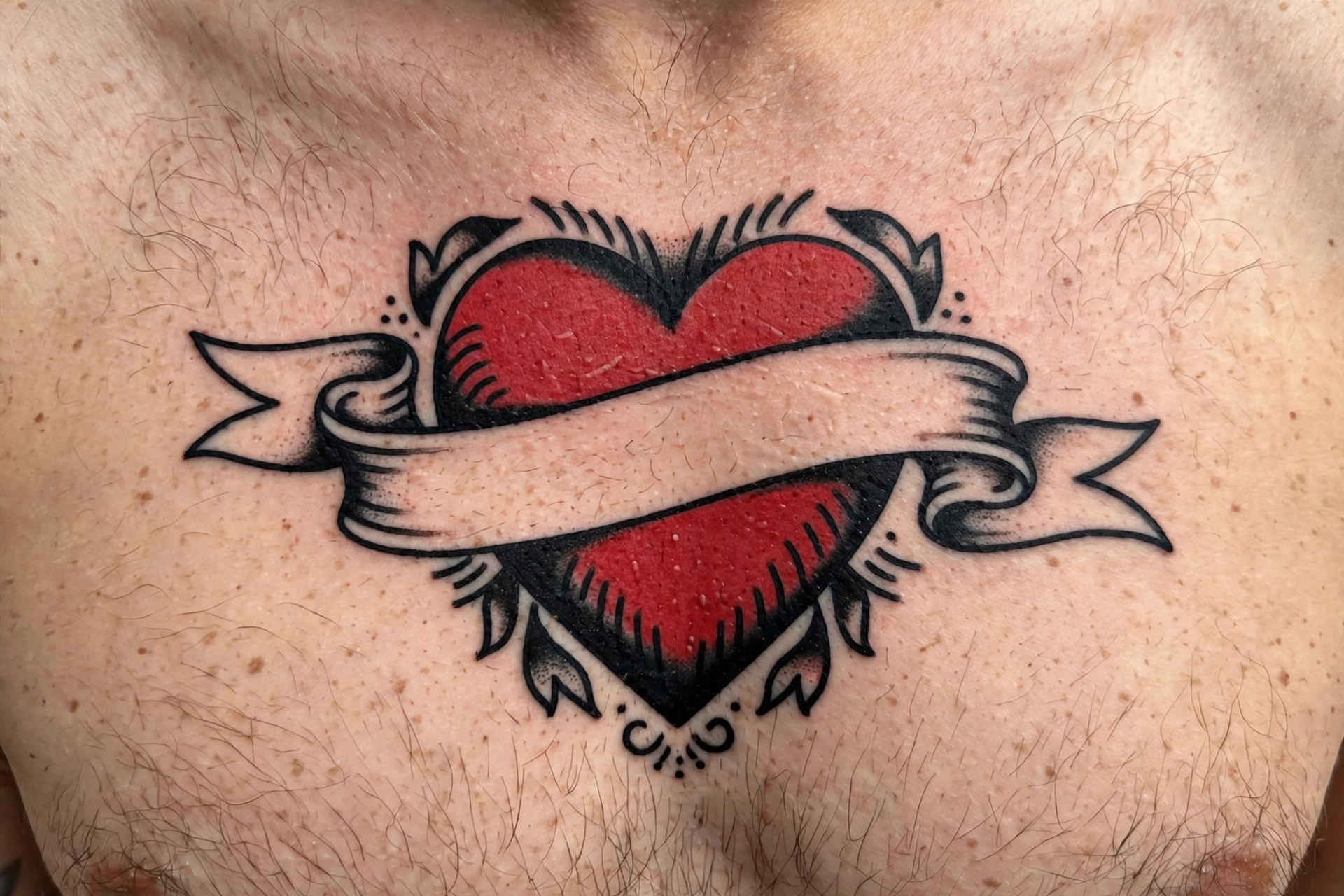
A heart with a banner is another old-school classic: a red heart with a ribbon running across it, ready for a name, a word, or a short date. The banner is what makes this design personal — the heart says the feeling, and the ribbon says who or what it is for. It comes from the same traditional tattooing as the classic red heart, and it pairs well with it if you ever want a matching set.
The lettering on the banner matters more than the heart itself. Keep it to one name or a couple of words, and pick a size your artist is happy with, since lettering that is too small loses its shape as it heals. A blank banner can also work on its own, if you like the shape but are not ready to commit to a name.
Placement: The chest, the upper arm, or the forearm, where the banner has a straight run and the lettering stays readable. Avoid curving the banner sharply, since the words will bend with it.
7. Geometric Heart Tattoo
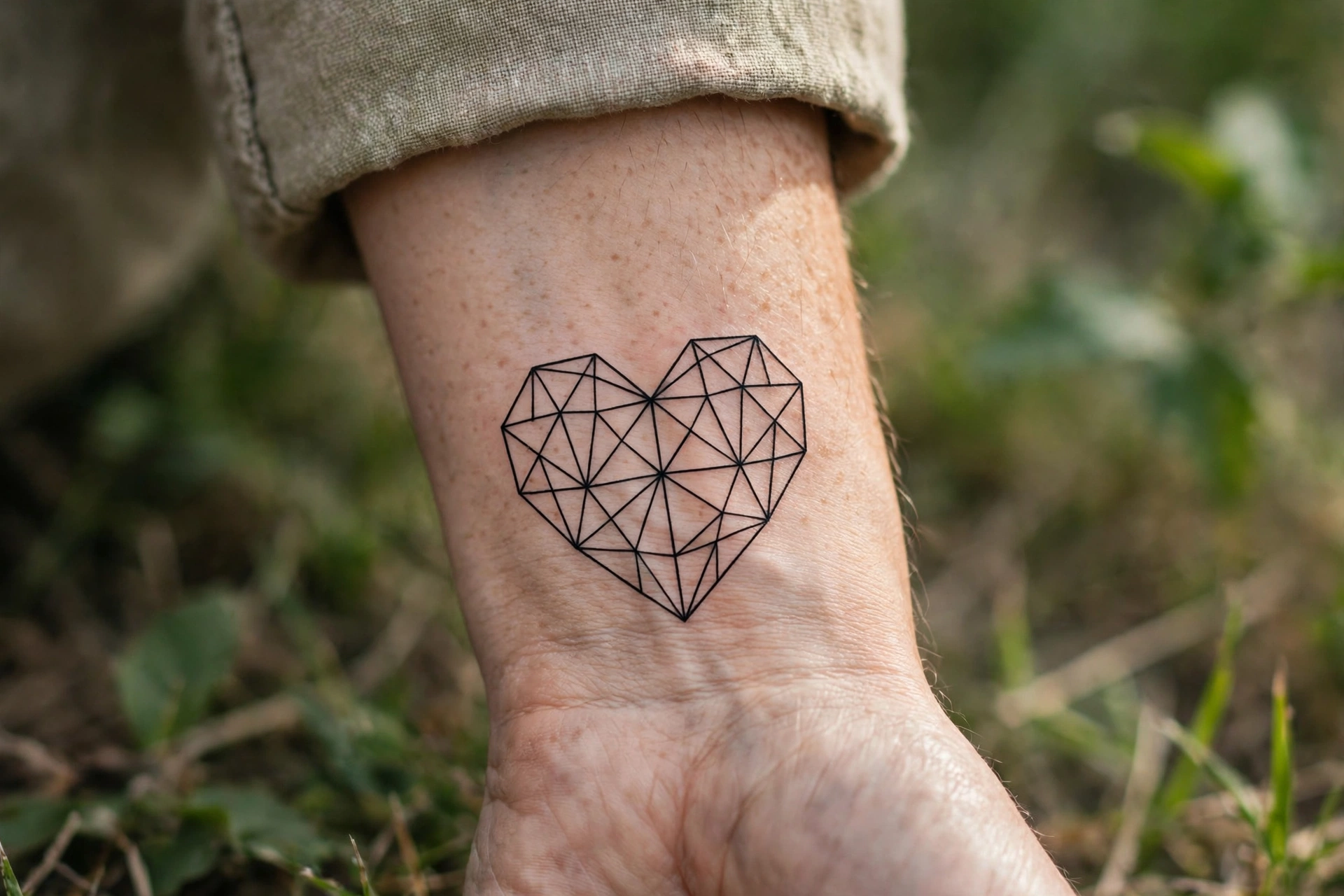
A geometric heart tattoo builds the heart from straight lines and sharp angles — triangles, facets, and clean edges instead of curves. It is a modern take on the shape, and it suits people who like tattoos that look designed rather than drawn. The lines give it a crisp, graphic feel, and a little dotwork shading inside the facets adds depth without softening the edges.
This style lives or dies on straight lines, so it needs an artist with a steady hand and a good eye for symmetry. A heart that is slightly lopsided is easy to miss in a curved design, but in a geometric one it shows at once. Keep the design compact and the lines evenly spaced, and the heart will read clearly from a distance.
Placement: The wrist, the forearm, or the back of the hand, where the flat skin keeps the straight lines true. Avoid spots where the skin stretches a lot when you move, since that can pull the lines out of shape.
A heart tattoo works because the shape itself does half the job — simple, clear, and understood by everyone who sees it. Pick the style that matches how you want it to feel: classic red or a banner heart for something traditional; fine-line or geometric for something quiet and modern; anatomical for detail; floral for warmth; a broken heart when the meaning is the point. Whichever you choose, keep the design sized to the spot. A heart that fits its space will look good for years, while one squeezed into too small a spot loses the detail that makes it worth having.
Related ideas
- 7 Wrist Tattoo Ideas — if you like small, easy-to-hide placements, the wrist article covers designs that work just as well at a small size.
- 7 Flower Tattoo Ideas — for more floral designs, including flowers that pair well with a heart.
- 7 Rose Tattoo Ideas — a single rose tucked into a heart makes a classic combination if you want one bold flower.
- 7 Shoulder Tattoo Ideas — the shoulder gives a heart and flowers room to spread, and the article covers designs that suit that spot.
- 7 Hand Tattoo Ideas — a small geometric or fine-line heart sits neatly on the hand if you want the design somewhere visible.