
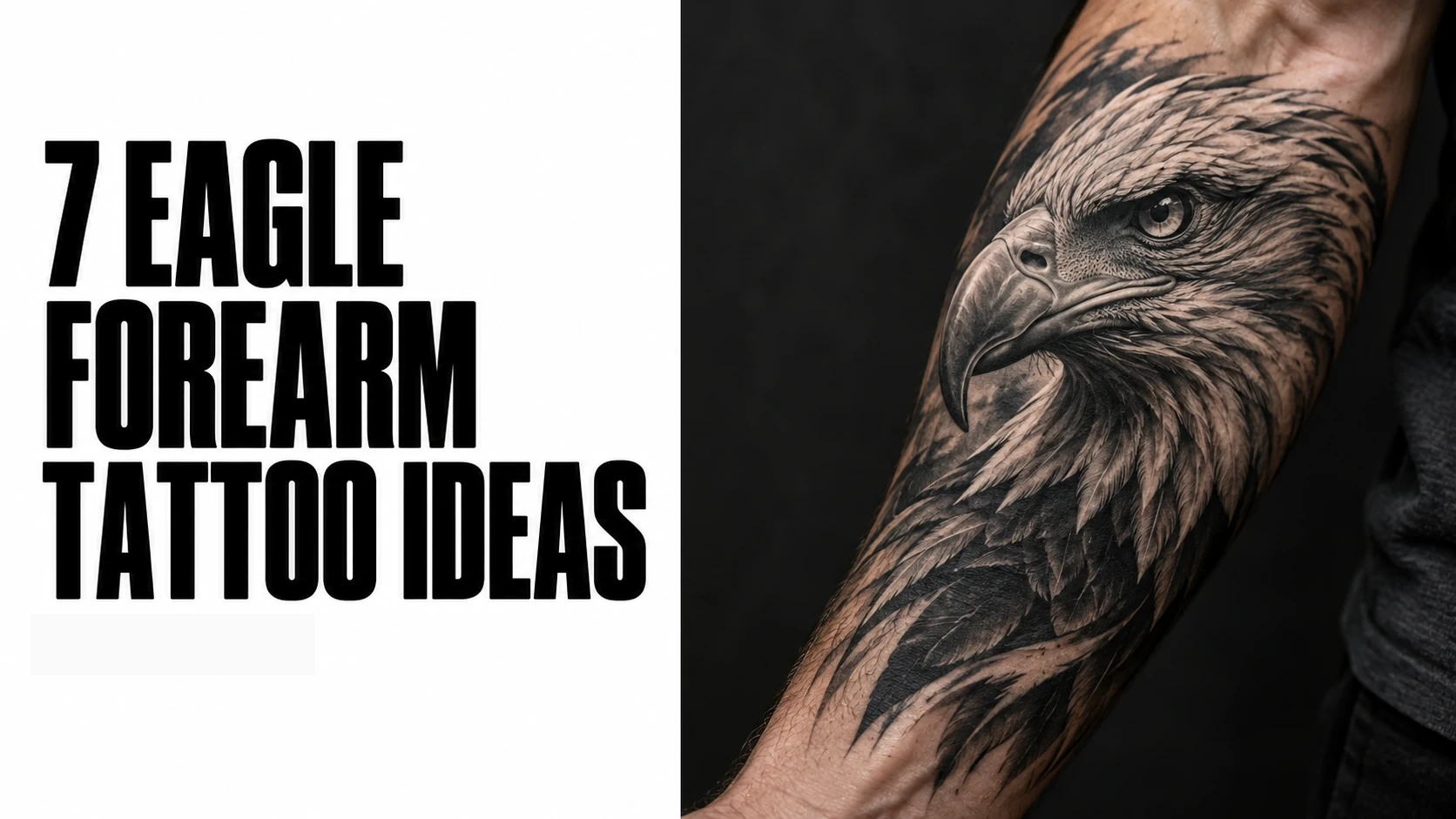
An eagle forearm tattoo can be a close-up portrait, a dramatic winged silhouette, or a nature scene contained inside the bird itself. Those choices create very different impressions, even when every design uses the same black and grey palette.
These seven eagle forearm tattoo ideas give you distinct starting points to compare. Each includes an original concept image and a design note to help you explain what you like. Use your favorites as references for a custom composition that your tattoo artist can adapt to your arm.
1 Eagle with Raised Wings
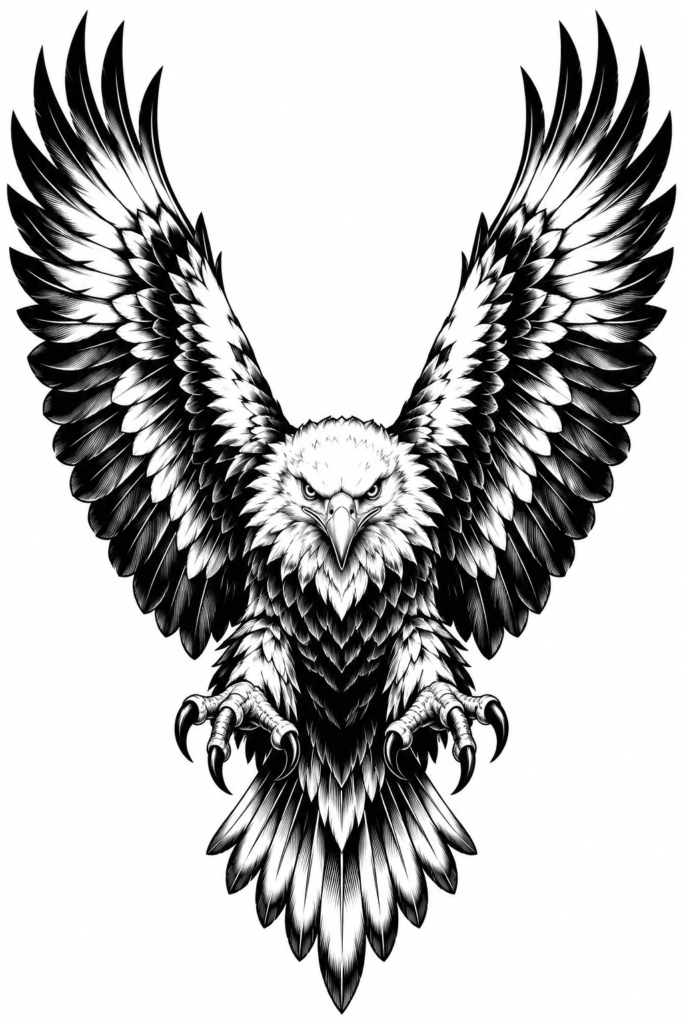
Raised wings give an eagle forearm tattoo a dramatic outline without forcing the entire design into a wide horizontal shape. The wings form a tall V, directing attention down toward the face, chest, and talons. In this concept, alternating dark feathers and pale gaps make the bird feel structured and substantial.
The main placement decision is how much wing width your forearm can show from one angle. Ask your artist to test the widest feathers near the broader part of your arm, then taper the tail toward the wrist. If you want every feather visible at once, compare a narrower wing pose before committing to the largest version.
Design direction: A tall wing silhouette, a clear face, and a tapered lower half.
2 Geometric Eagle Portrait
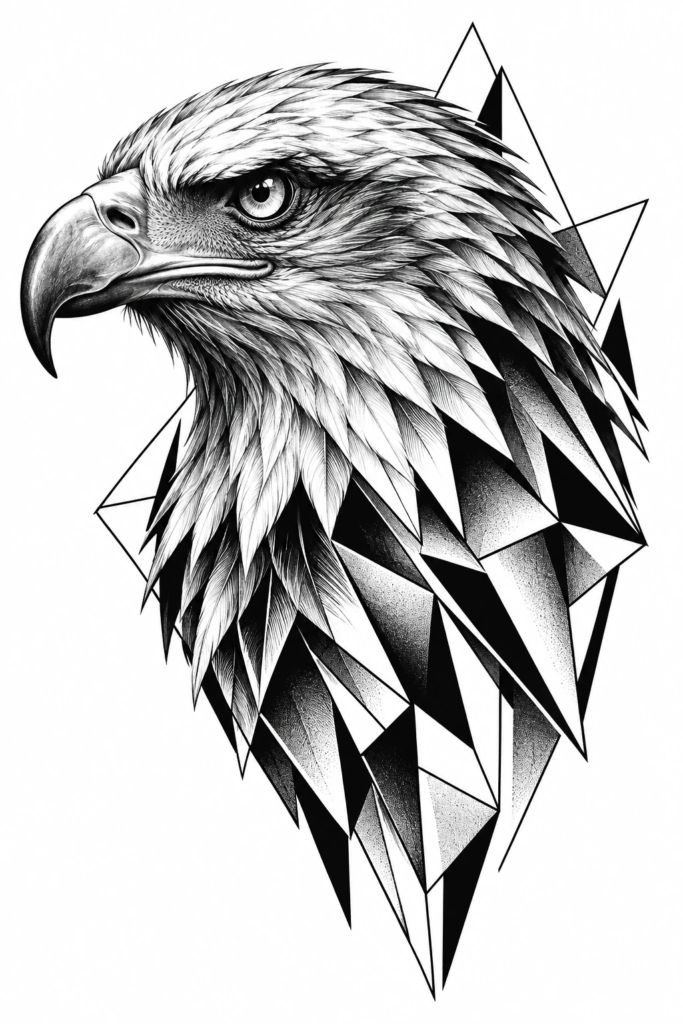
A geometric eagle tattoo brings together a recognizable eye and beak with angular shapes through the neck. That combination gives the portrait an architectural feel without losing the animal at its center. The concept is especially striking where the dark facets meet open white areas, creating a strong rhythm down the design.
Choose where the transition should begin. Keeping the face more natural and placing the geometry below it creates a clear hierarchy; covering every feather with triangles produces a busier effect. For a forearm composition, let the facets narrow toward the bottom. A few substantial shapes usually make a more deliberate visual statement than a scattering of unrelated tiny polygons.
Design direction: A readable eagle face above a controlled sequence of larger geometric shapes.
3 Diving Eagle with a Dark Sun
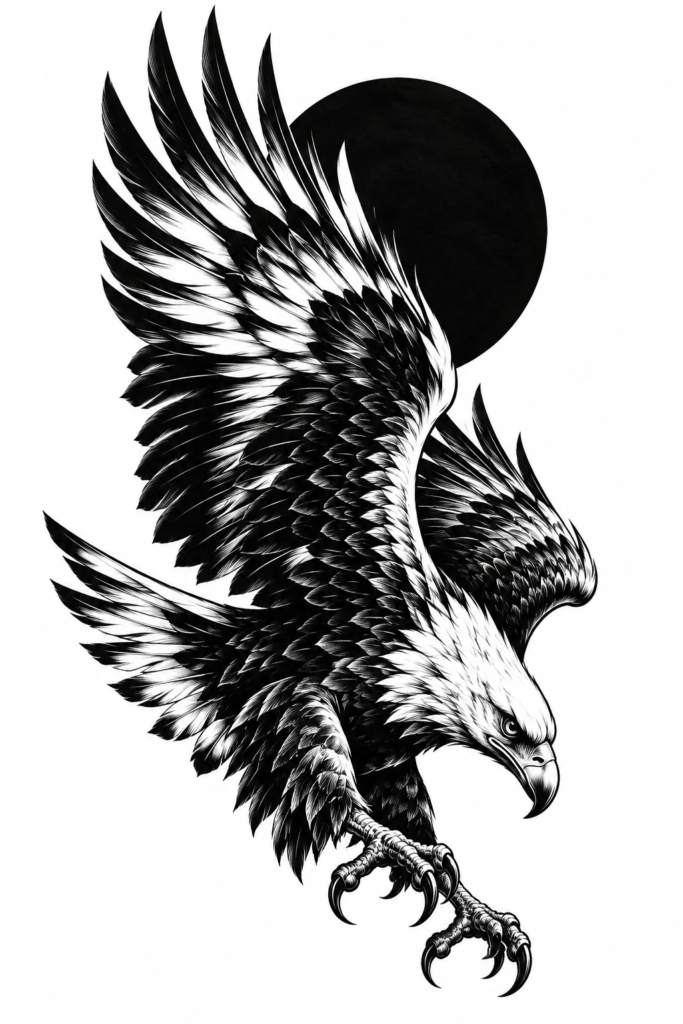
This diving eagle introduces motion through the angle of the body and the sweep of the wings. The dark sun provides a simple backdrop, giving the pale feather details something to stand against. Compared with a centered portrait, the whole design feels more active and directional.
Because the pose runs diagonally, placement deserves extra attention. Rotate the stencil to see whether the dive follows the forearm naturally or pushes important feathers around the side. Keep separation between the sun and the outer wing wherever the shapes would otherwise merge. You can simplify the sun into a partial circle if a full dark disc feels too heavy for your preferred look.
Design direction: A distinct diving silhouette with enough separation from the circular backdrop.
4 Eagle and Mountain Landscape
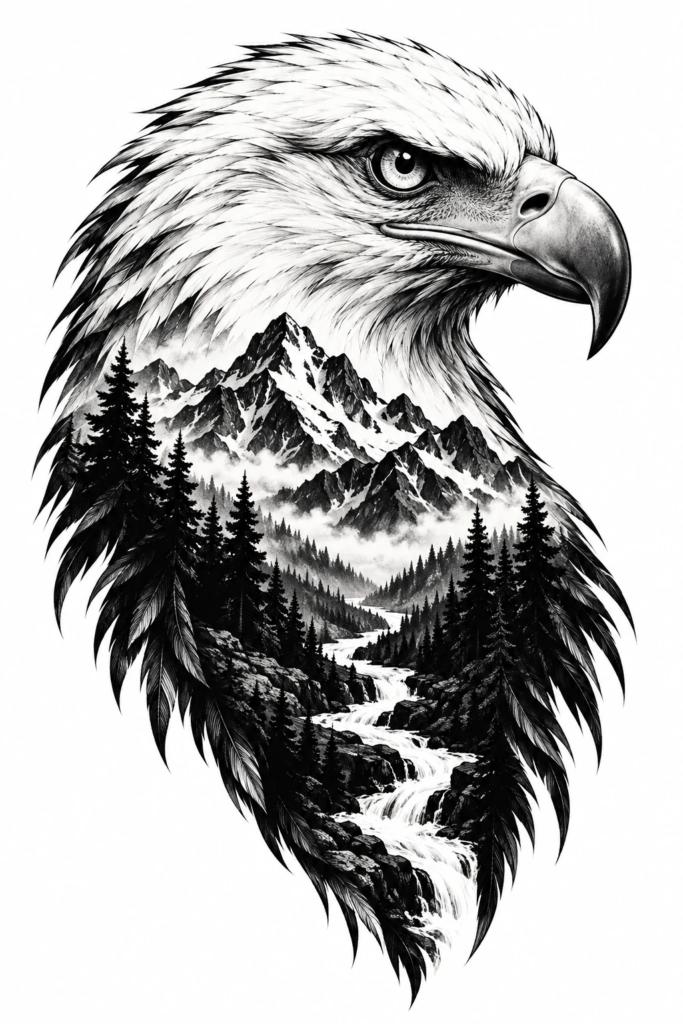
The mountain eagle concept turns the lower portrait into a landscape. Peaks sit below the face, trees build depth through the middle, and a winding river carries the eye toward the base. It offers a nature-focused alternative to a portrait surrounded by unrelated background scenery.
This idea depends on prioritizing the scene. Pick one landscape feature to emphasize, such as the highest peak or the river, instead of asking every tree to be equally detailed. Keep the eagle’s eye and beak distinct from the mountain edges. For a narrower forearm version, your artist can simplify the landscape while retaining the portrait outline and the river’s path.
Design direction: A strong eagle profile with a simplified landscape contained inside the lower silhouette.
5 Realistic Eagle Head
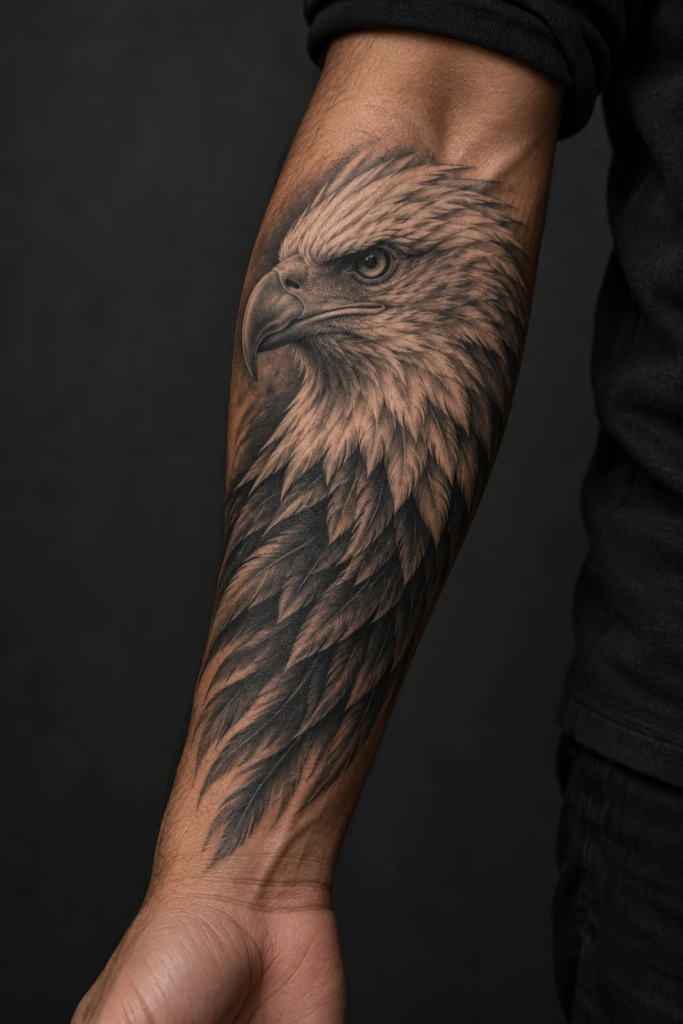
A realistic eagle head makes expression the main event. The curved beak, focused eye, and layered feathers create a close-up portrait with a strong sense of depth. The forearm mockup shows how the feather shapes can taper down the arm instead of ending in a blunt rectangle.
Bring your artist a clear idea of the expression you prefer: alert, calm, or more intense. Then discuss the amount of background shading around the head. A dark halo can make the pale feathers stand out, while an open background gives the portrait a lighter edge. Compare the design from normal viewing distance as well as close up so the face remains the focal point.
Design direction: A prominent eye and beak, with feather detail supporting the expression.
6 Ornamental Eagle
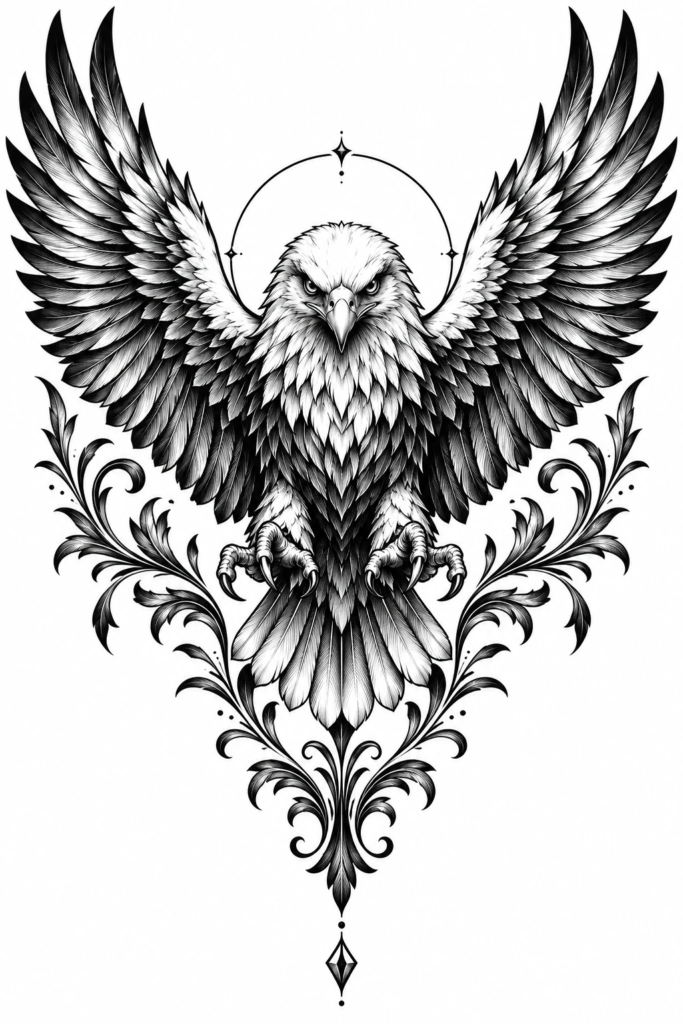
Curved ornament gives this eagle a formal, symmetrical frame. The raised wings establish the upper shape, while the flowing flourishes and pendant extend the composition below the talons. It feels closer to a decorative emblem than a wildlife portrait, making it an interesting direction for someone drawn to balanced, detailed artwork.
Keep the ornament subordinate to the bird. If every curl becomes equally dark, the eagle can disappear into the frame. On the forearm, consider trimming the widest flourishes and preserving the central line instead. You can also remove the pendant for a shorter version. These adjustments let the concept fit your placement while retaining its overall character.
Design direction: A clear central eagle framed by lighter, carefully spaced ornament.
7 Compact Blackwork Eagle Head
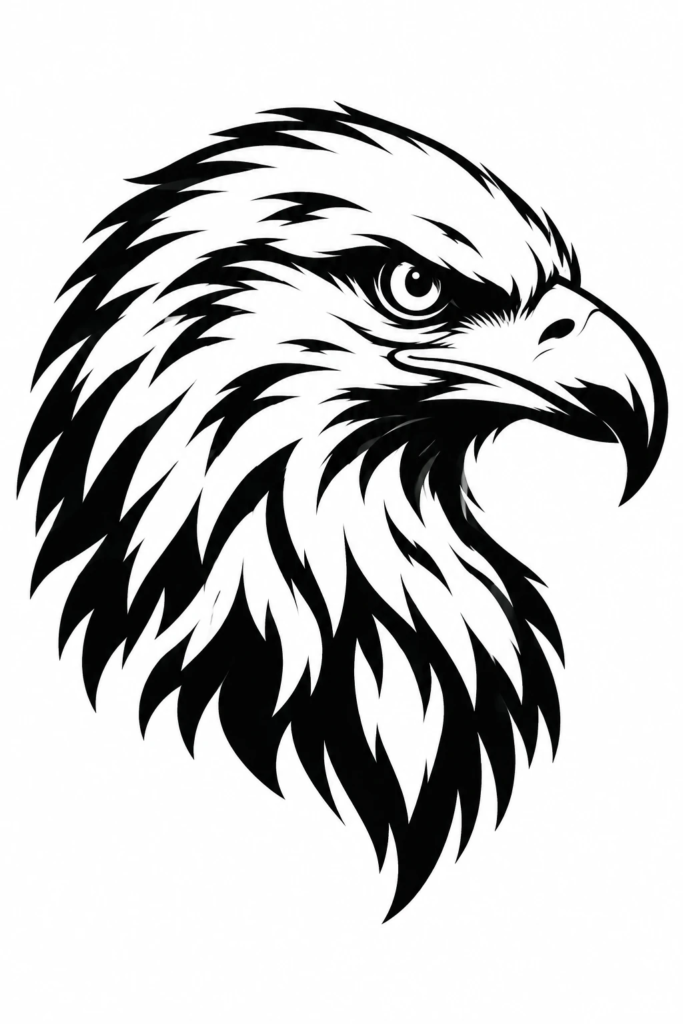
This compact eagle head uses broad black shapes instead of fine feather shading. The hooked beak, focused eye, and pointed neck feathers carry the identity of the bird. It is the most graphic option in this collection and a useful comparison if the realistic portrait feels more detailed than you want.
Compact describes the composition, not a required tattoo size. Ask your artist to keep the light spaces around the eye and beak distinct at the dimensions you choose. The portrait can stand alone on the forearm or become a starting point for a larger arrangement. Try both facing directions on a stencil before choosing how it should relate to your wrist and elbow.
Design direction: A bold profile with open facial details and a clean outer silhouette.Request editsCtrl Shift X
How to Choose Your Eagle Forearm Tattoo
Start by choosing two favorites from the collection and naming what you like about each. You might prefer the silhouette of one and the level of detail in another. That gives your artist a more useful brief than a request to combine every design into one tattoo. Keep one main subject and decide which supporting details actually add something.
Next, compare the composition on the inner forearm, outer forearm, and side of the arm. Look at the stencil with your hand relaxed and your arm turned. Check where the widest part sits, how the design finishes near the wrist, and whether you want room for future pieces. The final layout should be designed for your arm rather than copied at an arbitrary size.