
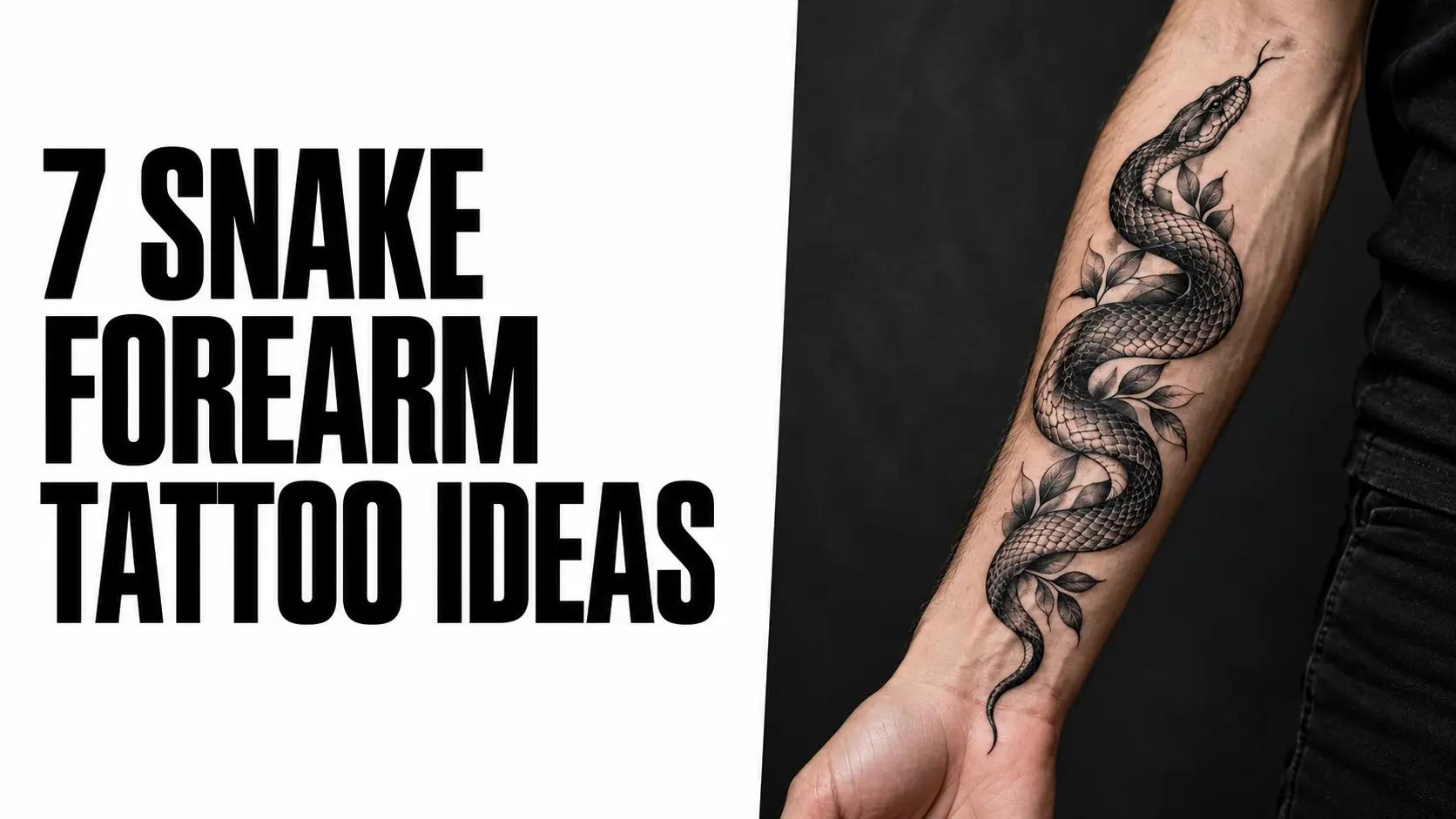
A snake can follow the length of your forearm, curl around it, or weave through a flower and still feel like the main subject. The choice is less about finding one perfect snake and more about deciding how much movement, shading, and detail you want to wear.
These seven snake forearm tattoo ideas give you distinct starting points to compare. Each includes an original concept image and a design note to help you explain what you like. Use your favorites as references for a custom composition that your tattoo artist can adapt to your arm.
1 Bold Blackwork Snake
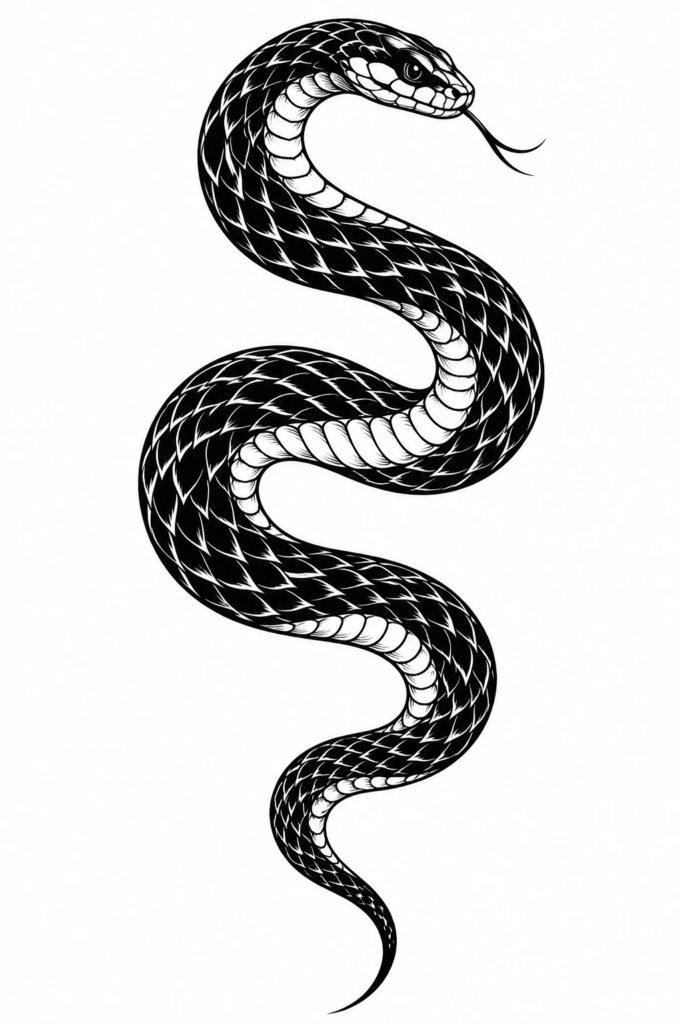
This blackwork snake forearm tattoo puts the silhouette first. The body moves through broad curves, while the pale belly creates a ribbon of contrast inside the darker scales. It has enough movement to feel alive without needing a busy background. If you want the snake itself to carry the design, this is a strong starting point.
For a forearm version, ask your artist to align the longest curve with the length of your arm. Keep a visible gap between neighboring bends so the body remains easy to follow. The head can sit nearer the elbow, with the tail tapering toward the wrist; compare that arrangement with a reversed stencil before settling on the direction.
Design direction: Broad curves, a clear head silhouette, and open space between coils.
2 Snake and Crescent Moon
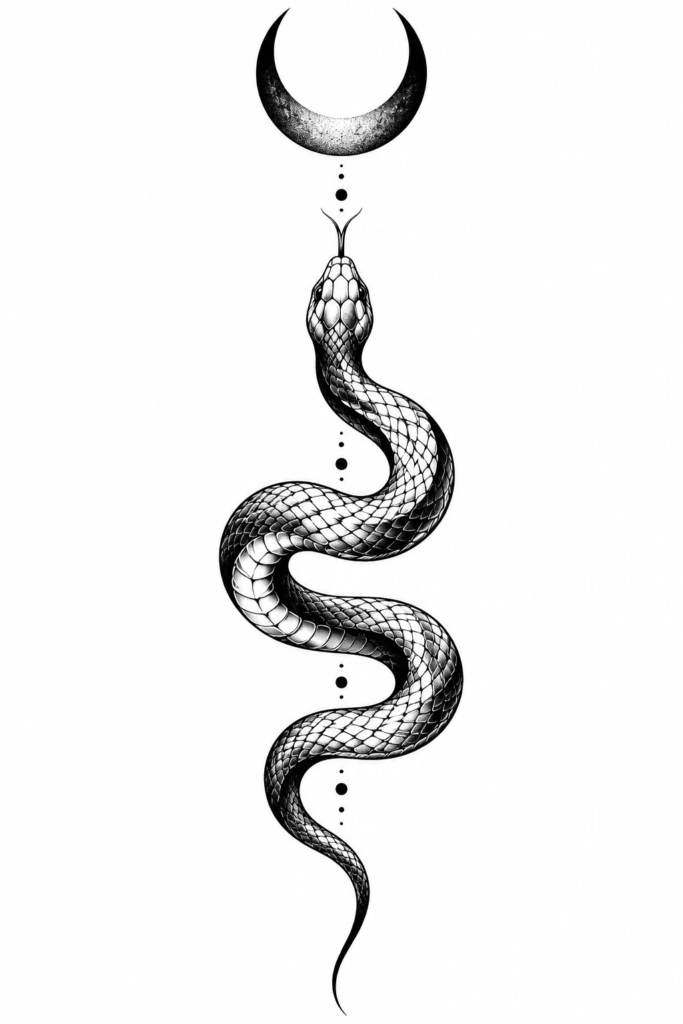
A crescent moon changes the mood without taking attention away from the snake. Here, the moon creates a small focal point above the raised head, and the narrow vertical arrangement gives the concept a composed, almost emblem-like shape. It is a good direction if you like celestial details but want the tattoo to remain mostly animal imagery.
Keep the moon simple and leave a little space between it and the snake. Adding several stars, a full zodiac circle, and extra lettering would make this a very different composition. On the inner forearm, try centering the whole arrangement rather than centering only the body: the crescent contributes to the visual balance too.
Design direction: One crescent, one flowing snake, and restrained celestial accents.
3 Snake and Rose
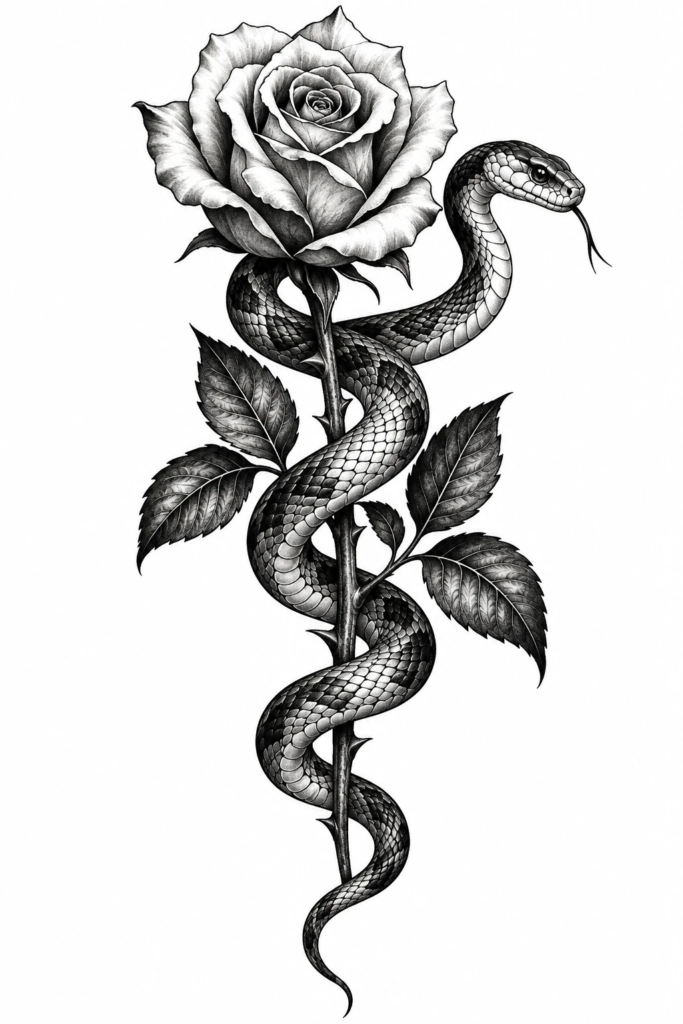
A snake and rose forearm tattoo combines two contrasting shapes: the broad, layered bloom and the narrow body curling below it. The flower gives the upper portion a clear destination for the eye. Dark leaves and textured scales connect the two subjects, making them feel like one design instead of separate images placed together.
If you prefer a floral look, keep the bloom generous and reduce the darkest shading in the snake. For a stronger animal focus, enlarge the head and simplify the petals. The reference uses a long stem to organize the composition; retain that structure when adapting it to your forearm so the lower half does not become a tangle of leaves.
Design direction: A prominent rose above a readable coil, with a long stem connecting them.
4 Snake Wrapped Around a Dagger
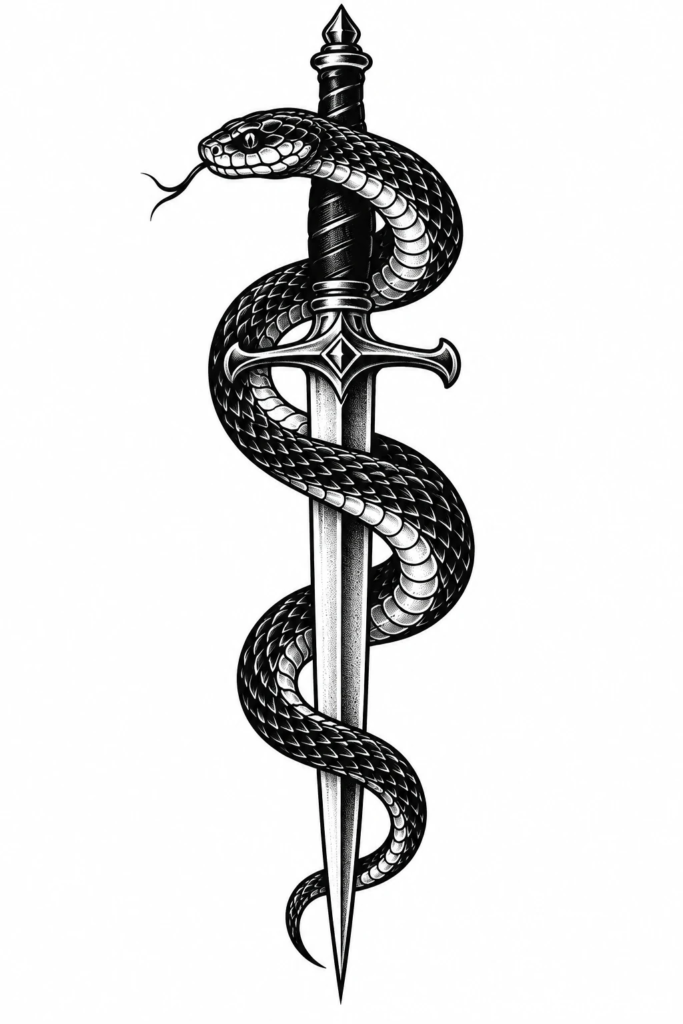
The dagger creates a straight central line while the snake supplies the movement. That contrast makes this design feel sharper and more graphic than a loose coil. It also gives you a straightforward way to organize the forearm: the handle, blade, and tip establish an axis from the upper arm side toward the wrist.
Keep enough blade visible that the dagger remains recognizable between the loops. A highly decorated handle can compete with the head, so choose which detail should lead. Before approving a stencil, look at how the blade sits with your arm relaxed and rotated. The design should feel balanced in the position you will see most often.
Design direction: A simple dagger, clear blade edges, and coils that do not hide the central shape.
5 Wraparound Snake
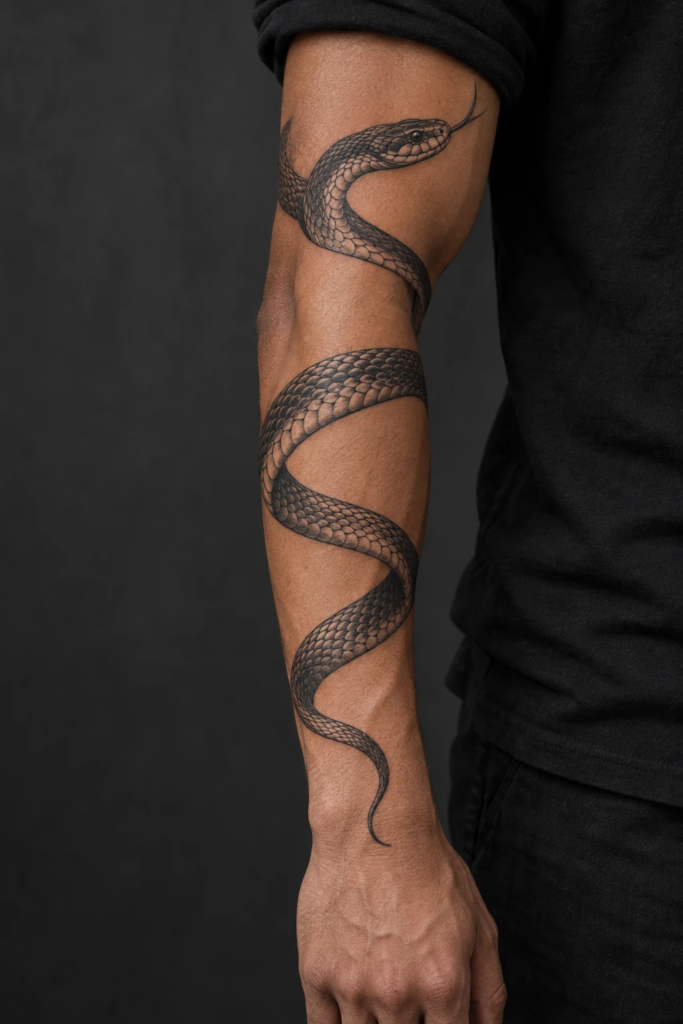
A wraparound snake uses the forearm as part of the composition. Instead of fitting the whole animal into a flat rectangle, the body travels around the arm and reveals different sections as you turn it. The placement concept shown here makes the head and part of the belly visible while the coils continue around the sides.
Treat this as a placement discussion rather than a finished stencil. Your artist will need to draw the path for your arm and decide where the head, overlaps, and tail become visible. Ask to see the layout from the front, side, and back. Leave some open skin between turns if you want an airy wrap instead of a dense band.
Design direction: A continuous path planned around the arm, with a deliberately chosen head position.
6 Minimal Snake
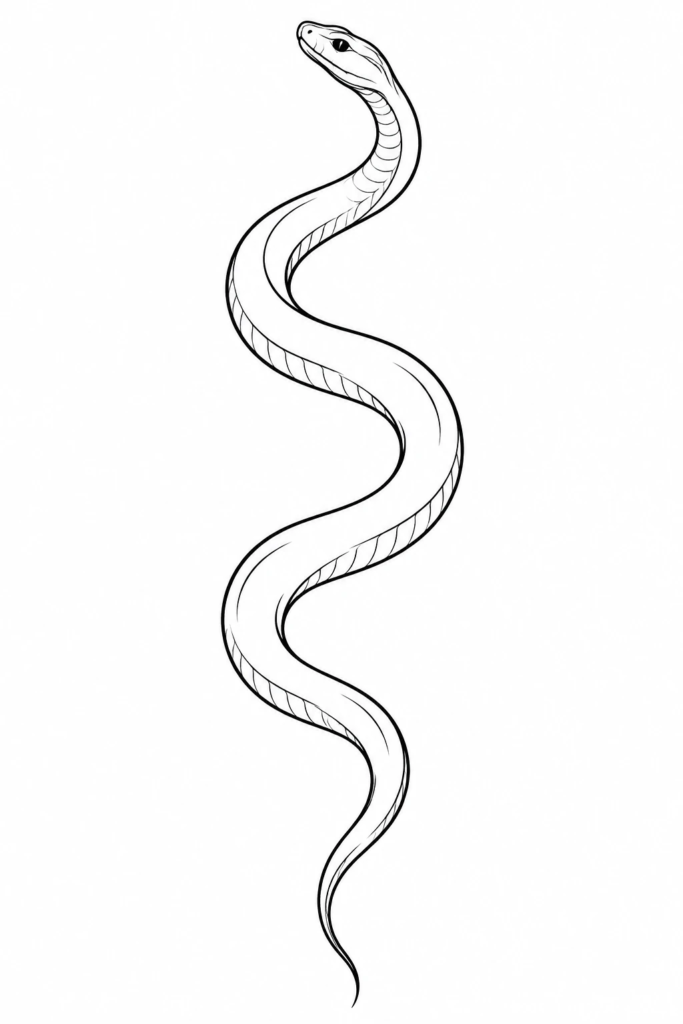
This minimal snake forearm tattoo trades dense scale texture for a clean outline and a spacious curve. The result feels lighter than the blackwork option, even though the subject is the same. It suits a composition where the shape of the animal matters more than dramatic shading or additional symbols.
Minimal does not have to mean extremely tiny. Give the head, body, and tail enough room to read as separate features, and let your artist decide which details make sense at the chosen size. For a quieter placement, try a narrow layout along the inner forearm. You can also compare a centered version with one following the side of the arm.
Design direction: A slender outline, a small number of bends, and generous open space.
7 Snake and Olive Branch
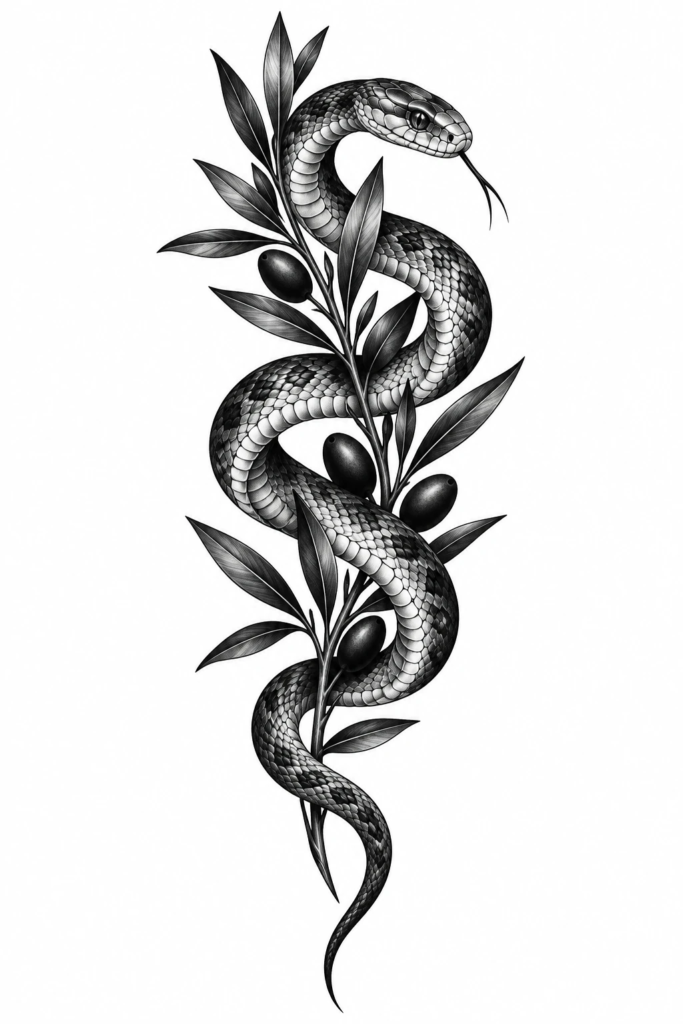
An olive branch gives the snake a softer surrounding shape while preserving the long vertical composition. The narrow leaves echo the tapered tail, and the small olives add variety without requiring another large focal point. This is an appealing option if you like botanical tattoos but would prefer foliage to a prominent flower.
The strongest version keeps the branch readable from top to bottom. Let some leaves sit outside the coils, and avoid filling every opening with another detail. You could personalize the plant choice with your artist, but changing to broad leaves or large flowers will alter the balance. Start with the overall outline before deciding how much texture to add.
Design direction: A single botanical stem woven through broad, readable snake curves.Request editsCtrl Shift X
How to Choose Your Snake Forearm Tattoo
Start by choosing two favorites from the collection and naming what you like about each. You might prefer the silhouette of one and the level of detail in another. That gives your artist a more useful brief than a request to combine every design into one tattoo. Keep one main subject and decide which supporting details actually add something.
Next, compare the composition on the inner forearm, outer forearm, and side of the arm. Look at the stencil with your hand relaxed and your arm turned. Check where the widest part sits, how the design finishes near the wrist, and whether you want room for future pieces. The final layout should be designed for your arm rather than copied at an arbitrary size.