
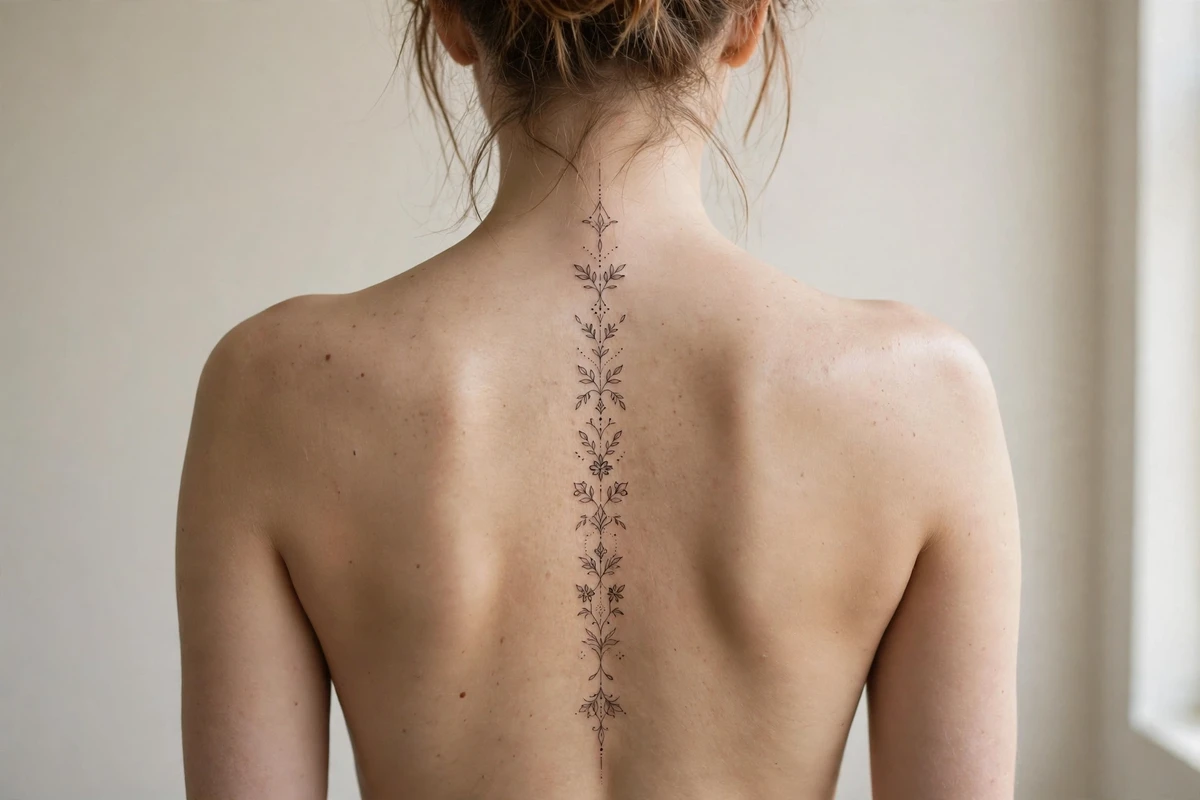
The spine is one of the best canvases a tattoo can have. It gives you a long, straight line to work with, and a design that follows it looks like it belongs there — it moves with the back instead of sitting on it. That is why spine tattoos photograph so well and why so many people pick this placement for a first large piece or a single delicate line.
Be honest with yourself before you book, though: the spine is known to be more painful than fleshier spots like the thigh or upper arm. There is very little padding over the bone, especially around the neck and the lower back, so expect a sharper feeling and plan for breaks during a longer session. The seven ideas below cover the full range, from a single fine line to a full ornamental column, so you can match the design to how much time in the chair you are ready for.
1. Fine-Line Spine Tattoo
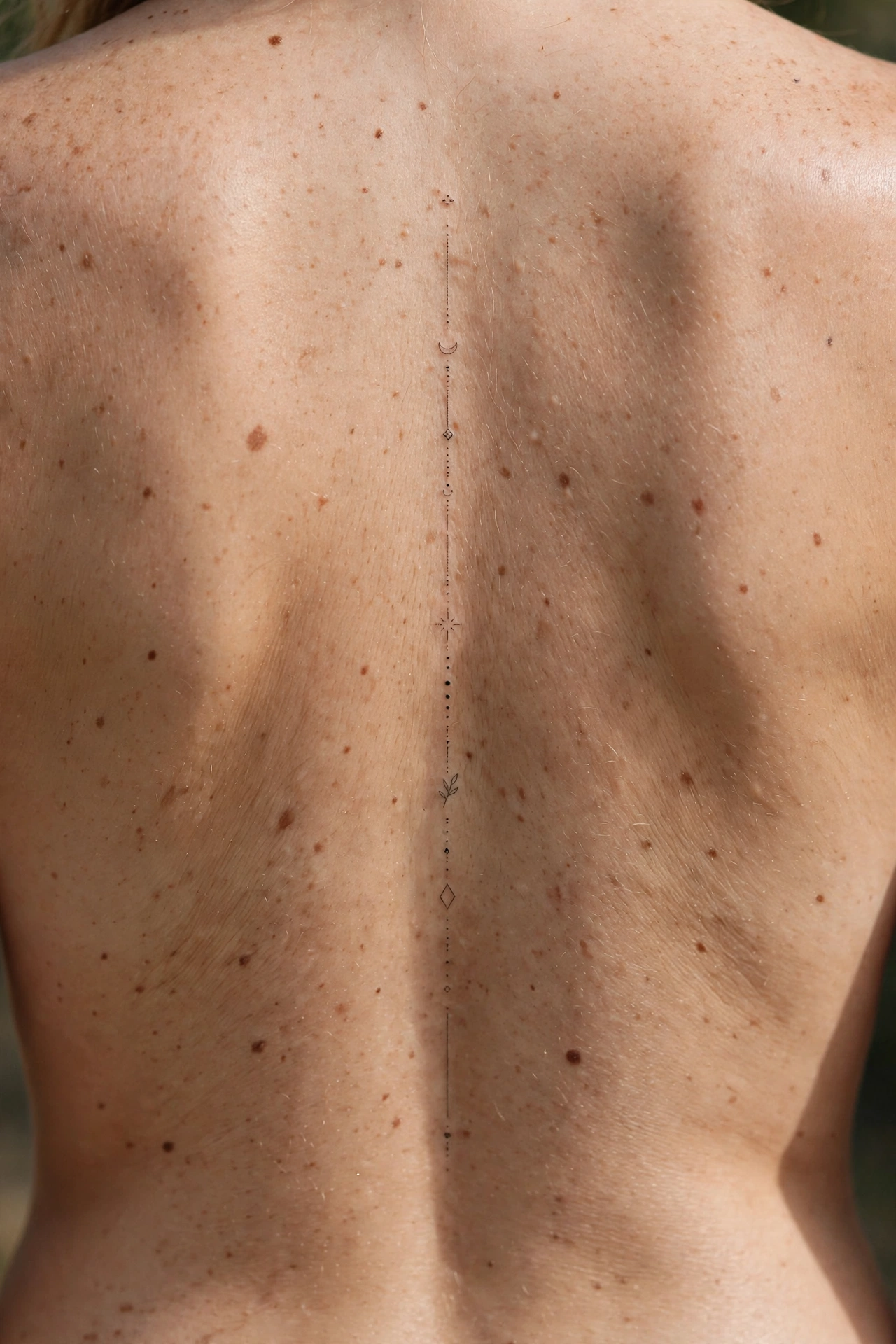
A fine-line spine tattoo is the simplest version of this placement, and often the most striking. One thin vertical line, broken up with tiny dots, a small crescent, or a few minimal symbols, runs down the centre of the back. The linework is so light that the tattoo reads more like a piece of jewellery than a picture, which is exactly why it has become so popular.
Because the design is so restrained, the line has to be clean. Ask your artist to keep the spacing even and the symbols small, and keep the line centred on the spine itself rather than drifting to one side. A straight, even line is what makes this style work, and it is also what is hardest to get right freehand.
Placement notes: The full length of the spine, from the base of the neck to the lower back. It also works as a shorter version between the shoulder blades if you want something more discreet.
2. Ornamental Spine Tattoo
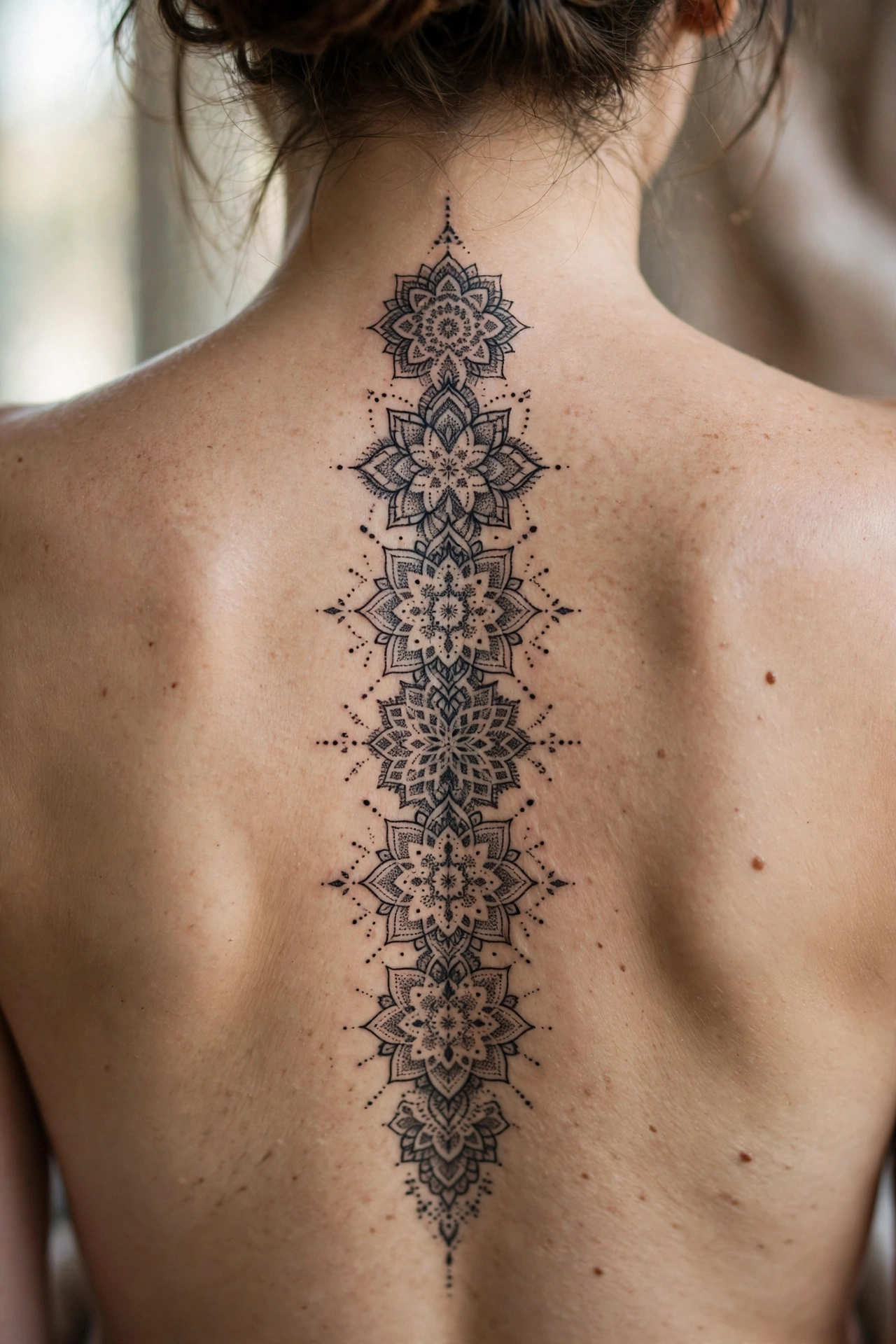
An ornamental spine tattoo turns the whole back into a piece of decoration: a column of symmetrical mandala shapes, dotwork, and lace-like detail running from neck to lower back. Each mandala stacks on the one below it, so the design has a rhythm to it, and the symmetry of the pattern suits the symmetry of the spine perfectly.
This is a big commitment in terms of time — a full ornamental column usually takes more than one sitting — but it is also one of the most rewarding spine designs, because it uses the whole length of the back rather than just a small section of it. The dotwork shading keeps the black ink from feeling heavy, and the detail holds up well over time because the back sees so little sun compared with the arms.
Placement notes: The full spine, neck to lower back, where the stacked mandalas can run in one unbroken column. Keep the widest mandala between the shoulder blades, where the back is broadest.
3. Floral Spine Tattoo
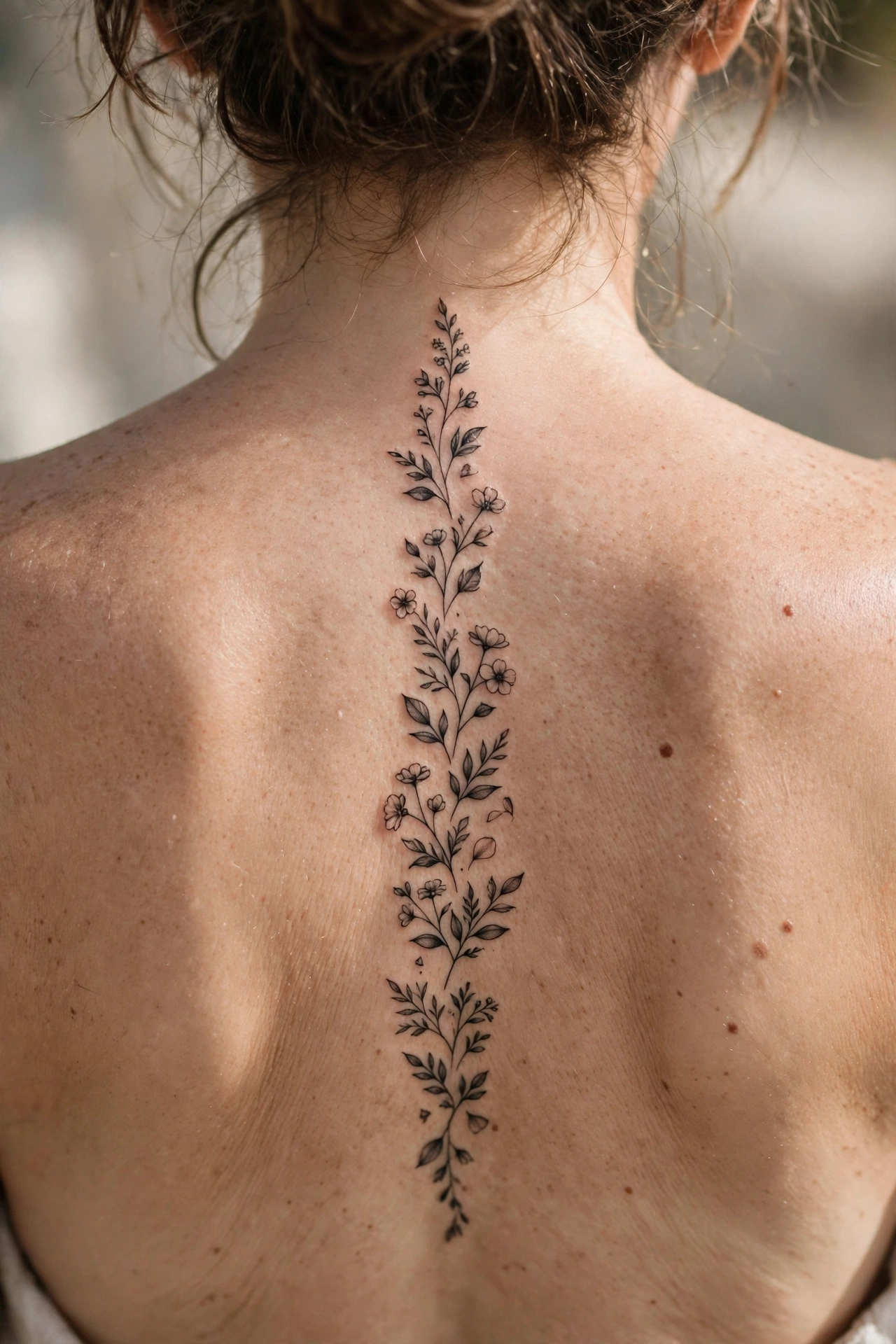
A floral spine tattoo lets a trail of flowers and leaves grow down the back, like a vine following the line of the spine. Small blooms, buds, and leaves work best — they keep the design light and let the stem do the work of connecting everything together. Black and grey shading gives it a soft, classic feel, while a touch of colour in one or two flowers can give the whole piece a focal point.
The trick with a floral spine piece is spacing. Flowers bunched too close together blur into one dark shape as the tattoo ages, so ask your artist to leave breathing room between each bloom. A looser, airier trail will still look like flowers years from now, where a crowded one will not.
Placement notes: The full spine for a long vine, or the upper back between the shoulder blades for a shorter sprig. A floral trail also pairs well with a small flower at the base of the neck.
4. Script Spine Tattoo
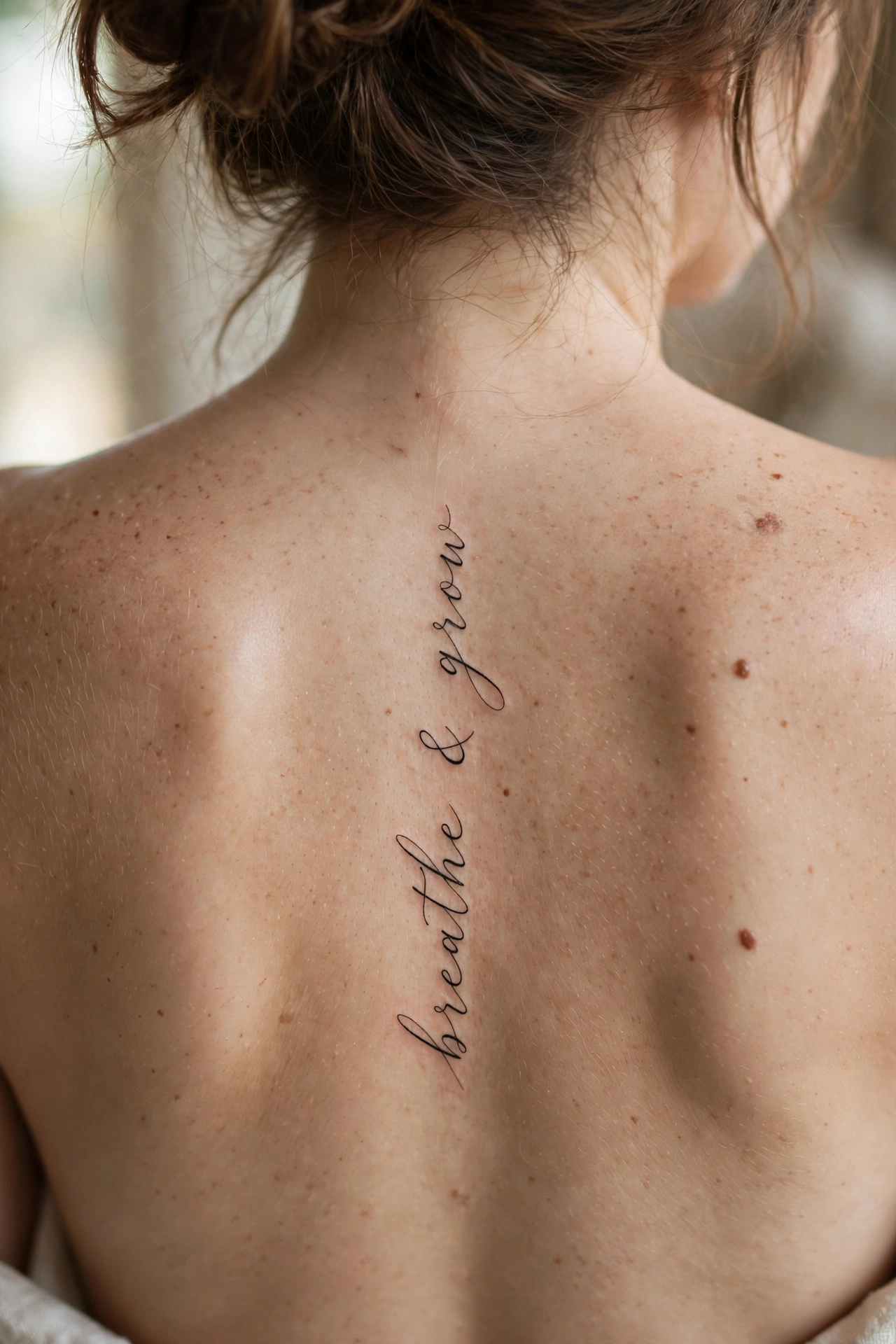
Script is a natural fit for the spine because words already run in a line. A short quote, a single word, or a line that means something to you, written in fine cursive down the centre of the back, turns the spine into a sentence. It is personal in a way a picture cannot quite match, and because it sits on your back, it is mostly for you rather than for everyone else.
Keep the wording short. A few words in elegant script will read clearly and stay legible; a long paragraph will shrink, blur, and be hard to read within a few years. Pick a typeface with open, clear letters rather than a heavily decorated one, and double-check the spelling with your artist before the needle touches skin.
Placement notes: Down the centre of the spine, reading top to bottom. A shorter word or date also works well placed vertically between the shoulder blades.
5. Blackwork Spine Tattoo
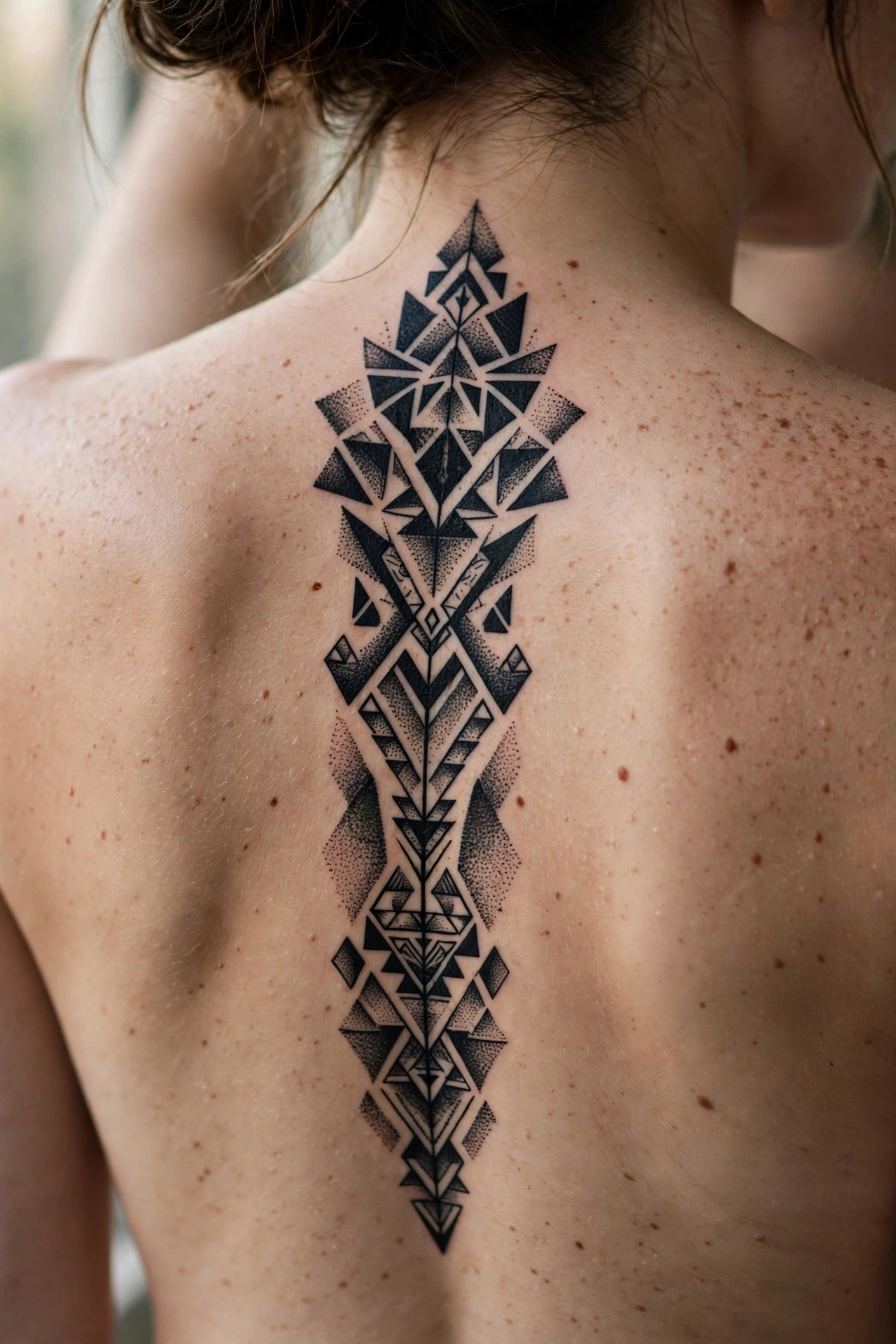
Blackwork takes the spine in the boldest direction: solid black geometric shapes, sharp triangles, and dotwork shading stacked into a strong vertical column. There is nothing delicate about it — the design is meant to be seen, and the contrast of solid black against skin makes it one of the most eye-catching spine styles there is.
Because blackwork uses so much solid ink, it suits a larger placement. The shapes need room to hold their edges as the tattoo settles, so a small blackwork piece can lose its crispness faster than a larger one. It also means a longer session and more healing time, so plan for aftercare and loose clothing that will not rub the fresh ink.
Placement notes: The full spine for a complete geometric column, or the upper back if you want the boldest shapes where the back is widest. Larger placements hold the detail better.
6. Moon Phases Spine Tattoo
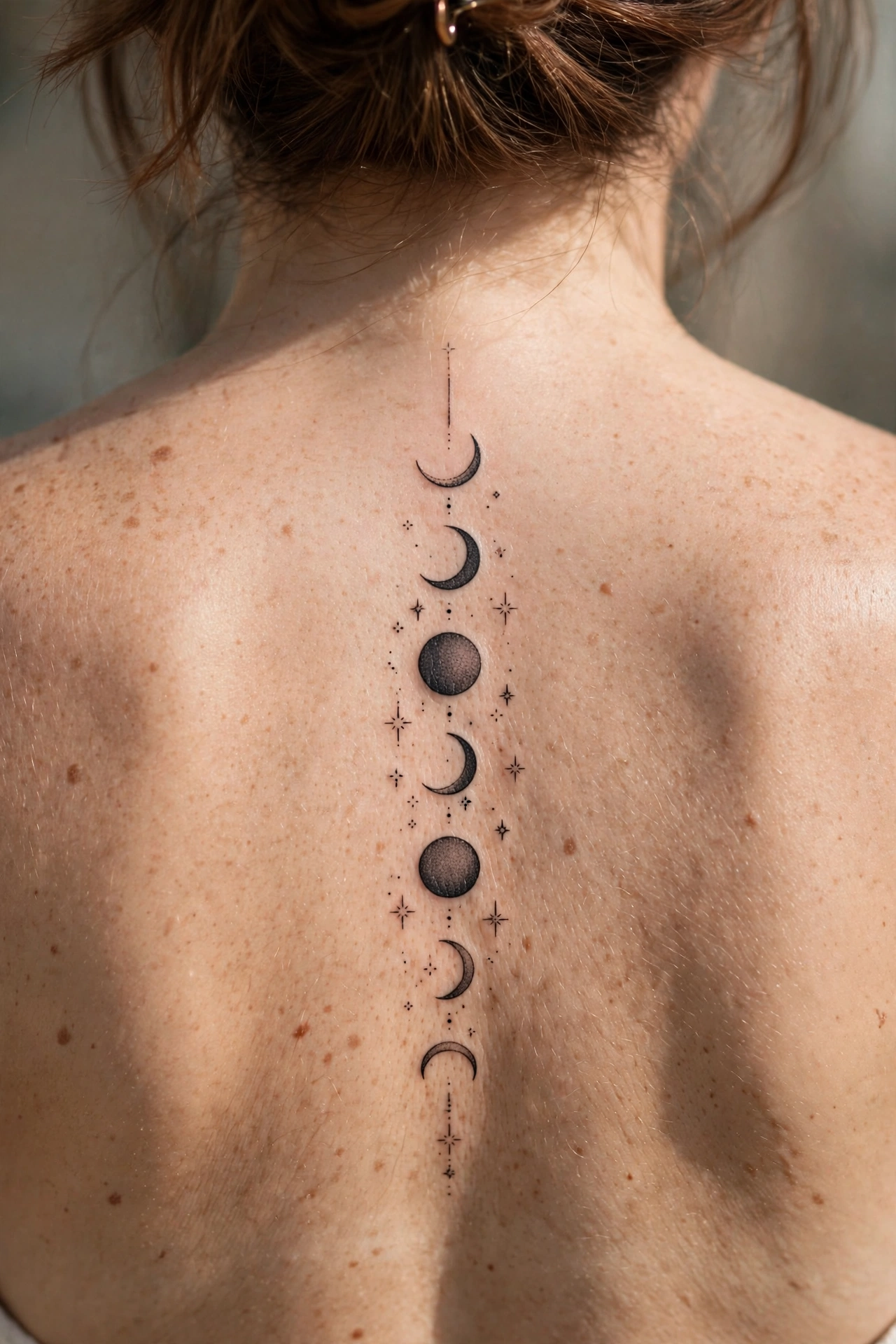
A row of moon phases running down the spine is one of the neatest fits for this placement — the moons are already a vertical sequence, so they sit naturally along the back. A full moon, crescents, and a few tiny stars, spaced evenly from neck to lower back, give the design a calm, even rhythm that suits the spine’s straight line.
This design works in pure black ink, but it also takes a little shading well: a shaded full moon in the middle of the sequence makes a good centrepiece, with the crescents getting smaller toward each end. Keep the moons the same size or let them grow slightly toward the middle — either way, even spacing is what keeps the row looking deliberate rather than scattered.
Placement notes: The full spine, with the largest moon in the centre of the back. A shorter version of three or four phases also works well between the shoulder blades.
7. Small Minimal Spine Tattoo
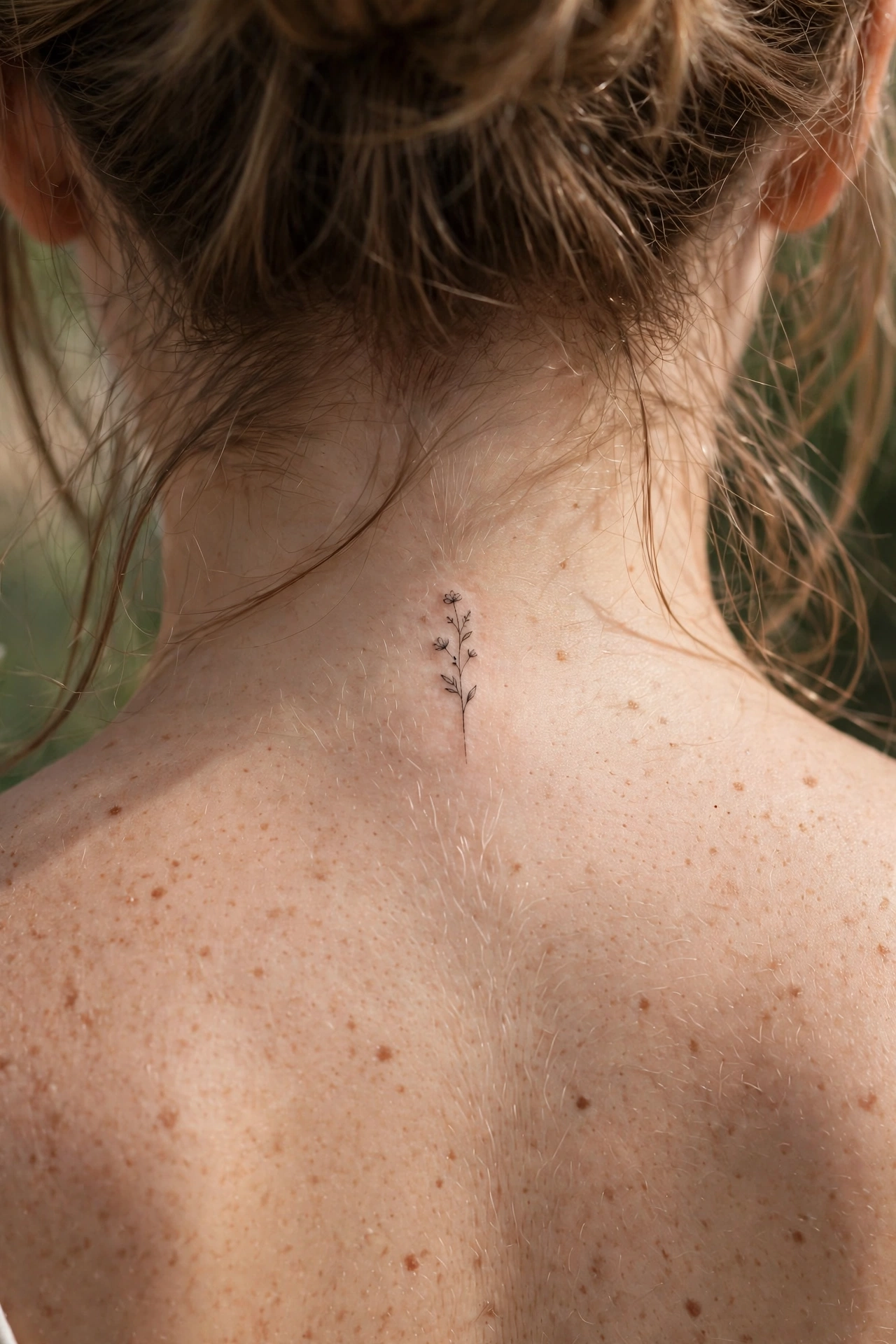
Not every spine tattoo has to run the full length of the back. A small minimal design — a single sprig, a tiny symbol, a few fine lines — placed at the top of the spine near the neck is easy to hide, quick to get done, and easy to live with. It keeps the spine placement without the commitment of a full column.
A small design like this is a good first spine tattoo, because the session is short and the healing is straightforward. It also leaves the rest of the spine free, so you can add to it later — a small sprig at the neck can grow into a longer trail if you decide you want more.
Placement notes: The top of the spine at the base of the neck, where a small design sits neatly and can be covered by hair or a collar. A small symbol also works well at the very bottom of the spine.
A spine tattoo works because the placement does half the job for you — the long, straight line of the back gives any design a natural flow. Pick the style that matches how bold you want to be: fine-line or minimal for something subtle, script or moon phases for something personal, and ornamental or blackwork when you want the whole back to make a statement. Whichever you choose, remember the spine is a sensitive spot, so book a good artist, plan for breaks, and give the design the length it needs — a spine tattoo squeezed into too short a space loses the flow that makes it special.