
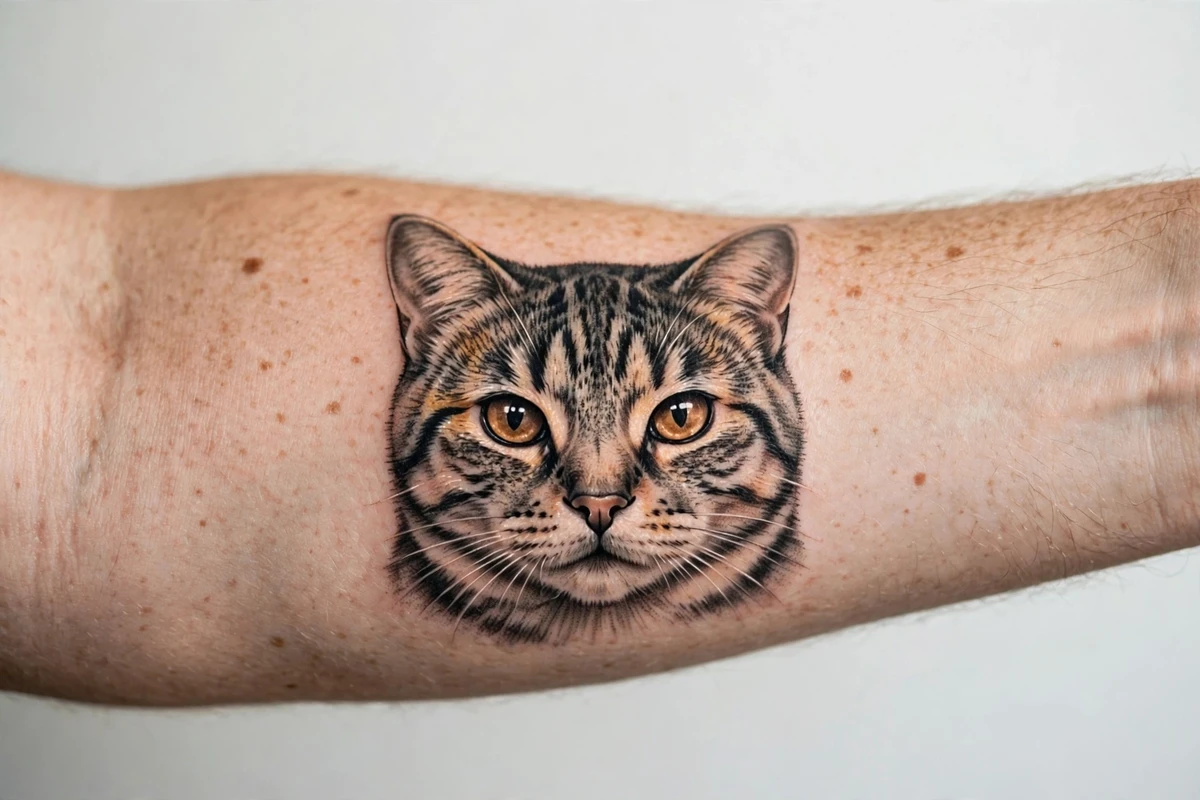
A cat tattoo works because a cat is easy to recognise in almost any style. A pointed ear, a curved tail, a pair of eyes — even a few lines are enough for someone to know what it is. That makes the cat a good choice whether you want a detailed portrait or something small and simple.
The decision is not really about the cat. It is about how much detail you want, how much colour, and how big the piece should be. A realistic portrait needs space and shading. A fine-line cat needs a steady hand and very little else. These seven ideas cover that range, so you can compare them before you talk to an artist.
1. Realistic Cat Portrait
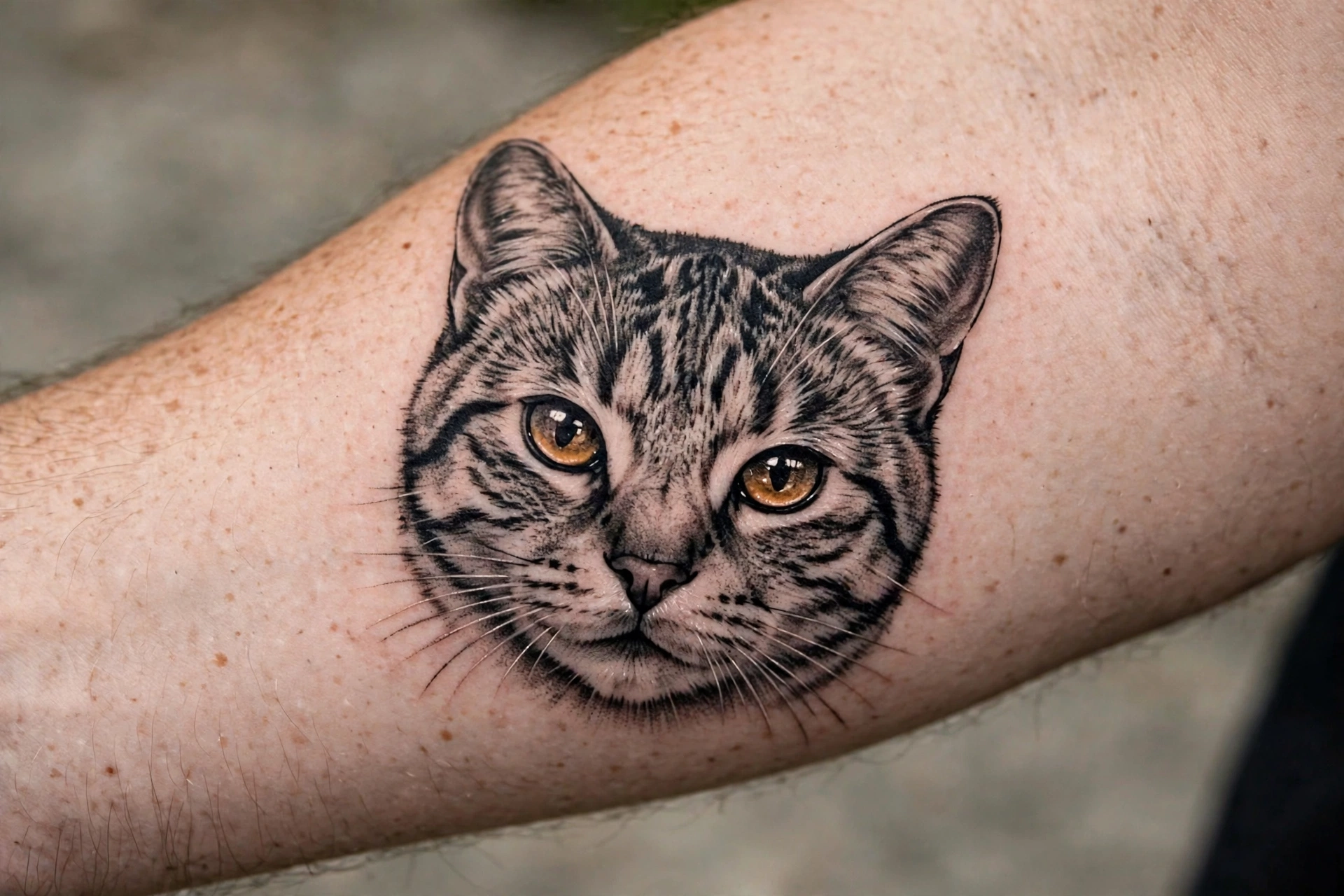
A realistic cat portrait is the closest a tattoo gets to a photograph of your own cat. The fur, the shape of the eyes, the markings on the forehead — all of it can be matched to a real cat, which is why this is the design most people choose when the tattoo is a tribute to a pet they have or had.
This is a strong choice for a forearm or upper arm, where the face has room to sit at a size that keeps the detail readable. Ask your artist to keep the darkest shading in the eyes and around the nose, so the face holds its shape from a normal distance. A portrait that is too small will lose the fur detail, while one that is too large can feel heavy on the arm.
Design note: Bring a clear photo of your cat taken in daylight. An artist works from the shape of the ears, the width of the face and the pattern of the markings, and a blurry photo leaves too much to guess.
2. Fine-Line Cat

A fine-line cat uses one thin outline to draw a sitting cat, usually with a curled tail and no shading at all. The design is quiet and elegant, and it suits someone who wants a cat tattoo without a bold image on show all the time.
It works well on a wrist, behind the ear, or along the collarbone, where a larger design would feel crowded. Keep the pose simple: a sitting cat reads clearly at a small size, while a running or jumping cat needs more room to make sense. Limit the design to the cat itself — whiskers and a tail are enough detail at this scale.
Design note: The line is the whole design, so any wobble will show. Choose an artist who does fine-line work regularly, and test the size on your skin first, because a cat that looks delicate on a screen can feel larger once it is on a wrist.
3. Watercolour Cat
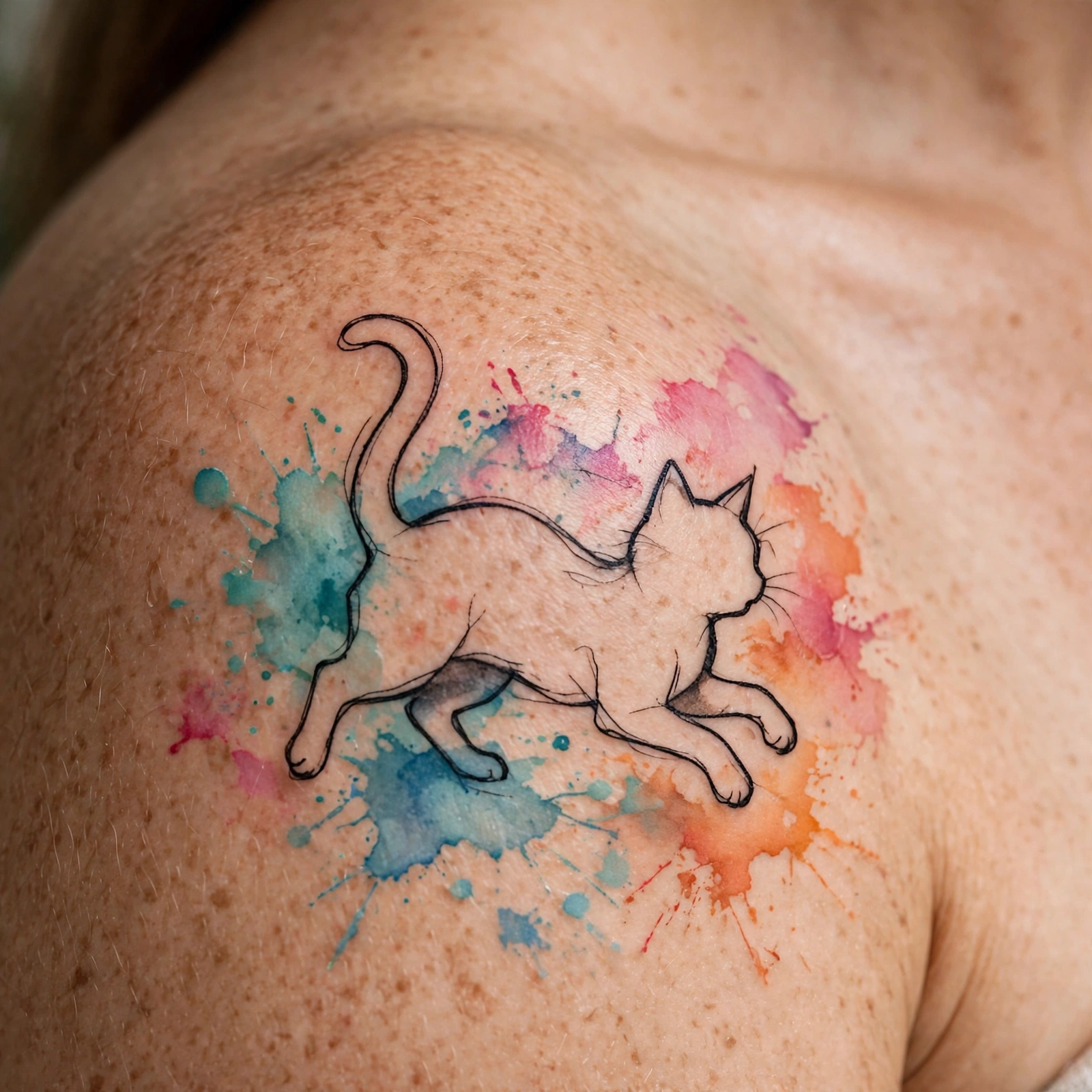
A watercolour cat uses soft washes of colour around a lightly outlined cat, with a few paint-like splashes outside the main shape. The effect is looser and more playful than a realistic portrait, and it suits a cat caught mid-step, tail up and ears forward.
It suits a shoulder or forearm, where the washes have room to spread without running into another tattoo. The outline should stay clear even where the colour is soft. Without that outline, the cat can look unfinished once the colour settles, so ask your artist how they keep the shape defined.
Design note: Ask how the artist handles the edges. A watercolour cat needs a clear outline around the body and tail, with the loose colour kept to the outside, so the cat keeps its form as the tattoo ages.
4. Blackwork Cat
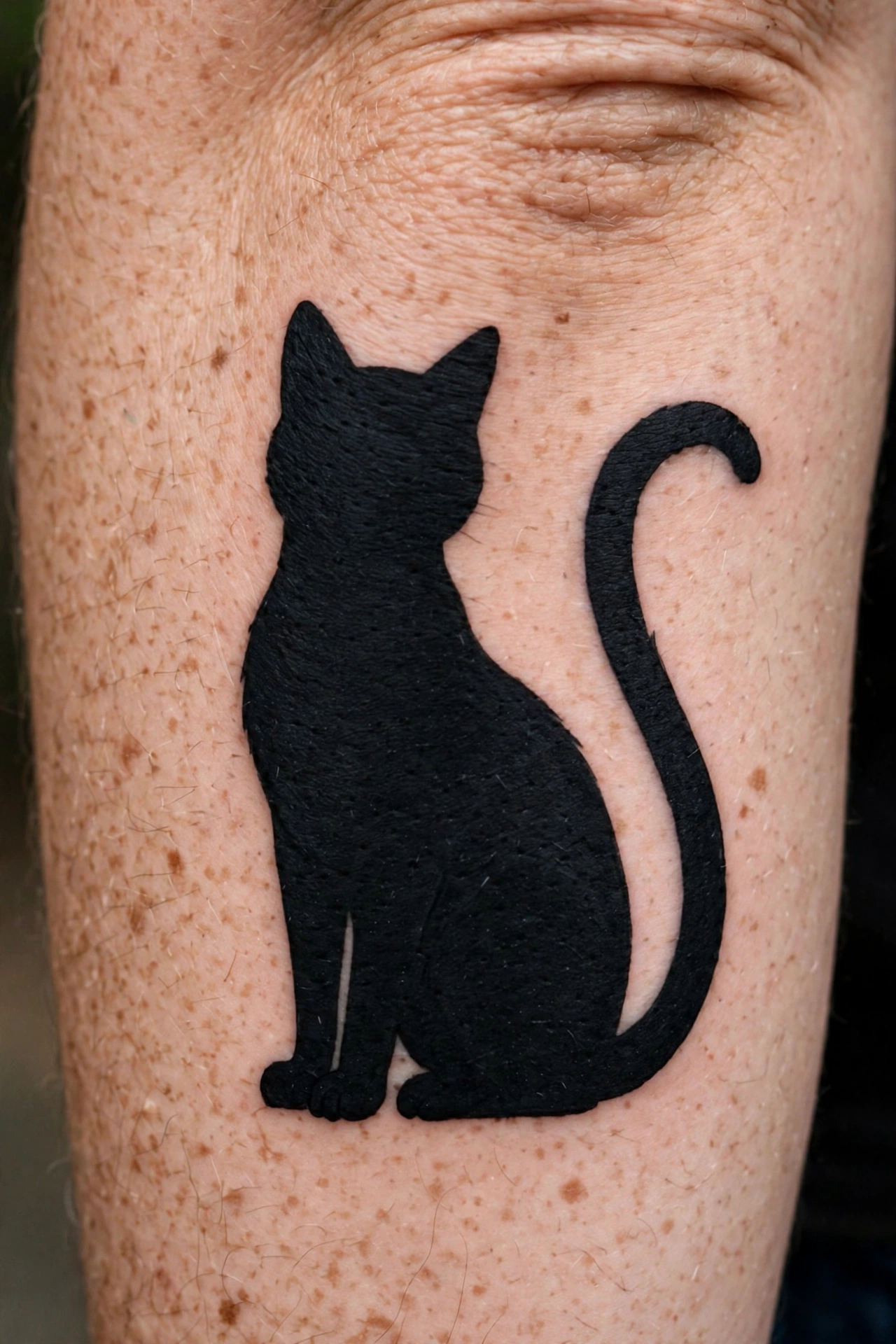
A blackwork cat trades colour and detail for contrast. A solid black silhouette of a sitting cat, with a long curved tail, reads clearly from across a room and needs no extra symbols to make its point.
This version suits a forearm or calf, where there is room for the dark shape to breathe. The edge of the silhouette matters more than anything else: a clean, smooth outline keeps the cat looking like a cat, while a rough edge can make it look like a dark patch. Ask your artist to keep the tail as one smooth curve, since a kinked tail is the first thing people notice.
Design note: Blackwork ages well when the shapes are bold. Avoid very thin black lines inside a solid design, as they can close up over time, and leave a little clear skin around the silhouette so it does not merge with nearby tattoos.
5. Cat and Flowers
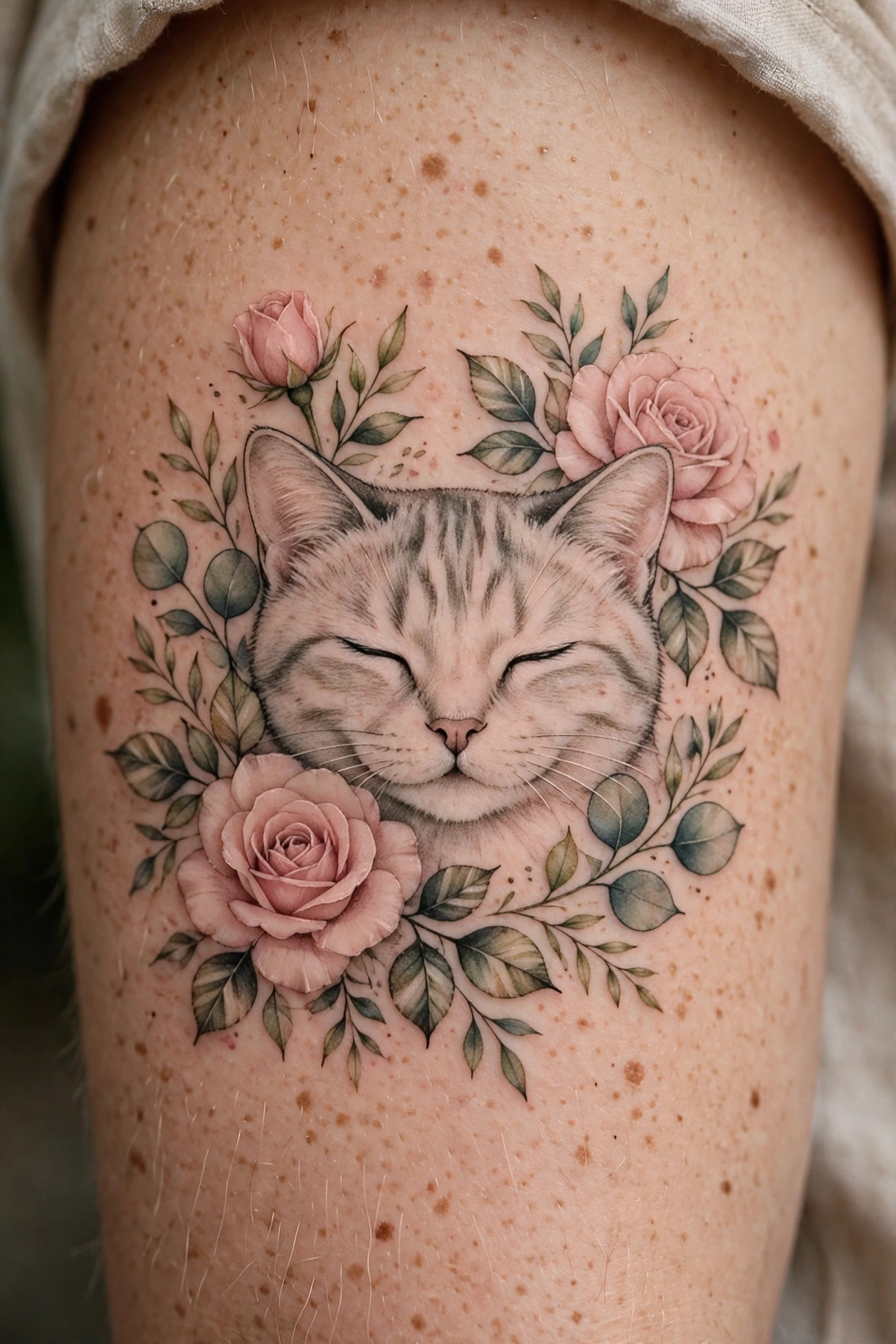
A cat with flowers pairs a calm cat face with soft roses and leaves around it. The flowers soften the portrait and give the design a gentle, settled feel, which suits someone who wants a cat tattoo that reads as warm rather than striking.
This suits an upper arm or thigh, where the cat and the flowers have room to sit together without squeezing each other. Keep the cat as the clear centre of the design, with the flowers framing it rather than competing with it. One or two roses and a few leaves are enough; a full bouquet can crowd the cat’s face.
Design note: Decide the flower colour first, then fit the cat’s shading around it. Soft pink roses work well with a grey-shaded cat, while deeper red flowers need stronger shading in the cat to hold the balance.
6. Small Minimal Cat
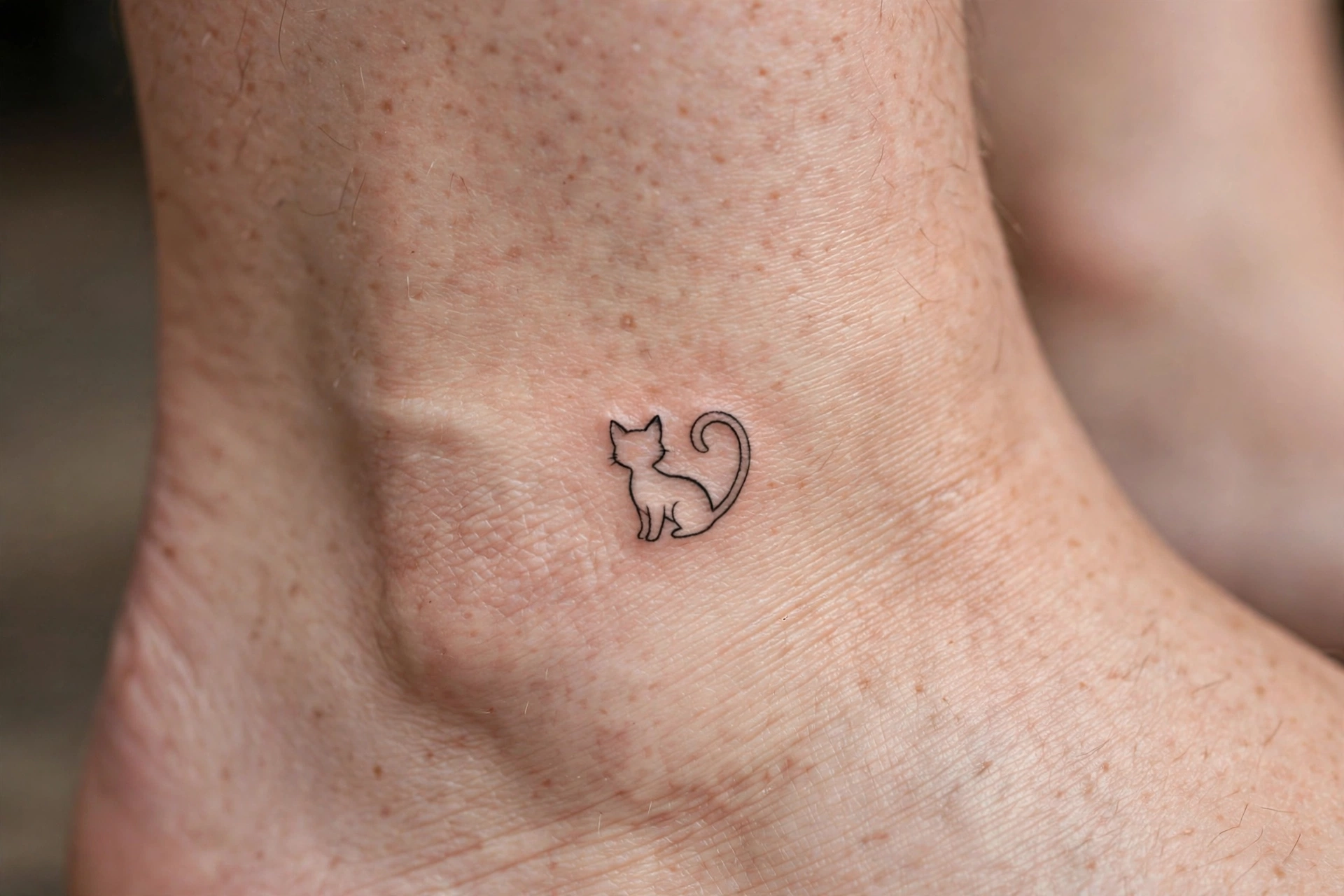
A small minimal cat is a tiny outline, sometimes no bigger than a coin, of a sitting cat with pointy ears and a curved tail. It is a good first tattoo because the commitment is low and the placement is easy to cover if you need to.
Good spots are the ankle, wrist, behind the ear, and the top of the shoulder. The design should be simple enough to read at that size: a clear head, two ears, a body and a tail, with no more detail than that. Fine detail that looks good enlarged will often disappear at this scale.
Design note: Keep the tail as one clean curve. At a small size the tail is what makes the shape read as a cat rather than a sitting animal, so a short or broken tail can confuse the whole design.
7. Geometric Cat

A geometric cat builds the face from triangles and straight lines, with the ears, eyes and whiskers fitted into the pattern. It is a modern, structured design that suits someone who likes clean lines and a tattoo that looks deliberate from every angle.
This works well on a forearm or upper arm, where the straight lines have room to stay straight. The symmetry matters: the two ears and the two eyes should mirror each other, because a geometric design with one side off looks unbalanced in a way a realistic portrait does not. A small crescent moon above the face is a common extra, but the design works just as well without it.
Design note: Ask your artist to draw the pattern on your skin first. Geometric work depends on how the lines sit on the curve of the arm, and a stencil check will show whether the triangles stay even once the arm bends.
Choosing Your Cat Tattoo
If you keep coming back to softer designs, start with the fine-line cat or the small minimal cat. If you want a portrait of your own cat, the realistic portrait is the clearest choice, while the watercolour cat and the cat with flowers are the best options if you want colour. The blackwork cat and the geometric cat suit someone who wants a bolder, more graphic piece.
Save two designs you like most and note what draws you to each: the line weight, the size, the colour, or the pose. Those specific preferences give your artist a useful starting point for a cat tattoo that feels like your own.